
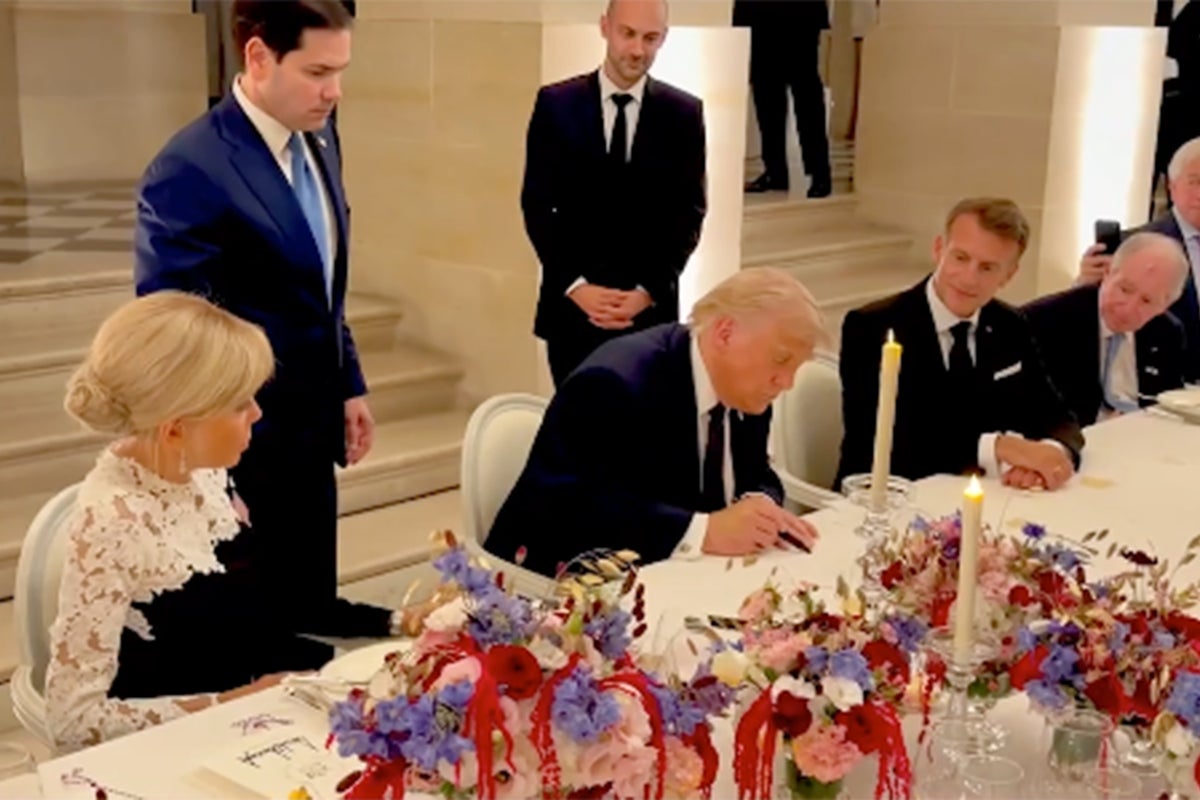
Donald Trump recently made headlines by asserting that his power is limitless, labeling a peace agreement with Iran as potentially amounting to an “unconditional surrender.” During an interview with The Axios Show, Trump was questioned about the perceived boundaries of his influence amid ongoing military conflicts. In a bold response, he indicated that he had yet to grasp the limits of his authority, stating, “there are no limits.”
Trump’s Assertion of Military Dominance
In the same discussion, Trump emphasized that the conflicts served to showcase America’s military capabilities and his personal capacity to influence global events. He claimed that the United States had successfully achieved its military objectives, boasting, “we defeated them totally militarily.” Furthermore, he pointed to a naval blockade instituted during the conflict as an example of American might, implying that such displays of power underscore the effectiveness of his leadership.
Trump elaborated on this blockade, asserting, “Who else could have done a blockade like that? I did a naval blockade where not one ship was able to get through.” He acknowledged that extending military actions might have severe economic ramifications, particularly concerning the vital Strait of Hormuz, a key passageway for global oil supplies. His analysis suggested that ongoing conflict could lead to a global economic downturn, stating, “This is the kind of thing that could cause a worldwide depression.”
US-Iran Talks in Jeopardy
Adding to the complexities, planned discussions between the United States and Iran at Switzerland’s Bürgenstock resort have been formally cancelled, casting further doubt over the prospects for diplomatic engagement. The Swiss foreign ministry confirmed this cancellation, which followed Vice President JD Vance’s withdrawal from the planned trip and Iranian officials expressing uncertainty about their participation.
This development raises questions about the future of negotiations following a temporary agreement between the two nations. With tensions remaining high, the cancellation signals potential setbacks in efforts aimed at stabilizing relations and securing long-term peace.
Internal Divisions and International Reactions
Vice President JD Vance has publicly criticized Israeli leaders for their negative stance towards the Iran deal. He remarked that those perceiving Trump as a threat to Israel should “wake up and smell the reality,” defending Trump as the strongest ally of Israel. Vance highlighted the significant military support the U.S. provides to Israel, noting that “two-thirds of the defensive weapons… have been built by American hands and paid for by American tax dollars.” His remarks underscore the intricate interplay between U.S. foreign policy and intra-regional diplomacy.
In another perspective, Iran’s Supreme Leader Mojtaba Khamenei has voiced hesitance regarding the peace deal despite granting his blessing for the negotiations. He described the U.S. move to secure the agreement as one driven by desperation, suggesting that future negotiations would not equate to an acceptance of American viewpoints.
Economic Implications of Ongoing Tensions
As the geopolitical dynamics shift, economic factors are also in play. The outlook for oil prices responded as the blockade on Iranian tankers was lifted, leading to a decrease in crude oil prices. However,, the backdrop of continued conflict involving Israel and Hezbollah raises questions about the sustainability of this peace agreement and its implications for global energy supplies.
Market analysts noted that easing fears of a prolonged disturbance in oil shipments through the Strait of Hormuz has provided some stability in prices, yet uncertainty remains prevalent. The interplay of military actions and economic considerations continues to shape both U.S. policy and international relations, further complicating the landscape of Middle Eastern diplomacy.
In conclusion, Trump’s declaration of his unfettered power and the contentious negotiations surrounding the U.S.-Iran deal encapsulate the complexities of current international relations, influenced heavily by military strategy, economic ramifications, and the intricate dance of diplomacy.