
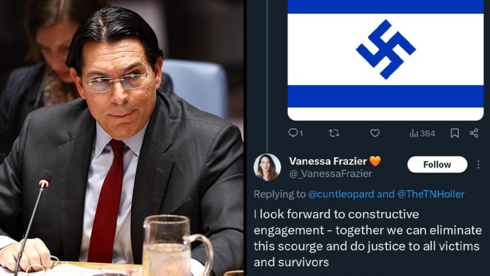
Vanessa Frazier, the UN Secretary-General’s representative on children and armed conflict, recently addressed a contentious situation involving accusations against Israel. In her reply to a post equating Israel with Nazi Germany, she expressed a desire for constructive dialogue, emphasizing the need to eradicate this issue and seek justice for all victims and survivors.
Tense Confrontation at the UN
This exchange followed a particularly charged confrontation between Frazier and Israel’s Ambassador to the UN, Danny Danon, during an event commemorating the International Day for the Elimination of Sexual Violence in Conflict. The atmosphere grew strained when Frazier attempted to interrupt Danon while he was speaking. Danon did not take kindly to this, responding with a firm rebuke and asserting his right to speak. He criticized her involvement in what he perceives as a campaign against Israel and expressed his disapproval, stating, “Shame on you. You are part of the persecution of Israel. Shame on you. You can leave.”
Allegations Against Frazier
Following this encounter, Danon leveled accusations against Frazier, claiming she tolerated anti-Semitic rhetoric. He referenced her engagement with an account that had purportedly shared content likening Israel to Nazis. “Yesterday she tried to silence me in the UN hall,” he remarked. “Today it turns out she is also corresponding with accounts that spread antisemitic content. Anyone who shows tolerance for antisemitism cannot present themselves as a defender of human rights. The mask is off.” This declaration highlights the growing tensions surrounding the UN’s treatment of Israel.
Israel’s Reaction to UN Policies
This confrontation coincided with Danon’s calls for the resignation of Pramila Patten, the UN Secretary-General’s special representative on sexual violence in conflict. Israel’s leadership has been particularly upset about the UN’s decision to add Israeli entities to a blacklist of those accused of committing sexual violence in conflict zones. The inclusion of such a list has been controversial, especially as it came shortly after Hamas was also blacklisted, raising questions about the motivations behind these decisions.
Israeli officials have argued that pressure on UN Secretary-General Antonio Guterres influenced this outcome. In the past year, Danon and his colleagues have repeatedly met with representatives from Guterres’ office, submitting extensive documentation and data to counter the claims made against Israel. They suggested that despite their efforts, the Secretary-General moved forward with what they characterized as a politically motivated decision to include Israel on the list, regardless of the evidence.
Strained Diplomatic Relations
In response to these developments, Israel announced the suspension of relations with Guterres’ office and canceled Patten’s anticipated visit to the country. Israeli officials indicated they would refrain from engaging with the Secretary-General’s office as long as Guterres remained in his position. The responses reflect a broader diplomatic strain between Israel and the UN, raising significant questions about future interactions and the implications for international relations in the realm of human rights and conflict.
These events underscore a complex landscape in which diplomatic conversations are increasingly fraught, leaving the resolution of longstanding issues surrounding Israel and its role in global humanitarian discussions uncertain. As the dialogue continues, the international community will be watching closely to see how these tense discussions evolve and what impact they may have on global perceptions of Israel’s actions and its diplomatic relations.