
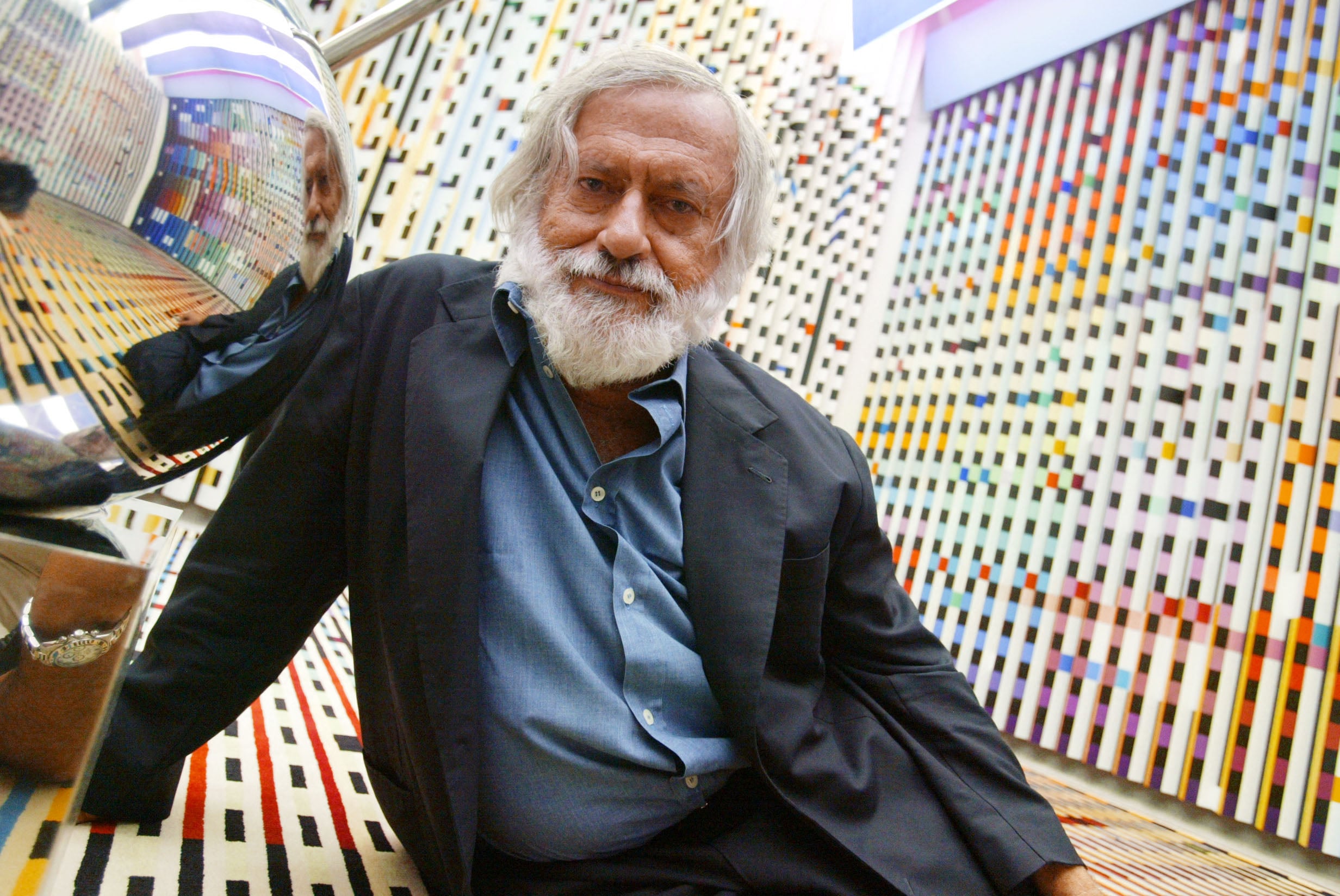
Yaacov Agam, the iconic Israeli artist and pioneer of kinetic art, passed away on Sunday at the age of 98. Renowned globally for his dynamic and interactive sculptures, Agam’s contributions to the art world have left an indelible mark. As a recipient of the prestigious 2026 Israel Prize for Visual Arts, his legacy will undoubtedly resonate for generations to come.
A Visionary Artistic Legacy
President Isaac Herzog praised Agam as “one of the most esteemed and recognizable Israeli artists globally.” In a heartfelt statement, Herzog reflected on Agam’s capacity to create a “unique artistic language of movement, change, and renewal,” emphasizing how his works have integrated into major museums and collections worldwide, including in the President’s residence. Agam’s innovative approach encouraged viewers to interact with art in unprecedented ways, allowing personal interpretation through movement, which became a hallmark of his oeuvre.
Minister of Sports and Culture Miki Zohar also conveyed his admiration for Agam, noting his role in shaping a distinctive artistic vernacular that continues to inspire creators. The Yaacov Agam Museum in Rishon Lezion expressed sorrow at the loss, highlighting Agam as one of the foundational figures of kinetic art, whose dedication helped to revolutionize modern artistic expression.
Early Life Influencing Breakthrough Art
Born on May 11, 1928, in British Mandate Palestine, Agam grew up in a deeply religious household influenced by his father, Rabbi Yehoshua Gibstein. His childhood experiences, particularly his fascination with the shifting sands of local dunes, ignited a lifelong passion for exploring motion and transformation in art. After enduring imprisonment during Operation Agatha in 1946 due to his Zionist activism, he honed his artistic skills at the Bezalel Academy of Art and Design in Jerusalem before moving to Zurich and later Paris.
In 1953, Agam held his first solo exhibition in Paris, marking the beginning of a celebrated career. His interactive works faced initial skepticism, yet he remained resolute in establishing a new artistic narrative that prioritized viewer engagement. His exhibitions at significant venues like the Museum of Modern Art in New York and the Centre Pompidou garnered international acclaim, solidifying his status as a trailblazer in kinetic art.
Cultural Influences and Iconic Installations
Agam’s artistic endeavors extended beyond traditional sculpture. His celebrated public works, such as the Fire and Water Fountain in Tel Aviv and the monumental display at La Défense in Paris, reflect his interpretation of Jewish heritage, merging spirituality with modern aesthetics. He also designed the world’s largest Hanukkah menorah in New York, further illustrating his commitment to infusing culture and faith into his art.
Just weeks before his death, Agam was presented with the 2026 Israel Prize in a poignant ceremony at his museum, where he expressed the deep interconnection between his faith and artistic vision. He believed that the essence of his work illustrated the dynamic nature of reality, urging a creative outlook rooted in Jewish values and traditions.
A Lasting Influence
Agam’s contributions to the art world are meticulously preserved at the Yaacov Agam Museum, which opened in 2018 and features many of his groundbreaking pieces. His notable creations like the Panoramagam and the 29 “Pillars of Clila” serve as testaments to his artistic legacy, which will continue to inspire future generations. Survived by his wife, Chantal Thomas d’Hoste, and artist son Ron Agam, his influence will surely extend across both personal and artistic realms, leaving a legacy that transcends boundaries.