
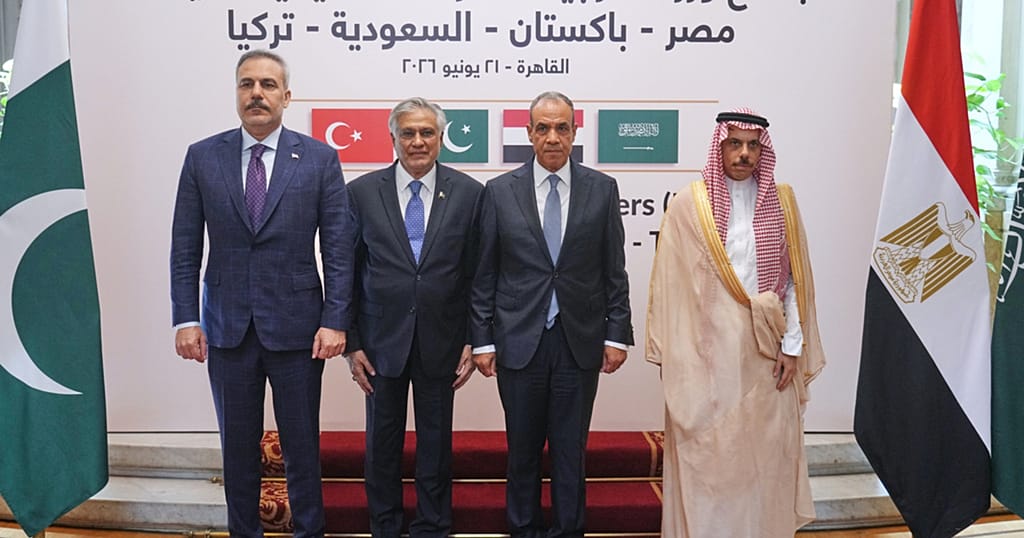
Foreign ministers from Egypt, Pakistan, Turkey, and Saudi Arabia convened in Cairo on Sunday to address pressing regional issues, focusing primarily on peace, security, and stability. This meeting is part of broader efforts in the region aimed at supporting the recent agreement signed between the United States and Iran, which seeks to mitigate ongoing conflicts.
The Significance of the Cairo Meeting
The discussions held in Cairo come at a crucial juncture, especially as the international community grapples with tensions in the Middle East. The memorandum of understanding between the U.S. and Iran, aimed at de-escalating hostilities, is vital for stabilizing the region. The foreign ministers emphasized the importance of collaboration among their nations to promote peace and security. Egyptian President Abdel-Fattah el-Sisi lauded the coordinated efforts of the four nations and underscored the necessity of ensuring the successful implementation of the negotiations that are currently taking shape.
This meeting marks the fourth such gathering between these four countries, signaling a commitment to address regional challenges through diplomatic avenues. The previous discussions had been a platform for dialogue and strategizing, and the current meeting holds even greater significance since it occurs right after the U.S.-Iran ceasefire agreement.
High-Level Negotiations in Switzerland
On the same day as the Cairo meeting, critical negotiations commenced in Switzerland between Washington and Tehran, following the formal signing of the ceasefire deal. These negotiations, initially scheduled for Friday, were postponed due to escalating Israeli attacks in Lebanon. Iran has expressed concerns that these actions contradict the terms of the newly reached agreement. The resumption of talks in Switzerland underscores the urgency of resolving tensions, not just between the U.S. and Iran, but across the broader region, which remains volatile.
The ceasefire agreement itself is of paramount importance, as it not only aims to halt the conflict that erupted on February 28 following U.S.-Israeli strikes on Iran but also includes provisions for ensuring maritime security by reopening the Strait of Hormuz. Additionally, it sets the stage for a 60-day negotiation period where broader issues, including Iran’s nuclear program, can be deliberated.
The Role of Regional Powers
The collaboration among Egypt, Pakistan, Turkey, and Saudi Arabia is indicative of a growing recognition among regional powers that lasting peace can only be achieved through united efforts. By gathering to deliberate on these critical issues, these nations are stepping into a pivotal role in shaping the region’s future. They recognize that their collective influence can facilitate constructive dialogue and potentially lead to sustainable solutions for long-standing conflicts.
As regional players, their responsibilities extend beyond their borders, as they must navigate the complexities of international relations while advocating for their national interests. Their involvement in the negotiations not only highlights their diplomatic clout but also their commitment to fostering stability in an area known for its turmoil.
In conclusion, the meeting in Cairo and subsequent negotiations between the U.S. and Iran indicate a concerted effort to address the multifaceted challenges facing the Middle East today. The roadmap established through these discussions could pave the way toward a more stable and prosperous regional landscape, contingent upon the successful execution of the agreements and cooperation among involved parties.