
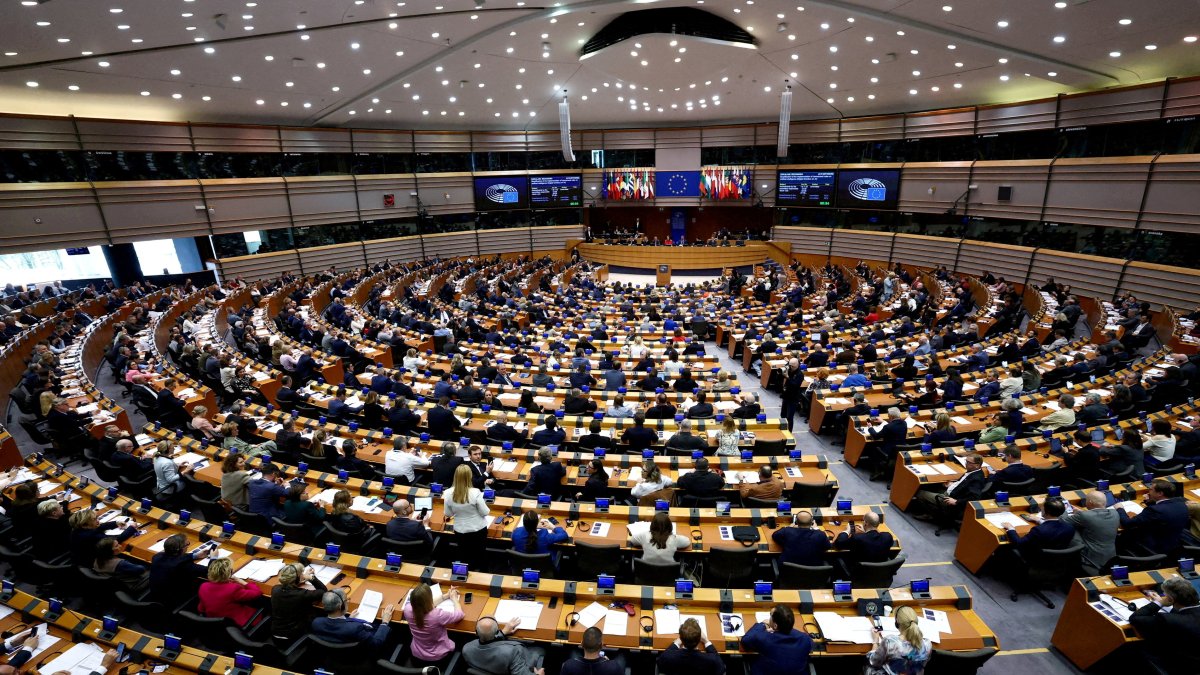
The recent European Parliament report on Türkiye raises a critical question: Is the Parliament genuinely focused on enhancing Europe’s relationship with this strategically important partner, or is it ensnared in a cycle of ideological rhetoric disconnected from real-world geopolitics?
Persistent Patterns in the Reports
The report, published on June 17, exemplifies a recurrent trend characterized by sweeping judgments, selective interpretations of events, and recommendations that overreach the Parliament’s practical influence. This essentially blocks the development of a constructive Türkiye-European Union dynamic. Over the past decade, EP reports have shifted from objective evaluations to politically charged declarations, driven by partisan interests and ideological biases. This has led to a notable decline in their credibility among various segments within Turkish society, including many who remain supportive of Türkiye’s European aspirations.
The underlying issue appears to be structural. Unlike the European Commission, which handles accession negotiations and fosters ongoing dialogue, the European Parliament is inherently political. This often results in resolutions reflecting the domestic agendas of various political factions rather than offering balanced assessments of candidate nations.
The Importance of Objectivity
During my time as Türkiye’s Minister for EU Affairs and Chief Negotiator, I recognized this troubling reality. I advocated that progress reports should not serve as political evaluations imposed on sovereign entities. To address concerns about objectivity, Türkiye even produced alternative progress reports that aimed to present a more comprehensive view of reforms and developments often overlooked in Brussels. This initiative, regardless of its contentious aspects, underscored a crucial reality: assessment frameworks lose their legitimacy if perceived as biased.
The latest report starkly exemplifies this issue, particularly its language directed at Türkiye’s Minister of Justice, Akın Gürlek, regarding ongoing judicial proceedings. Such interventions blur the line between legitimate political critique and unwarranted interference in domestic judicial matters. No democratic nation would appreciate foreign political entities attempting to influence or pre-judge ongoing legal cases. The principle of judicial independence cannot be genuinely upheld if it is simultaneously undermined. If European institutions genuinely advocate for the rule of law, they must respect the idea that courts—not political bodies—determine legal outcomes.
Geopolitical Realities and Strategic Importance
Against this backdrop, a bigger strategic contradiction emerges. Europe is currently navigating unprecedented challenges, including the ramifications of Russia’s war in Ukraine, instability across the Middle East, and the pressing need for energy diversification. In these contexts, Türkiye is a central actor rather than a secondary player. As NATO’s second-largest military force and a significant energy transit hub, Türkiye holds a vital position that European leaders increasingly recognize, both in public statements and private discussions.
However, the European Parliament’s approach often seems disconnected from these geopolitical realities. Instead of exploring how Türkiye and the EU can collaboratively tackle shared challenges, parliamentary debates often devolve into symbolic gestures that generate headlines rather than delivering substantial policy outcomes. Unfortunately, some EP members seem more focused on political signaling, substituting ideological posturing for strategic engagement, failing to recognize the long-lasting repercussions this behavior can have on European interests.
The Need for Strategic Engagement
Such a disconnect ultimately weakens both parties involved. For Türkiye, these reports emphasize a perception of inequality in engagement with European institutions. For Europe, the lack of credibility in the Parliament undermines the institution’s ability to foster a coherent long-term strategy toward one of its critical partners. While fair and balanced criticism is crucial—no democracy is beyond scrutiny—constructive engagement must be characterized by consistency, objectivity, and mutual respect.
The future of Türkiye-EU relations shouldn’t hinge on cycles of political symbolism and frustration. It requires a strategic vision and a genuine understanding of shared interests. Europe’s challenge is not merely to agree with Türkiye’s policies but to engage meaningfully with a key geopolitical player. Ultimately, history will judge Europe not by its resolutions but by the partnerships it forges. It’s time for a shift from symbolic politics to a more strategic, statesmanlike approach.