
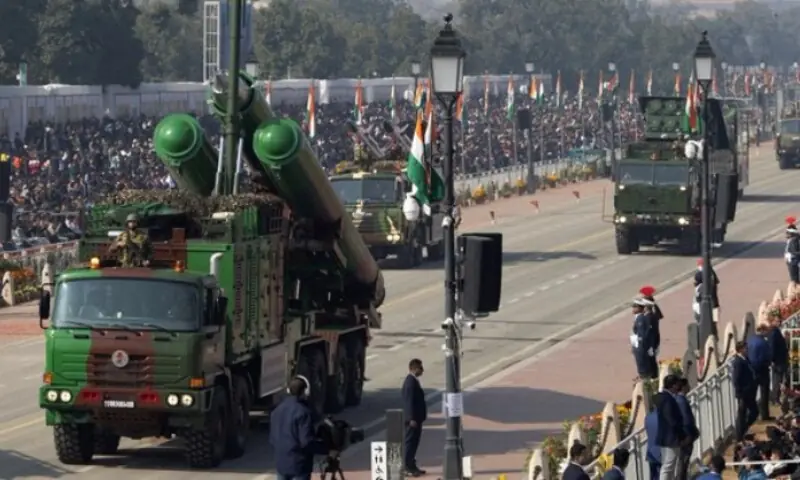
The Indian government is currently engaged in discussions with the United Arab Emirates (UAE) regarding the potential sale of advanced defense technology, notably including the BrahMos supersonic cruise missile. This move comes as the UAE seeks to enhance its military capabilities, particularly in response to the recent conflicts in the Middle East.
Key Defense Technologies in Discussion
Sources close to the matter indicate that negotiations involve India’s Akashteer air defense system alongside the BrahMos missile. The BrahMos, a collaborative development between India and Russia, is renowned as one of the fastest cruise missiles worldwide, capable of launching from land, sea, and air platforms. Meanwhile, the Akashteer system is an automated air defense technology developed by Bharat Electronics Ltd and the Indian Army, designed to bolster aerial protection.
The urgency of these discussions is underscored by the UAE’s recent military challenges, particularly the drone and missile attacks from Iran during the ongoing regional conflicts. The Gulf nation’s commitment to secure critical waterways like the Strait of Hormuz, vital for energy exports, further amplifies its need for enhanced defense solutions.
The Strategic Importance of Defense Partnerships
The UAE’s interest in acquiring equipment from India reflects a strategic shift in its defense procurement strategy. Previously aligned primarily with Western suppliers, the UAE is diversifying its procurement base to gain greater strategic autonomy. Analysts emphasize that forging closer ties with India allows the UAE to strengthen its defense capabilities without straining its relationship with the United States, which remains a key ally.
Earlier this year, the UAE also entered into a memorandum of understanding with South Korea to boost defense cooperation, highlighting its proactive approach to security in a volatile region. Data from the Stockholm International Peace Research Institute shows that the US has historically dominated arms exports to the Middle East, making up 54% of total imports from 2021 to 2025. In this context, India’s entry into the arms market in the Gulf symbolizes a significant shift.
Challenges and Opportunities for India
Before any deal for the BrahMos can be finalized, India will require approval from Russia, given that the missile is a joint venture. However, experts believe that this is unlikely to impede negotiations, considering the solid relationship between Moscow and Abu Dhabi. Both the BrahMos and the Akashteer systems are anticipated to meet the UAE’s defense requirements effectively, despite increasing international competition in arms sales to Gulf states.
While India’s past attempts in the arms export sector have been inconsistent, the current climate reflects a more promising opportunity for potential sales to the UAE and neighboring regions. The evolving geopolitical landscape and strategic partnerships between nations are likely to enhance the chances of successful arms deals.
In the backdrop of intensifying geopolitical maneuvers in the Middle East, both India and the UAE are exploring avenues to solidify their defense ties. Recent agreements have paved the way for collaboration on trade, energy, and military hardware development, signaling a strong partnership rooted in mutual interests.
These enhanced defense relations serve a dual purpose: reinforcing each country’s military capabilities while projecting a united front amid regional tensions. As both nations navigate the complex geopolitical landscape, their growing security partnership highlights the importance of strategic defense cooperation in fostering stability and resilience in the region.