
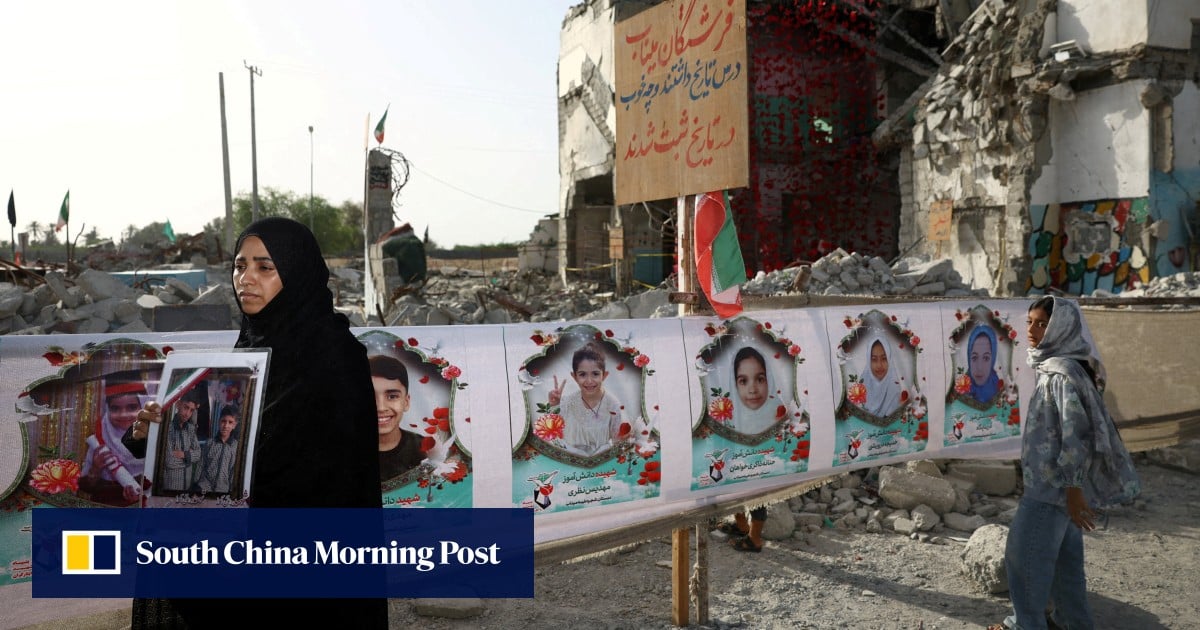
On February 28, the outbreak of conflict in Iran was tragically marked by a devastating strike on a girls’ school, resulting in the loss of numerous young lives. This incident has spurred debate and raised concerns about accountability, especially following remarks made by U.S. President Donald Trump regarding the situation.
Ambiguity Surrounding Accountability
During a news briefing, President Trump expressed skepticism over whether the true source of the attack would ever be determined. He noted the chaotic environment characterized by the chaos of missiles flying in various directions, complicating the attribution of responsibility. “I don’t know that they are ever going to solve that problem,” Trump stated, highlighting the complexity and uncertainty surrounding the incident. The president’s comments reflect a profound sense of helplessness in understanding the full scope of what occurred that day.
Trump referenced an initial U.S. military investigation, first reported by Reuters in March, suggesting that American forces might bear some responsibility for the tragic event in Minab, a city in southern Iran. Despite elevating the inquiry, the Pentagon has not publicly recognized any preliminary findings or conclusions, creating further ambiguity regarding the true nature of the strike.
Discussions on Responsibility and Speculation
Intriguingly, President Trump further remarked on the possibility that the missile responsible for the attack may not have originated from U.S. forces. He indicated that he had seen no solid evidence to confirm the claims that it was indeed an American missile. “Somebody said it was our missile, maybe it wasn’t our missile but I have seen nothing to lead me to believe it was,” he repeated, emphasizing his stance that the incident was likely not a result of U.S. military action. This assertion points to a broader theme of uncertainty and speculation in high-stakes military engagements.
Trump’s statements were complemented by input from Defense Secretary Pete Hegseth, who was present during the session. When prompted to support the President’s claims, Hegseth affirmed that the Pentagon is taking the investigation seriously. “Well Mr. President, we’ve taken the investigation very seriously, and when the appropriate time is right, whatever that outcome is, that’ll be the time to divulge,” he indicated, leaving the outcome of the investigation open-ended.
The Broader Implications
This situation sheds light on the complexities and challenges facing military operations in hostile regions. As tensions escalate, the potential for catastrophic mistakes grows, exacerbating the humanitarian crisis and fueling international scrutiny. The incident at the girls’ school highlights the urgent need for transparent investigations and accountability, especially in cases involving civilian casualties.
The conflicting statements and ongoing inquiries may prompt further investigation and discussions on rules of engagement, military accountability, and the role of international observers. As global attention remains focused on Iran, the necessity for a clear understanding of military actions and their repercussions becomes increasingly apparent.
As the international community grapples with these complexities, one thing is clear: the quest for accountability in such conflicts is essential not only for justice but also for the integrity of military operations worldwide.