
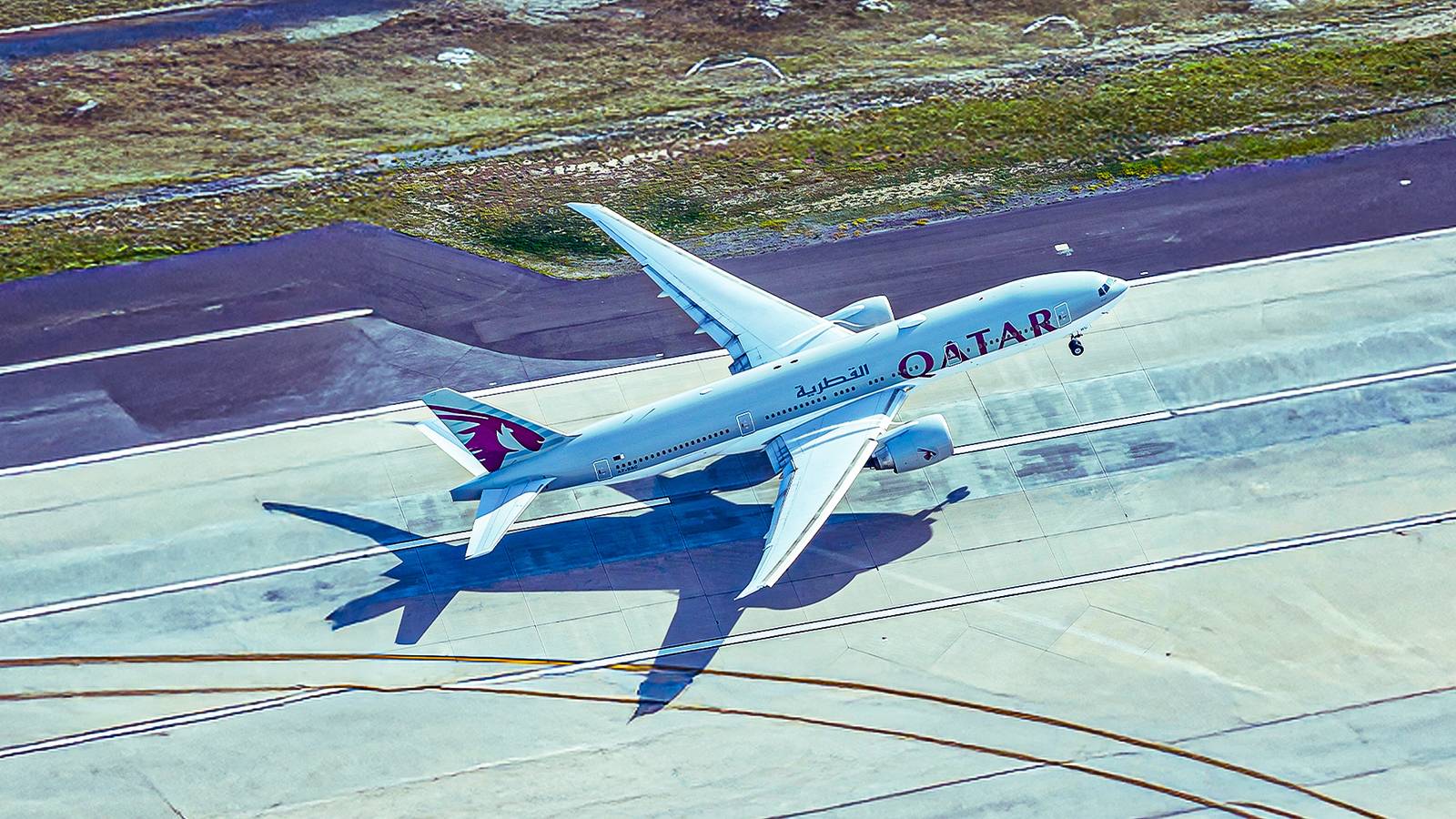
A recent incident involving a Boeing 777-200LR freighter has raised safety concerns in the aviation community. On June 24, during a low pass over a private Texas airstrip, this aircraft, which was en route for a pre-delivery test flight, narrowly avoided disaster. The aircraft was not operated by Qatar Airways but was intended for their cargo fleet, prompting discussions about operational safety standards.
The Flyover Incident Explained
The Boeing 777-200LR, identified as N705DN and previously used by Delta Air Lines, was making a symbolic flyover of the Horseshoe Bay Resort Jet Center, owned by Jetran. Video footage shared on social media illustrates how perilously close the freighter’s wing came to the ground during the maneuver. While the aircraft was conducting this ferry flight from Indiana to Texas, the intention was to celebrate its integration into Qatar Airways Cargo. Reports confirm that this maneuver has prompted the Federal Aviation Administration (FAA) to likely proceed with an investigation into the incident, where operator accountability will be scrutinized. This incident serves as a reminder of the delicate balance between ceremonial aviation displays and safety.
Analyzing the Risks Involved
Although low passes are not unique in aviation—serving often for special occasions—this specific maneuver posed significant risks. Data indicated that at one point during the flyover, the aircraft’s altitude dropped dangerously close to ground level. According to monitoring data, the lowest altitude was recorded at around 950 feet, and some adjustments indicated it may have been even lower, with moments almost at ground level. The pilot executed a right turn at this critical point, risking a catastrophic outcome from even the slightest gust of wind.
Horseshoe Bay’s airport primarily serves private jets and smaller regional aircraft and is also adjacent to a residential area. History has seen similar low-altitude flyovers lead to tragic accidents, reminding us all of the stakes involved. Another incident this year saw a veteran pilot face repercussions for performing an unauthorized low-altitude flyover during his farewell flight, underscoring that such maneuvers can rapidly escalate into serious safety violations.
Background on the Aircraft and Its Conversion
N705DN, the aircraft involved in this incident, is a significant case study in itself. The 17-year-old airframe previously flew with Delta Airlines and was stored during the pandemic before being acquired by Jetran. Subsequently, it became the benchmark model for Mammoth Freighters’ innovative passenger-to-freighter conversion program, known as the 777-200LRMF. The aircraft underwent a meticulous conversion process, completed in 2025, and was recently adorned with the Qatar Airways Cargo livery, awaiting its entry into service.
Qatar Airways is the launch customer for this specialized freighter type, ordering five units to enhance its already extensive cargo fleet, which has been a vital asset for the airline. Currently, Qatar Airways operates a fleet of around 30 Boeing 777 Freighters, solidifying its position in the competitive air cargo market. As Mammoth Freighters continues to secure certifications and partnerships for further conversions, the importance of adhering to operational safety cannot be overstated, especially in light of recent events.
In summary, while the Boeing 777-200LR incident ultimately concluded without tragedy, it serves as a stark reminder of the inherent risks in aviation. The authority’s investigations, combined with the broader dialogue about safety standards, will play a crucial role in ensuring that such dangerous maneuvers do not recur in the future.