
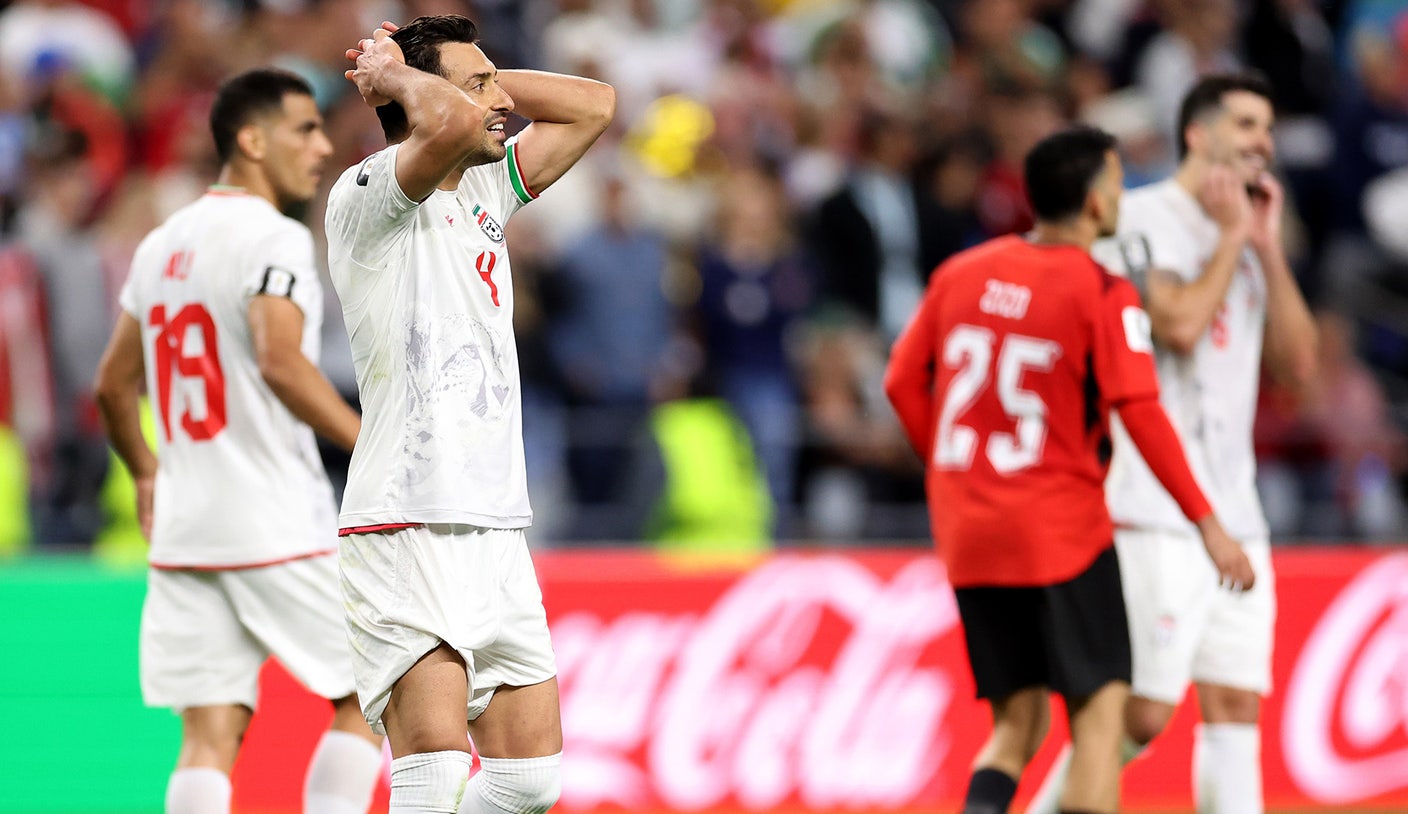
In a thrilling climax to the match, Iran seemed poised to secure its spot in the knockout stage against Egypt. The game’s tension reached its peak when, during the 93rd minute, Shoja Khalilzadeh found the net in what appeared to be a last-gasp winner. Iran’s celebration reflected the elation of a team on the brink of advancement. However, the joy was short-lived as the Video Assistant Referee (VAR) intervened, leading to a heartbreaking disqualification of the goal.
The Disallowed Goal: A Dramatic Twist
Khalilzadeh’s seemingly decisive strike ignited a wave of optimism among Iranian supporters, but the jubilation turned to astonishment when the referee consulted VAR. The goal was annulled for offside, instantly casting a cloud of confusion over the stadium. Many fans mistakenly believed that the positioning of Yasser Ibrahim, who was behind Khalilzadeh when the ball arrived, kept the Iranian forward onside. This interpretation, however, simplified an intricate situation.
The critical detail lay in the positioning of Ibrahim. While he was indeed behind Khalilzadeh, this didn’t change the fact that Ibrahim was the last Egyptian player on the field. The regulations dictate that the determination of offside is based on the second-last opponent. This critical point brings the role of the goalkeeper, Mostafa Shobeir, into focus, as his positioning played a pivotal role in the offside call.
Understanding Offside: The Role of the Goalkeeper
The position of Shobeir, who had advanced out of his net, impacted the offside line significantly. Typically, the last defender is perceived as the primary reference point for determining offside, leading many to instinctively consider Ibrahim as keeping Khalilzadeh eligible to play. However, the offside rule operates on the principle that a player must be level with or behind the second-last opponent to avoid infringement.
In this situation, Shobeir’s movement forward altered the dynamic. Although there was an Egyptian defender behind Khalilzadeh, it wasn’t enough to maintain his onside status. Khalilzadeh was actually ahead of Hamza Abdelkarim, the second-last defender, when the ball reached him. Therefore, he was in an offside position according to the regulations.
The Consequences of the Decision
The disappointment in the Iranian camp was palpable after the disallowed goal. What could have been a moment of triumph quickly turned into a sense of despair. The game ultimately concluded in a 1-1 draw, leaving Iran on the verge of elimination. Despite putting up a commendable fight, they were left to rely on other match outcomes to assess their chances of advancing as one of the best third-place teams.
This incident highlights the importance of understanding the nuances of football rules, especially the offside regulations that can decisively change the outcome of a match. The heartbreak experienced by Iran serves as a critical reminder of how quickly fortunes can shift in the high-stakes environment of international football, making every second and every decision count.