
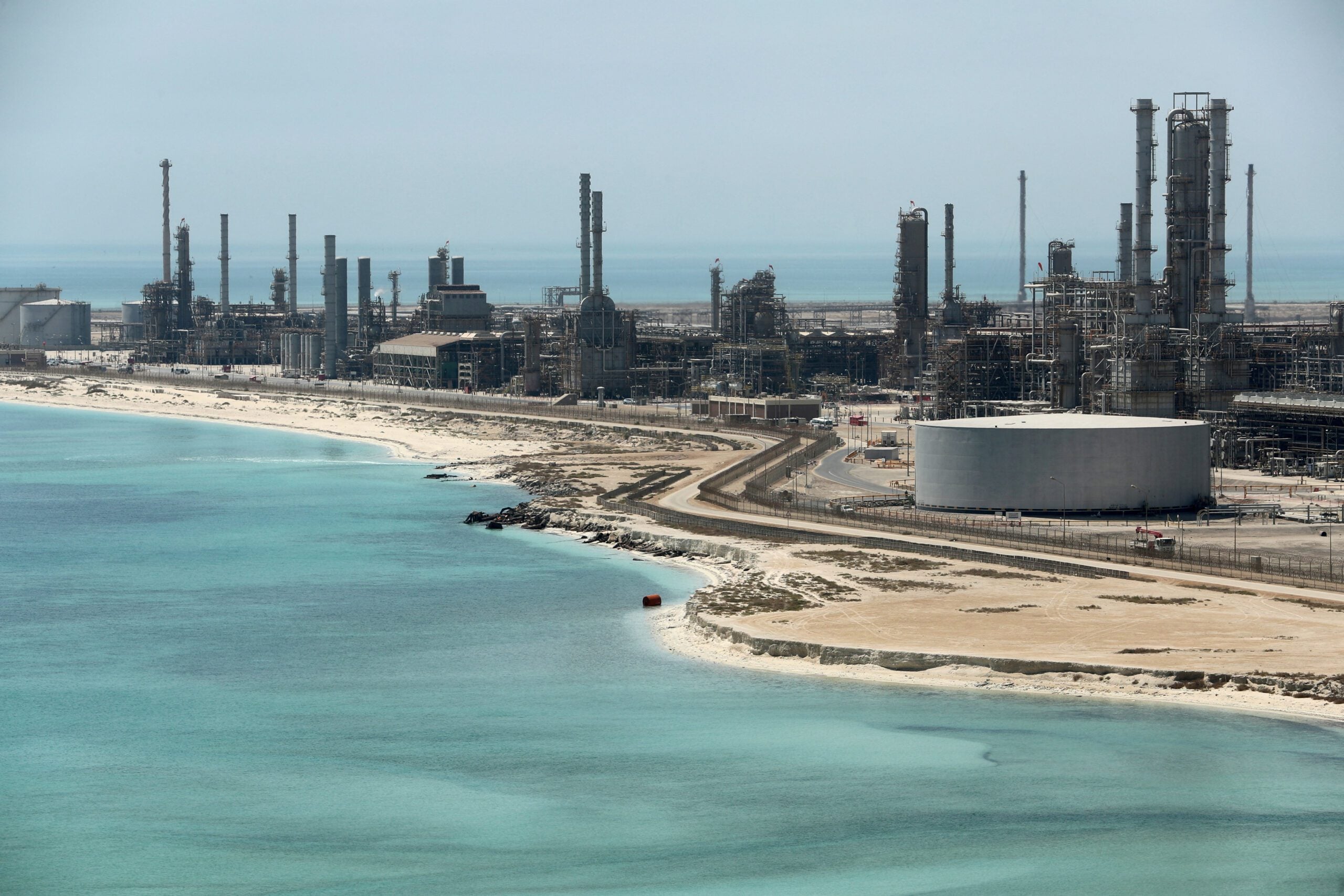
Saudi Arabia is taking significant steps to enhance its crude oil shipments by reopening its Persian Gulf ports, which had been closed due to the ongoing conflict with Iran. Additionally, the nation is ramping up operations at its Red Sea terminals to further secure its oil export routes and minimize reliance on the strategic Strait of Hormuz.
Resumption of Operations at Ras Tanura
Recent ship-tracking reports indicate that the Ras Tanura port on the Persian Gulf has resumed operations. Two very large crude carriers (VLCCs) began loading oil on Thursday, marking the first activity at this terminal since early March. The reopening comes after the suspension of exports forced Saudi Arabia to divert crude through an extensive pipeline to the Red Sea. This logistical shift, spanning about 746 miles, was implemented to maintain export levels during the height of the conflict.
As of Friday, two additional VLCCs were spotted at the Ras Tanura facility, indicating an ongoing recovery in Saudi oil exports. The reestablishment of operations here signals that the country’s oil sector is gradually returning to its pre-war state. Crude exports from the Gulf have reached around 75% of their previous levels, following a recent interim peace agreement between the U.S. and Iran. However, safety concerns linger, especially after a cargo ship was attacked near the Strait of Hormuz, raising alarms about the security of maritime routes.
Increasing Capacity at Yanbu Terminals
In parallel with the developments at Ras Tanura, shipments from the Yanbu terminals on the Red Sea coast are also gaining momentum. Data shows that all seven loading berths at Yanbu were occupied on Friday for the first time since the war commenced, showing a significant uptick in activity. As of June, the average daily exports from Yanbu have reached approximately 4.1 million barrels, climbing nearly 500,000 barrels from the previous month. However, this figure still falls short of the nation’s capacity to export around 7 million barrels per day before the conflict began.
With continued volatility in the Strait of Hormuz, the Yanbu terminals are positioned to become increasingly important in Saudi Arabia’s oil logistics. These facilities allow oil shippers to avoid potential disruptions in the Gulf, enhancing the resilience of the country’s export system. Even looking ahead, it is plausible that traffic through Yanbu could surpass pre-war volumes, particularly if Tehran insists on maintaining control over major routes.
Market Implications and Future Outlook
The recent improvements in Saudi Arabia’s oil exports come at a time when global markets are closely watching supply flows. The surge in shipments implies a recovering oil market, which could influence global pricing and availability. However, the long-term durability of this recovery will hinge on broader geopolitical dynamics, including Iran’s role in future agreements regarding the Strait of Hormuz.
As the international community continues to monitor developments, the viability of Saudi Arabia’s renewed export capabilities will be of paramount importance. The interplay between Ras Tanura and Yanbu can potentially mitigate risks related to the Strait, but the ongoing tensions will require careful navigation in the months to come. Ultimately, Saudi Arabia is working to stabilize its oil production and exports while adapting to a rapidly changing geopolitical landscape.