
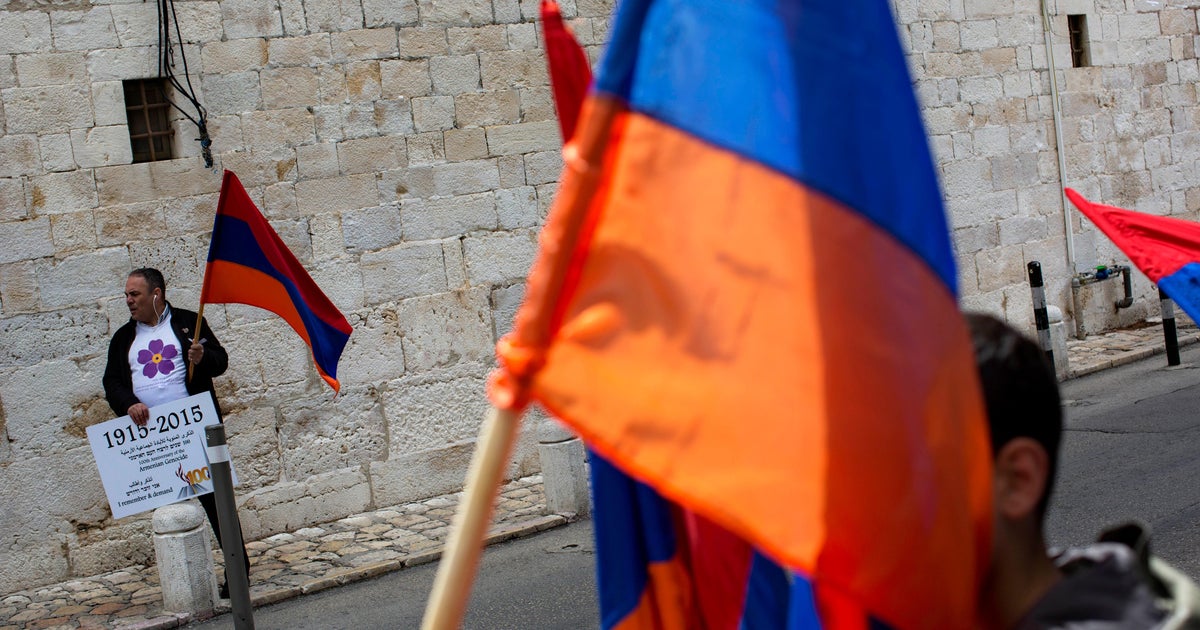
Israel’s Cabinet has taken a significant step by unanimously agreeing to recognize the violence perpetrated against Armenians by the Ottoman Empire during World War I as a genocide. This decision, still pending ratification by Parliament, highlights the ongoing deterioration of relations between Israel and Turkey, which has historically opposed any official acknowledgment of the Armenian Genocide.
The Political Context of the Proposal
This recent move comes amidst strained ties between the two nations, particularly as Turkey has actively worked to dissuade other countries from labeling the mass killings of Armenians in 1915 as genocide. Historians estimate that during this period, up to 1.5 million Armenians lost their lives due to actions taken by Ottoman Turks. While many scholars consider this atrocity to be the first genocide of the 20th century, Turkey contests this classification, suggesting instead that the death toll has been exaggerated and attributing the casualties to civil unrest rather than a systemic campaign of extermination.
Israel has historically been cautious about addressing this sensitive issue, primarily due to concerns over its relationship with Turkey. However, the state of those relations has deteriorated significantly over the past two decades, accelerated by ongoing conflicts in Gaza, Lebanon, and Iran. Israeli Foreign Minister Gideon Saar underscored the importance of recognizing the Armenian Genocide, emphasizing the need to confront a “campaign of denial and minimization” orchestrated, in large part, by the Turkish government. He argued that despite ample historical documentation, acknowledgment has been lacking and is a moral imperative.
Recognition and Its Implications
While Israeli leaders, including Prime Minister Benjamin Netanyahu, have previously referred to the events of 1915 as genocide during various addresses, such a formal designation had never been ratified through a parliamentary vote. Saar articulated that it is “never too late to do the right thing,” framing the recognition as both a moral obligation and an essential acknowledgment of historical truth.
Israel is joining a growing list of countries, including the United States, Syria, and Lebanon, that have classified the violence against Armenians as genocide. The timing of the Cabinet’s decision to present the proposal to Parliament remains uncertain, and as of now, Turkey has not released an official rebuttal to this latest move.
Strained Israeli-Turkish Relations
Once close allies, Israel and Turkey’s relations have been undermined by geopolitical changes, particularly under the leadership of Turkey’s President Recep Tayyip Erdogan. Israel has faced numerous allegations, including those from the United Nations and Turkey itself, claiming that its military operations in Gaza amount to genocide. These accusations are met with strong denials from Israel, founded in the context of the Holocaust and historical trauma.
In response to the attack by Hamas on October 7, 2023, Israel initiated military action, leading to significant casualties in Gaza, with reports indicating that over 73,000 individuals, including a substantial number of women and children, have died. Israel asserts that it aims to avoid civilian casualties and accuses Hamas of employing civilians as shields during the ongoing conflict.
Amid these tensions, a recent report from a team of independent experts commissioned by the United Nations accused Israel of deliberately targeting children in Gaza. Israel has denounced this report as a “libelous sham,” illustrating the contentious atmosphere surrounding allegations of genocide as both nations navigate a complex geopolitical landscape. This evolving situation underscores the delicate balance of historical truth, political alliances, and humanitarian considerations.