
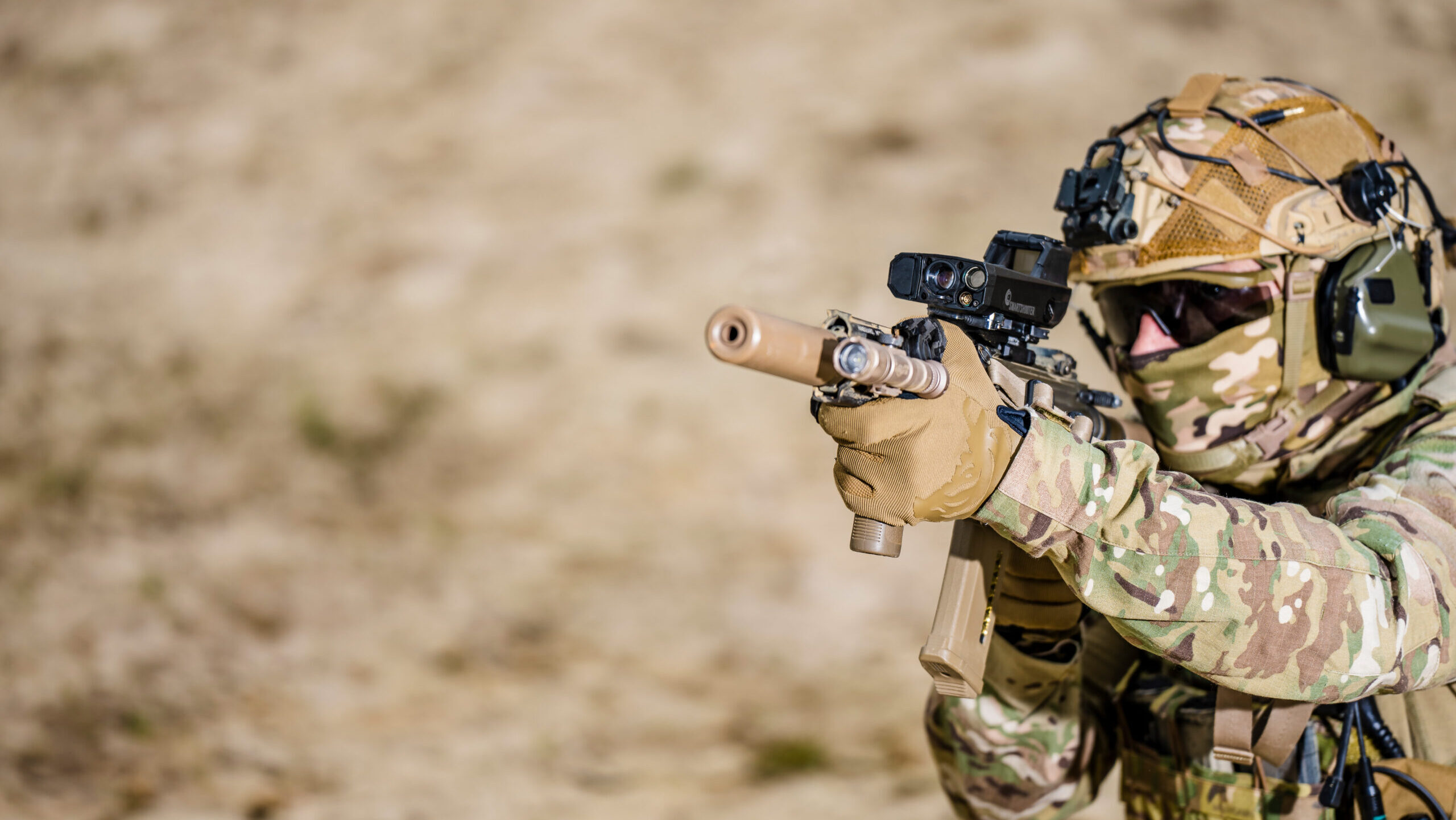
In recent developments, the US Marine Corps awarded Israeli company Smart Shooter a follow-on contract worth $3.4 million. While not the highest-value deal, this agreement signifies the military’s growing demand for effective troop-level counter-drone solutions. According to Smart Shooter’s vice president, Scott Thompson, most branches of the US armed forces now hold contracts with the company, indicating a widespread acknowledgment of the need for advanced counter-unmanned aerial system (c-UAS) technology.
Innovative Technology for Modern Warfare
Smart Shooter is renowned for its innovative Smash 2000LE, a rifle-mounted fire control system designed to enhance target identification. This technology aims to significantly increase accuracy by calculating the optimal moment to fire based on the probability of a successful hit. With the rise of small and agile drones in the battlefield, making each round count becomes paramount for soldiers on the ground. Thompson highlighted that the increasing urgency for dismounted c-UAS solutions has been a “common denominator” behind the recent contract awards.
The Marine Corps’ contract, dated June 9, follows multiple similar agreements across various branches of the US military. Just days before, the company announced a separate $1.8 million contract with the US Navy, in addition to a notable $10.7 million order from the US Army in May. Each military branch has unique requirements for Smart Shooter’s technology, demonstrating its versatility. For instance, the Marines might deploy it within their Expeditionary Units, while the Navy focuses on critical infrastructure protection.
Synchronized Efforts Against Drone Threats
Smart Shooter’s products are becoming increasingly integrated with various military strategies. The company received its first order from the Joint Interagency Task Force 401 (JITF), which is dedicated to counter-drone efforts. Thompson indicated that one of these orders is intended for the Air Force’s Global Strike Command, emphasizing the growing recognition across military levels of the importance of drone defense. “The Air Force has come on strong,” he said, enhancing security measures focused on airbases and key infrastructure.
With a global focus on synchronized anti-drone strategies, the JITF aims to deliver advanced capabilities swiftly. This initiative echoes the need for efficient and effective technology, especially as military operations adapt to emerging threats. The JITF acts like a military-version online marketplace, allowing different branches to access vital equipment, thereby streamlining the procurement process.
Expanding Impact and Market Reach
Smart Shooter’s technology has been operational with US troops since early 2020, illustrating its proven effectiveness. Originally evaluated by a counter-terrorism group, the product has since permeated various military branches. “The next step is to scale this capability significantly,” Thompson stated, noting interest not only from active-duty military but also from Army Reserve units. With evolving drone threats necessitating kinetic responses, there is a pressing need for advanced solutions like the Smash system across even broader military applications.
Looking ahead, Smart Shooter is exploring applications for its system beyond traditional rifle platforms. The company has plans to implement the technology in remote weapon stations and other vehicle-mounted systems. This strategy underscores their commitment to refining user experience based on constant feedback and adapting technology to various operational contexts. As the market expands, Smart Shooter has also secured contracts overseas, including agreements with the Israeli Ministry of Defense and the Australian Defence Force, indicating a strong international demand for their innovative solutions.
In summary, the growing range of contracts and the adaptability of Smart Shooter’s technology signal a significant shift in military operations concerning drone threats. As the landscape of warfare continues to evolve, companies that can offer ground-level solutions to counter these emerging challenges will play a crucial role in global defense strategies.