
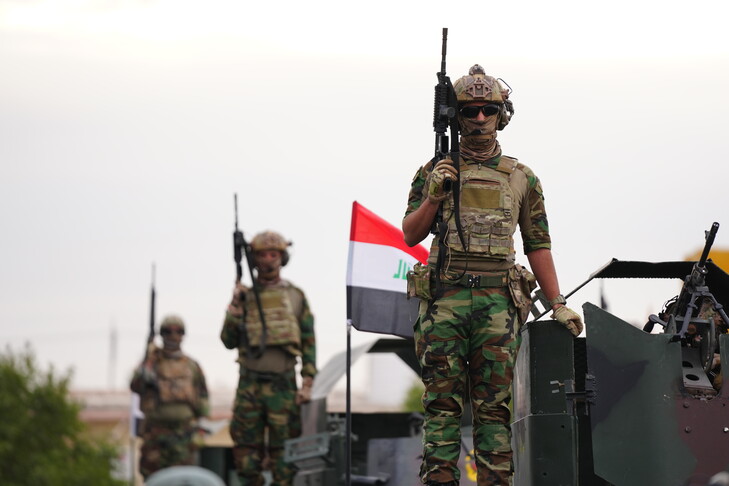
The Iraqi government has officially announced a significant deadline for armed groups within the country. As of September 21, these factions are expected to surrender their arms to state authorities, marking a crucial step in Iraq’s efforts to consolidate power and maintain peace. This announcement was made by government spokesperson Haider al-Aboudi, who emphasized that this deadline aligns with the planned withdrawal of the international coalition forces.
Final Deadline for Weapons Surrender
During a press briefing, al-Aboudi stated, “September 21 is the final deadline for handing over weapons, and also for the withdrawal of the international coalition.” This initiative is seen as a pivotal move meant to strengthen Iraq’s sovereignty and control over its territory. By requiring armed factions to disarm, the government aims to promote stability and diminish violence within the borders.
In a separate development, al-Aboudi mentioned the Iraqi government’s approval for Iran to hold funeral ceremonies for the late Supreme Leader Ali Khamenei in Iraq on July 8. This event is expected to draw attention to Iraq’s relationship with its neighboring country and displays a gesture of goodwill, as Iran coordinates with Iraqi authorities to arrange the ceremonies, especially at the country’s revered holy sites.
Ongoing Anti-Corruption Efforts
In addition to addressing security concerns, the Iraqi government is intensifying its efforts to combat corruption. Prime Minister Ali al-Zaidi has instructed the Finance Ministry to create an account explicitly for the funds recovered from individuals involved in illicit enrichment. Al-Aboudi stressed that the administration is committed to upholding its constitutional responsibilities to protect public finances and ensure the state can operate effectively.
The urgency of anti-corruption measures has led to a recent sweep resulting in the arrests of 21 suspects. The government is actively pursuing additional individuals implicated in corruption, illustrating a determination to end malpractice within its ranks. Al-Aboudi remarked that this ongoing campaign is “unlike previous ones,” indicating a more robust and systemic approach toward transparency and accountability in governance.
A Vision for Future Governance
According to al-Aboudi, the current methodologies behind these anti-corruption efforts are designed to ensure that public funds remain protected and this responsibility transcends individual actors or shifting circumstances. Confessions from the arrested suspects are reportedly leading investigators to uncover further networks involved in corrupt practices, demonstrating the campaign’s effectiveness.
The Iraqi government’s comprehensive vision for addressing systemic corruption includes institutional reforms and strategic planning to navigate existing challenges. Al-Aboudi reaffirmed the administration’s commitment to a relentless pursuit of justice, insisting that the crackdown on corruption will persist until the integrity of public finance is restored.
As these significant developments unfold, the Iraqi government aims to create a safer and more accountable environment for its citizens, with the hope of cultivating a more stable national atmosphere in the near future.