
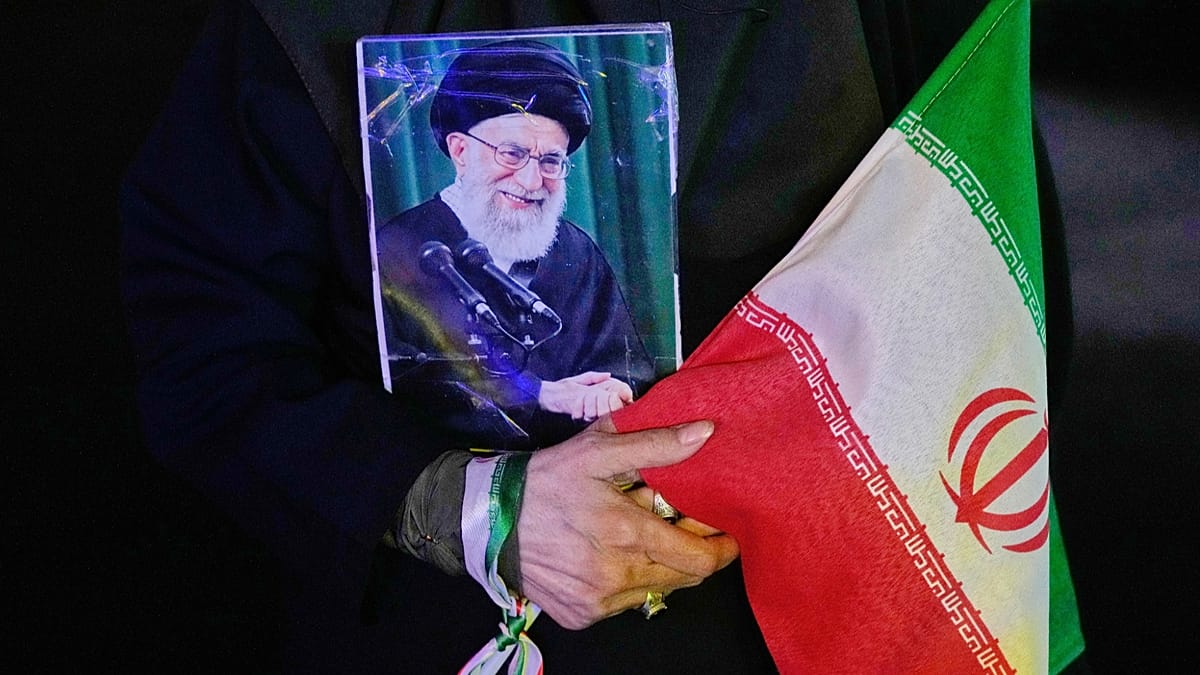
Iran is orchestrating one of the most significant state funerals in its history to honor the late Ayatollah Ali Khamenei. Scheduled across five cities in Iran and Iraq, the ceremony will unfold over six days, commencing this Saturday. This occasion comes nearly four months after Khamenei’s death, which coincided with the initiation of US-Israeli military actions on February 28.
Historical Background of Ayatollah Ali Khamenei
Khamenei occupied the position of the Islamic Republic’s supreme leader for 37 years, making him the second-longest-serving individual in this role since the Islamic Republic was established following the 1979 revolution. Born in Mashhad in 1939, Khamenei initially served as Iran’s president from 1981 to 1989. His ascent to the position of supreme leader came after the passing of Ayatollah Ruhollah Khomeini, appointed by the Assembly of Experts, a body of elected Islamic scholars responsible for selecting future supreme leaders. A significant delay in the funeral arrangements was triggered by the ongoing conflict, followed by a ceasefire and subsequent negotiations between conflicting parties.
Currently, the situation has shifted, allowing both Iran and the US to pause military engagements, creating a proper environment for the funeral. Tehran is eager to ensure that the proceedings occur smoothly, especially in front of an international audience.
Details of the Funeral Schedule and Venue
The funeral activities will kick off in Tehran, held at the Mosalla prayer complex, the central venue for large state religious events, over the weekend. This complex has a rich history of hosting significant gatherings, marking it as a pivotal location for mourning ceremonies. The principal procession is slated for Monday, covering a distance of 10 kilometers from Imam Hossein Square to Azadi Square, a location imbued with historical significance from the 1979 revolution to various mass protests.
Estimates suggest a staggering attendance of about 20 million people, which would mark an unprecedented gathering in Tehran’s history. Following the initial events in Tehran, the procession will proceed to Qom, a center for Shiite Islamic education, on July 7. The route will stretch between the revered shrine of Fatima Masoumeh and the Jamkaran Mosque, notable pilgrimage sites in Shia Islam.
The body will then be transported to Iraq, where ceremonies are planned in Najaf and Karbala, regarded as the most sacred cities in Shiite belief. The final burial will occur in Mashhad on July 9, with predictions of attendance between eight to ten million individuals.
Logistical Preparations and Security Measures
The Basij paramilitary force is overseeing the logistical arrangements, including converting Tehran’s highways into temporary parking lots and repurposing various public buildings for accommodations. Each of Tehran’s districts will support mourners from different provinces, while flight cancellations and tight city access controls are anticipated. The Iranian Revolutionary Guard Corps (IRGC) will handle security measures to ensure safety during the high-profile event.
The presence of Mojtaba Khamenei, the newly appointed ayatollah and son of the deceased leader, remains uncertain. Although some reports indicate he may have sustained injuries during the strikes that claimed his father’s life, the Iranian government has yet to confirm this.
Comparative Significance of Past Funerals
This upcoming funeral invites comparison with previous notable state mourning events, such as the chaotic funeral of Ayatollah Khomeini in 1989, during which the crowd nearly overwhelmed the procession. In 2020, the funeral for Qassem Soleimani drew mass participation and ended in a tragic crowd crush that resulted in several fatalities. Similarly, the recent funeral for President Ebrahim Raisi attracted significant attendance across multiple cities.
As the state prepares for this significant funeral, negotiations between Iran and the US are ongoing, focused largely on Iran’s nuclear ambitions. The historical context of these discussions adds weight to the proceedings. Both nations continue to navigate complex negotiations, which may play a role in shaping the future of these critical international relations.