
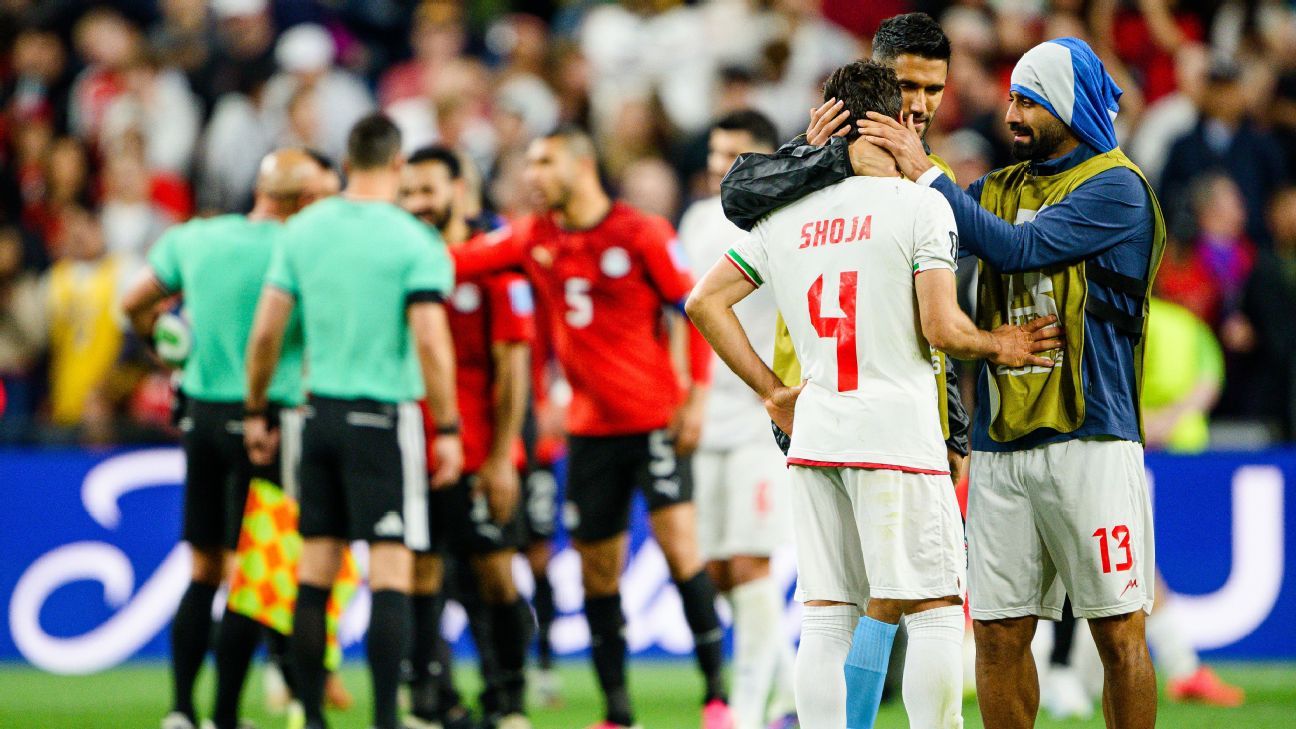
A prominent U.S. government figure has expressed relief over Iran’s exit from the World Cup. This sentiment underscores the complex relationship between sports, politics, and international relations in the current geopolitical landscape.
Iran’s Journey in the World Cup
Iran’s participation in the World Cup had been in doubt leading up to the tournament, especially after airstrikes occurred in February, instigated by the U.S. and Israel. Nevertheless, the team made its way to the tournament, managing to secure a notable achievement by drawing all three of their group-stage matches. This included a narrow miss against Egypt, where a marginal offside decision thwarted their opportunity for a win. The Iranian football team demonstrated resilience; however, their lack of progression to the knockout stage, primarily due to goal difference, left them behind in the competition.
Complaints from the Iranian Team
The Iranian football federation voiced concerns about the treatment they received from U.S. authorities during the tournament. Coach Amir Ghalenoei noted his squad felt like the “most oppressed” team at the World Cup, highlighting the pressures they faced while representing their country. One significant complaint was the stipulation that the team had to leave the venue immediately following their matches. This arrangement was perceived as an added burden on an already mentally strained group dealing with external political tensions.
U.S. Government’s Response
Markwayne Mullin, the Secretary of the U.S. Department of Homeland Security, shared his thoughts during a World Cup security briefing. He proclaimed his contentment with Iran’s early exit, even humorously revealing that he celebrated the decision to revoke their visas. Mullin stated, “I’m just glad they’re done, and they’re not coming back,” further indicating how the situation affected governing authorities. He emphasized that transitioning the team’s training base to Tijuana, Mexico, from Tucson, Arizona, was a well-coordinated move, aiming to streamline operations for the players during the games, even if it added to the complications off the pitch.
Concerns Over Team Affiliations
An additional element came to light regarding Iran’s delegation, with Mullin claiming that nearly half of the non-playing staff had connections to the Islamic Revolutionary Guard Corps (IRGC). This raised alarms in security discussions, as concerns about the potential political ramifications of such affiliations were taken into serious consideration. Mullin clarified that the decision for Iran to leave the venues promptly after their games was a pre-agreed arrangement that aligned with FIFA’s guidelines, aiming to reduce any unnecessary tensions.
The complexities rooted in the intersection of sporting events, national politics, and international security issues can drive discussions that go beyond the games themselves. As international tensions fluctuate, these multifaceted concerns will likely continue to shape how organizations handle teams from politically sensitive nations in future tournaments. Stakeholders, including FIFA and the Iranian football federation, have been urged to respond to the ongoing implications these relationships engender, ensuring that the spirit of competition is not undermined by external factors.