
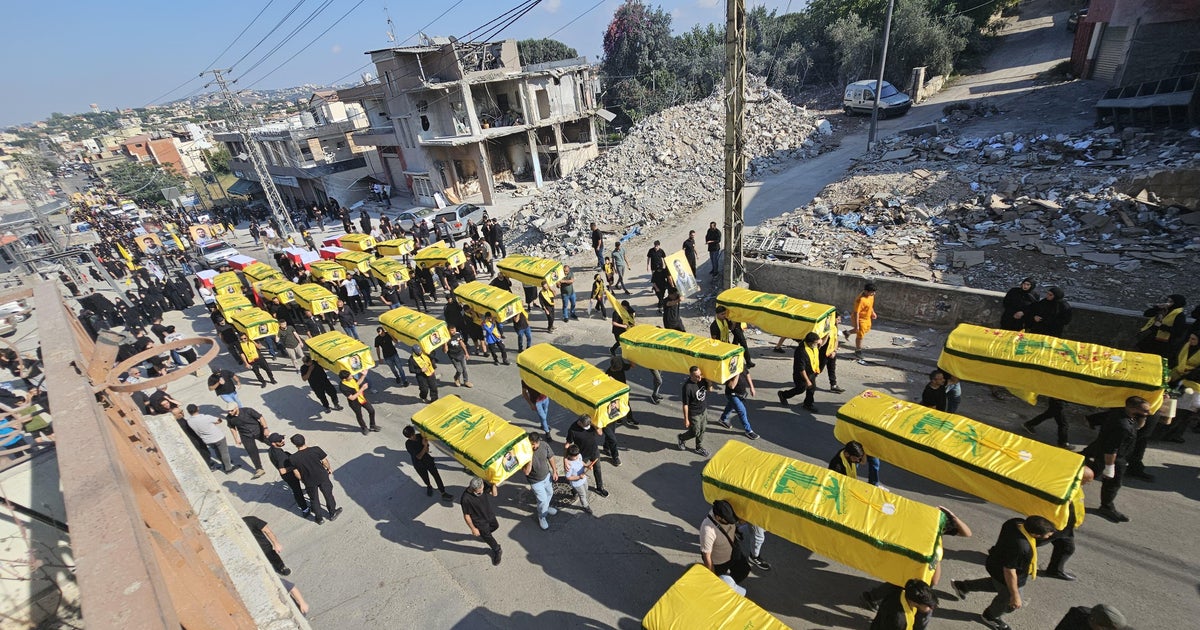
In a recent development, an agreement signed between the Israeli and Lebanese governments poses significant implications for the region’s stability. This pact, linking the withdrawal of Israeli forces from southern Lebanon to the disarmament of Hezbollah, raises concerns about the potential for a prolonged Israeli military presence in Lebanon, complicating ongoing diplomatic efforts between the U.S. and Iran.
Hezbollah’s Stance and Lebanon’s Challenges
Despite the new agreement, Hezbollah has stated its intention to retain its arms, and the Lebanese government appears powerless to enforce disarmament. A senior political figure in Lebanon, who wished to remain anonymous, critiqued the deal as more of an imposed arrangement rather than a mutual agreement. The lawmaker expressed skepticism, asserting that the Lebanese military lacks the capability to compel Hezbollah to disband its operations.
Michael Young, a Beirut-based analyst, commented on the ramifications of this agreement, indicating that it heavily burdens Lebanon. He noted that the structure created by this deal effectively allows Israeli forces to maintain a continued presence in the south of Lebanon, potentially indefinitely. This creates a precarious situation for Lebanon, which is already grappling with numerous internal challenges.
The Implications for Peace and Stability
Fawaz Gerges, a scholar from the London School of Economics, characterized the agreement as essentially ineffective. He referred to it as a “gift” to Israeli authorities, providing them with a rationale to solidify and potentially expand their “security zone” in southern Lebanon. Such a move could instigate heightened tensions in an already volatile region.
Analysts, including Young, have suggested that the agreement could lead to civil unrest or even an uprising within the Shiite community, further complicating the already intricate landscape of Lebanese politics. Danny Citrinowicz, a regional expert and former Israeli military intelligence officer, emphasized that the disbandment of Hezbollah is improbable, asserting that the deal inadvertently legitimizes a long-term Israeli military engagement in Lebanon.
The Road Ahead for U.S.-Iran Relations
The ongoing presence of Israeli forces is expected to remain a sticking point in broader negotiations between the U.S. and Iran. Both Iran and Hezbollah have made it clear that a full withdrawal of Israeli forces must be part of any comprehensive peace agreement. Yet, with the dynamics as they currently stand—where Israel is unlikely to retreat, and Hezbollah continues to maintain its arsenal—collaborative discussions seem increasingly challenging.
As this situation unfolds, it increasingly appears that the current arrangements could lead to a stalemate rather than resolution. Both local and international observers must keep a keen eye on developments in Lebanon, as they could have significant repercussions not only for the nation itself but for regional stability and global diplomatic efforts focused on peace in the Middle East.