
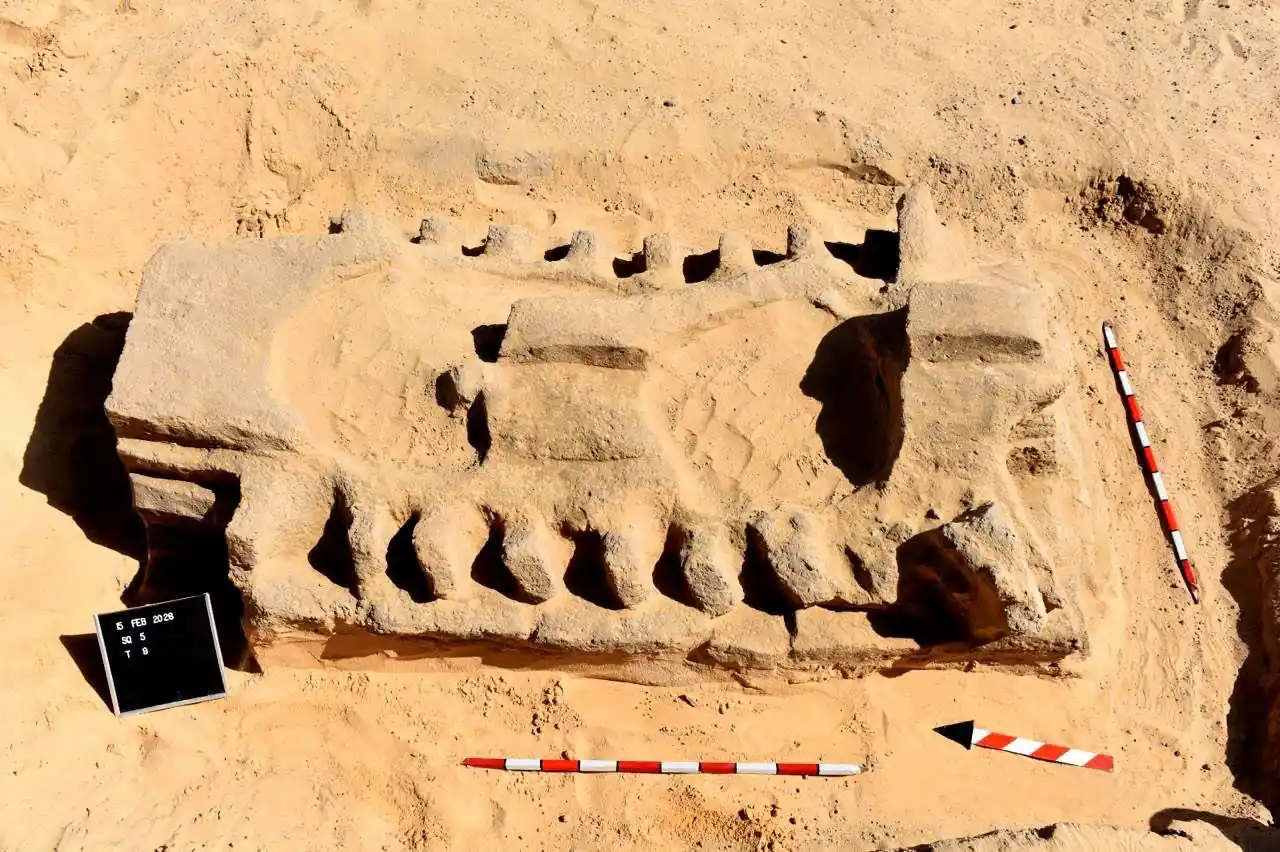
A significant archaeological discovery in Tell el-Ku’a, located in the Wadi Tumilat of Ismailia province, has revealed a fascinating array of tombs, residential spaces, and production facilities dating back to the Second Intermediate Period of ancient Egypt. This excavation, led by an Egyptian archaeological team, sheds light on the social and economic structures of the time, offering a glimpse into one of the most complex eras in pharaonic history.
Unveiling a Self-Sufficient Community
The recent findings highlight an intricate urban network, demonstrating a well-organized community that encompassed living areas, storage facilities, workshops, and burial sites. According to researchers, these discoveries illustrate the existence of a self-sufficient society that thrived in the eastern delta. Sherif Fathy, Egypt’s Minister of Tourism and Antiquities, emphasized the significance of these findings, which enhance the understanding of settlement patterns during this formative historical phase. He praised the collaborative efforts of both Egyptian and international archaeological teams in unlocking the mysteries of ancient Egypt.
The integrated nature of the settlement is particularly noteworthy, as it reveals a coexistence of various functional spaces, including domestic zones, production units, and funerary areas. This structure exemplifies the complex interactions among different aspects of life during the Second Intermediate Period. Hisham El-Leithy, Secretary General of the Supreme Council of Antiquities, pointed out the strategic importance of Tell el-Ku’a as a pivotal site linking the eastern delta with Egypt’s borders, further elucidating its role in historical trade and communication.
Insights into Cultural Transitions
The excavation also provides invaluable insights into the transition from the Second Intermediate Period to the Early New Kingdom and the societal changes accompanying this shift. Led by archaeologist Mostafa Hassan, the team documented several structures revealing the settlement’s continuity until the mid-18th Dynasty. This continuity reflects transformative societal dynamics, including trade networks that may have positioned the site as a significant distribution hub in ancient Egypt.
Among the discoveries are ten mudbrick tombs featuring varied sizes and orientations, including rectangular-shaped burials reminiscent of traditional mastabas. Remarkably, this excavation marks the first instance of human burials found outside these tombs, suggesting unique funerary practices that may require more analysis to fully comprehend their significance.
Discoveries of Everyday Life
The excavated residential area, covering an estimated thirty by sixty meters, is bordered by a robust mudbrick wall about one and a half meters thick. Inside, the layout includes architectural units throughout, indicating organized living conditions. Additionally, the site reveals kilns and storage silos, reflecting the community’s productivity and ability to store surplus goods effectively.
The findings further include a diverse array of artifacts, such as scarabs, bronze tools, decorated ceramic vessels, and alabaster cosmetic tubes. Preliminary studies indicate a variety of burial positions among individuals interred, ranging in age from twenty-five to forty years, alongside numerous animal remains tied to both daily sustenance and ritual offerings.
These artifacts not only illuminate the daily lives of the resident community but also provide insights into their dietary habits and domestic practices. The considerable presence of tableware and cooking containers suggests a rich cultural and culinary tradition.
The Significance of Tell el-Ku’a in Ancient Egyptian History
Tell el-Ku’a serves as a crucial archaeological site at the southern edge of the Wadi Tumilat, positioning it as a significant representation of the Second Intermediate Period in the eastern delta. Ongoing excavations continue to uncover numerous architectural elements and burial sites, expanding the understanding of the spatial and social dynamics during this enigmatic chapter of Egyptian history.
The newly documented structures and artifacts significantly enhance the archaeological narrative surrounding Tell el-Ku’a, further deepening our comprehension of societal organization and interaction during a time that remains partly shrouded in mystery. As excavations progress, they promise to shed light on the complexities of an ancient civilization that laid the groundwork for future dynastic developments in Egypt.