
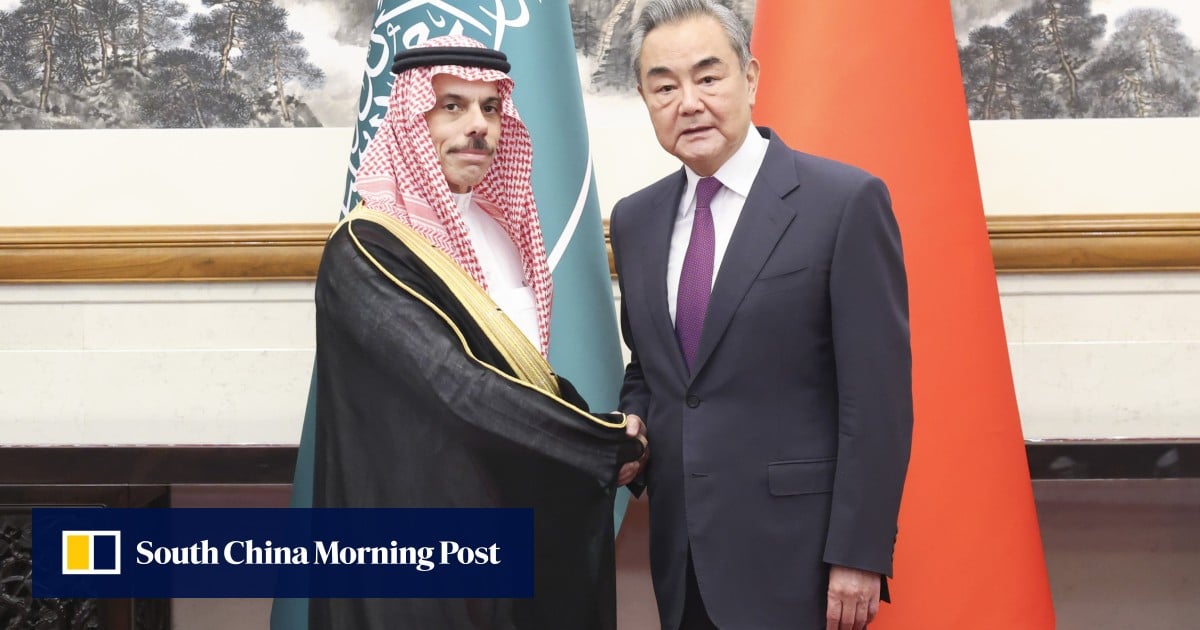
Chinese Foreign Minister Wang Yi recently held discussions with Saudi Arabia’s Prince Faisal bin Farhan al-Saud in Beijing. This meeting underscores China’s ongoing commitment to facilitating dialogue in the Middle East, especially amid ongoing tensions and the fragile state of a recent ceasefire. The emphasis was placed on the importance of negotiations as a means to resolve conflicts, highlighting a diplomatic approach to regional stability.
Dialogue Over Conflict
During the meeting, Wang Yi articulated the perspective that “talking is better than fighting, and dialogue is better than confrontation.” This statement reflects China’s strategic posture in international relations, particularly in a region marked by volatility. The Chinese Foreign Ministry’s release reflects an ongoing diplomatic effort aimed at promoting communication channels between conflicting parties in the Middle East.
Wang Yi also addressed the situational dynamics in the region, identifying the immediate priority as upholding the recent memorandum of understanding forged between the United States and Iran. This agreement, established on June 17, includes essential elements aimed at fostering peace, such as halting military operations and ensuring safe passage for commercial vessels. This framework seeks to stabilize relations and reduce hostilities, setting the stage for more comprehensive negotiations.
U.S.-Iran Relations: A Step Toward Stability
The 14-point memorandum between Washington and Tehran is a significant development, advocating for an immediate cessation of military engagements on all fronts. Iran, in return, is tasked with guaranteeing safe passage for commercial vessels for a period of 60 days, while the U.S. has agreed to release frozen Iranian assets. This bilateral agreement signifies a cautious but hopeful step towards a more peaceful coexistence, with the support of key players like China facilitating these critical discussions.
Wang’s comments emphasize Beijing’s role as a stabilizing force, signaling a readiness to collaborate with Saudi Arabia and other regional nations to mitigate tensions. This proactive stance aims to foster a landscape conducive to lasting peace and security, reflecting China’s growing interest in Middle Eastern diplomacy as part of its broader international strategy.
China’s Growing Influence in Middle Eastern Diplomacy
The meeting between Wang Yi and Prince Faisal bin Farhan al-Saud is part of a broader pattern of increasing diplomatic engagements between China and various Middle Eastern countries. This strategy not only aligns with China’s economic interests, particularly the Belt and Road Initiative, but also positions it as a pivotal player in Middle Eastern affairs. The emphasis on dialogue represents a method through which China can enhance its diplomatic influence while fostering stability in a region characterized by complex geopolitical tensions.
Ultimately, the discussions reinforce the notion that sustained dialogue is crucial for achieving peace in the Middle East. With the support of global powers like China, regional nations are reminded of the importance of engaging in conversations that can lead to effective conflict resolution. As tensions persist, the focus on negotiation and cooperation offers a glimmer of hope for achieving long-term peace and stability in the region.