
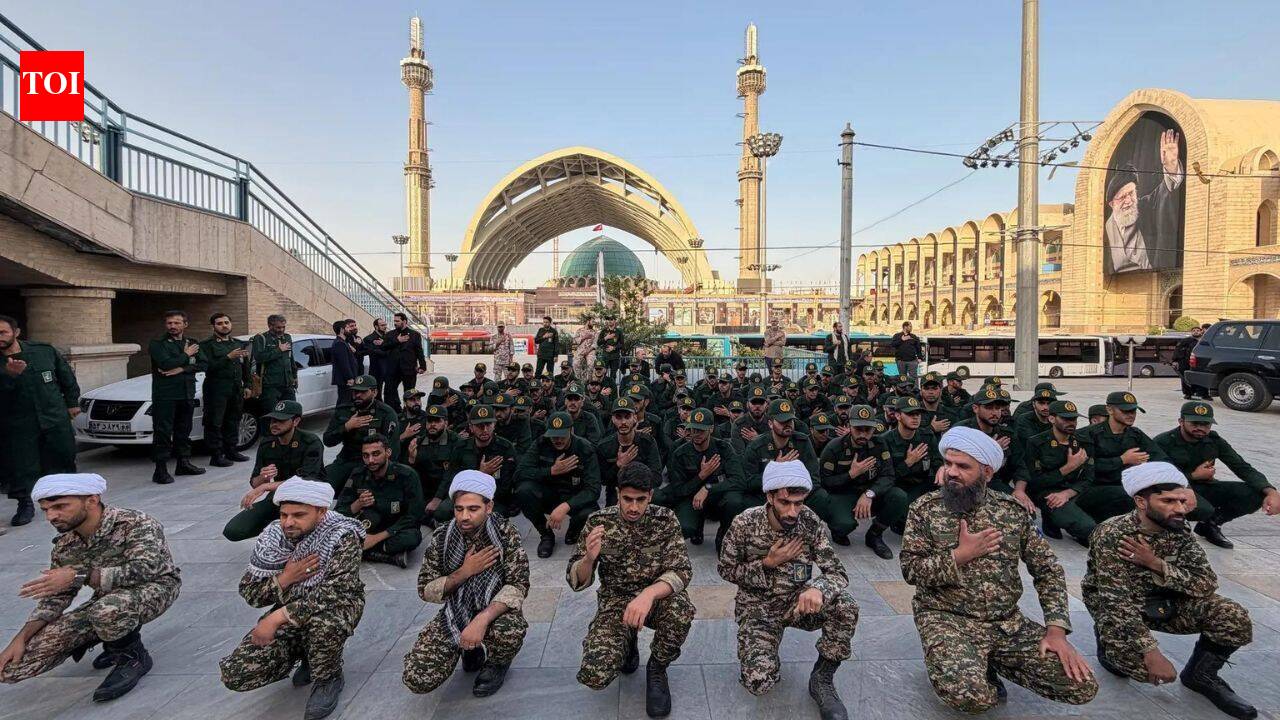
The recent statements by the commander of the Islamic Revolutionary Guard Corps (IRGC) Navy have stirred significant attention, particularly in the context of ongoing tensions between Iran, the United States, and Israel. During the funeral of Supreme Leader Ali Khamenei, Rear Admiral Ali Ozmaei warned of imminent “divine retribution” aimed at the U.S. and Israel, suggesting that these nations should brace for consequences.
Significant Statements from IRGC Leadership
In a message delivered on Saturday, Admiral Ozmaei emphasized the commitment of the IRGC Navy to uphold the principles of past leaders and martyrs. He expressed unwavering faith in the eventual punishment of what he termed the “terrorist America” and the “illegitimate Zionist regime.” His remarks are not only a reflection of the current geopolitical climate but also serve as a rallying cry for national unity among Iranians who share his views. The notion of divine retribution resonates deeply in Iranian society, fueled by a history of confrontation with Western powers.
Ozmaei paid homage to Khamenei, referring to him as a “steadfast voice of truth.” He acknowledged Khamenei’s legacy and assured that his ideals would continue to inspire the nation. This narrative emphasizes the IRGC’s role as protectors of Islamic values and underscores their commitment to resist perceived injustices from external forces. By framing the funeral as a revival of commitment to Khamenei’s ideals, Ozmaei encourages a collective identity among the Iranian populace.
Contemplating the Aftermath of Khamenei’s Death
The implications of Khamenei’s death extend beyond national grief; they provoke a re-examination of Iran’s strategic posture in the region. Admiral Ozmaei’s assertions about retaliation suggest an intensification of Iran’s adversarial stance, particularly against Israel and its allies. This is especially poignant given the ongoing geopolitical frictions, military skirmishes, and diplomatic standoffs that characterize Iran’s relationships with these nations.
Furthermore, Ozmaei’s statements imply a message of resilience within the Iranian military establishment. The IRGC’s resolve to continue what they describe as the fight for justice can potentially escalate tensions even further. Critics of Iran may interpret these declarations as a justification for ongoing militarization and hostility, reinforcing their stance that Iran is a destabilizing force in the Middle East.
An Expanding Role for the IRGC in Iranian Politics
Admiral Ozmaei takes up leadership at a critical juncture for the IRGC, following the death of Alireza Tangsiri in an Israeli airstrike. The changing of the guard within such a pivotal military faction echoes broader shifts in Iran’s political landscape. With tensions at a high, the IRGC’s influence on future military and political decisions could shape the regional dynamics significantly.
The upcoming burial of Khamenei in Mashhad, anticipated to draw vast crowds, adds another layer of complexity to these developments. Authorities have braced for a substantial turnout, perhaps reflecting both reverence for Khamenei and the underlying currents of unrest and anticipation for retribution against perceived transgressions.
In conclusion, Rear Admiral Ali Ozmaei’s statements mark a defiant moment in Iran’s ongoing struggle against external influences. By invoking notions of divine retribution and unwavering commitment to a legacy, the IRGC signals its readiness for confrontation, with implications that may extend far beyond Iran’s borders.