
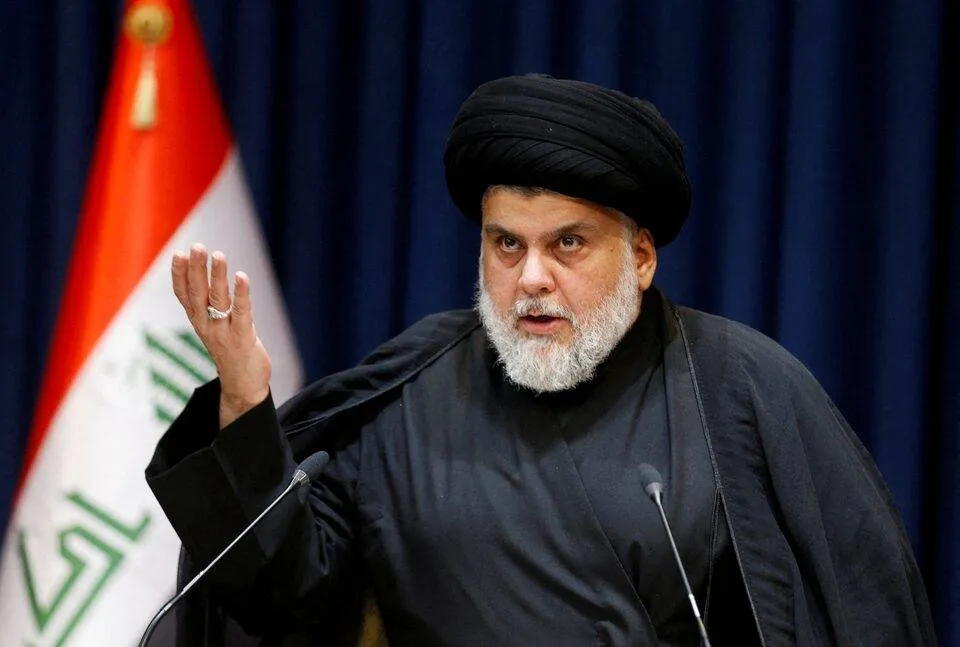
The recent public endorsement by Moqtada al-Sadr, the influential leader of the Sadrist Movement, of Prime Minister Ali al-Zaidi’s anti-corruption initiative signals a critical shift in Iraq’s political dynamics. This move potentially sets the stage for a direct clash with the ruling Coordination Framework, marking a departure from the previously restrained rivalry between these factions.
A Shift in Political Alliances
The initial response to al-Sadr’s endorsement came from former Prime Minister Nouri al-Maliki, head of the State of Law Coalition. He defended the ruling Coordination Framework, describing it as a successful political project. His statements appear to be an attempt to mitigate the escalating pressure facing his coalition, which has deep ties to Iran. This shift occurs amid signs of internal fractures within the Framework, which has struggled with its identity since the 2021 elections. The Framework was established as a counterweight to the Shiite alliances that have dominated Iraqi politics since 2005.
After the 2021 elections, al-Sadr aimed to establish a national majority government in collaboration with the Kurdistan Democratic Party and a Sunni coalition led by former Parliament Speaker Mohammed al-Halbousi. However, these efforts imploded due to the “blocking third” issue, resulting in a prolonged political paralysis. In 2022, al-Sadr escalated his withdrawal from politics by removing his lawmakers from parliament and denouncing participation in what he termed a “corrupt” system. Despite lingering calls from political rivals to re-enter the political arena, he has thus far refused.
The Impact of Al-Zaidi’s Anti-Corruption Efforts
Prime Minister al-Zaidi’s recent anti-corruption campaign, epitomized by the arrest of 21 political figures in a sweep dubbed “Dawn Strike,” has altered the political landscape. This campaign not only targeted entrenched corruption but also raised scrutiny regarding the financing of recent elections. Al-Sadr’s renewed position aligns perfectly with his earlier call for integrity in governance—refusing to engage in a political system he views as irredeemably corrupt.
Interestingly, al-Zaidi’s ascent to power came after the Coordination Framework failed to self-nominate a suitable candidate. Amidst internal conflicts and failing prospects for its leaders, al-Zaidi emerged as a figure seemingly acceptable to both domestic factions and international stakeholders, including the United States. His stance on disarming armed factions, which has historically posed challenges for Iraqi governance, demonstrates a commitment to resolving critical security issues that previous governments struggled with.
Popular Support and Future Implications
Al-Sadr’s tacit support for the anti-corruption initiative has galvanized popular mobilization, marking the most significant collective political alignment against the ruling establishment since 2003. Those movements have expanded to include numerous prominent figures, emphasizing a shared goal of rooting out corruption and establishing state authority over armed groups. While al-Zaidi’s reforms echo U.S. priorities, any notion of a formal alliance remains elusive.
The pressure on the Coordination Framework intensifies as it faces criticism from both al-Sadr and pro-Zaydi factions. In a public defense, al-Maliki reaffirmed the Structure of the Coordination Framework as foundational for political stability and governance in Iraq. He argued against the need for a complete overhaul of the Framework, suggesting reforms should merely improve operational efficacy without compromising its core principles.
As this political narrative unfolds, the future remains uncertain. The genuine fractures within the Coordination Framework, combined with al-Sadr’s newfound engagement in Iraqi politics, suggest an impending reshuffling that could redefine the political landscape in the coming months. Both domestic and international eyes will remain focused on how these evolving dynamics play out on the ground, particularly given the overarching issues of governance, corruption, and armed faction control that have long plagued Iraq.