
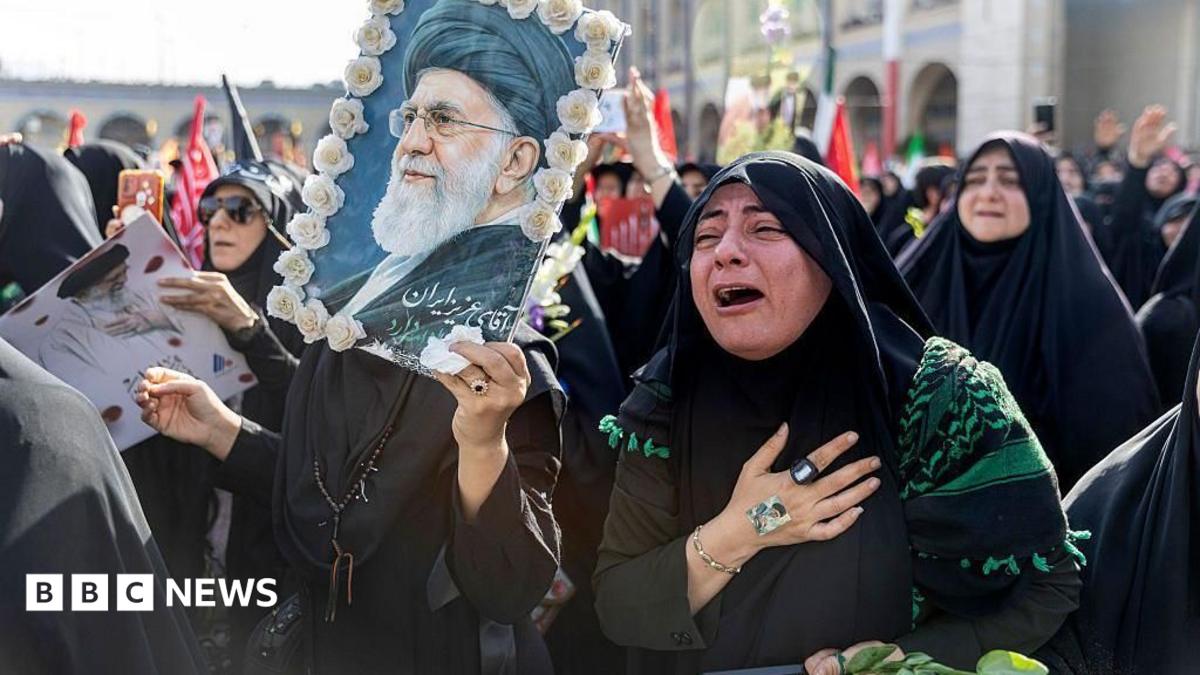
The funeral procession for Iran’s former Supreme Leader, Ayatollah Ali Khamenei, has commenced in Tehran. This significant event marks the beginning of a week-long mourning period for the leader who governed Iran for over 35 years before his death earlier this year.
Khamenei’s Legacy and the Circumstances of His Passing
The mournful journey through the capital is not just a farewell but a reflection on Khamenei’s lengthy rule, which spanned more than three decades. He significantly influenced Iran’s political, economic, and social landscape, and his passing has created ripples of uncertainty throughout the nation. Khamenei was killed in a US-Israeli air strike in February, a violent end that has heightened tensions within the region and amongst his followers. His leadership was characterized by staunch opposition to Western influence, particularly from the US and Israel, marking a critical juncture in Iran’s foreign policy.
A Week of Mourning and Anticipated Attendance
His funeral began on a solemn Friday and is scheduled to last for seven days, with events planned in key locations across both Iran and Iraq. The Iranian government has projected that attendance could reach between 12 to 20 million individuals. Such enormous participation underscores the profound impact Khamenei had on his nation and the devotion many continue to hold for him posthumously. The multi-day ceremonies are a testament to both his legacy and the persona cultivated during his leadership.
Notable Figures and Speculation Surrounding the Successor
While the funeral proceedings unfold, the absence of Khamenei’s son, Mojtaba Khamenei, has sparked widespread speculation. Despite being the designated successor, Mojtaba has yet to make an appearance, leading to numerous rumors regarding his health and safety, especially given that he was allegedly injured in the same air strikes that took his father’s life. His absence raises questions about the future leadership of Iran and the ongoing stability of the regime during this transitional period. Multiple senior officials from the regime have attended the ceremony, underscoring the event’s political significance.
Implications for Iran’s Future
The circumstances surrounding Khamenei’s death and the subsequent funeral process have opened discussions on Iran’s trajectory moving forward. With the potential for a power vacuum, many are closely watching how the regime will navigate this turbulent period. As they reflect on Khamenei’s enduring legacy, citizens ponder the direction in which the nation might head under new leadership. The atmosphere during the mourning process embodies both sorrow for a lost leader and apprehension about what lies ahead.
In summary, as the funeral procession for Ayatollah Ali Khamenei passes through Tehran, it represents more than just a tribute to a key historical figure. It signals a potential turning point for Iran, rife with uncertainty regarding its leadership and future. The ongoing developments during this week-long ceremony will undoubtedly shape the discussion around Iran’s national identity and governance in the coming years.