
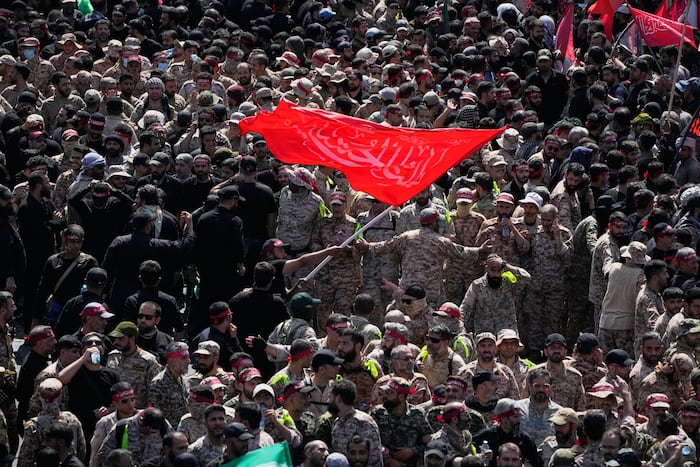
Mourners in Iran have gathered en masse in Tehran to honor the late Supreme Leader Ayatollah Ali Khamenei, following his recent death. The somber event has transformed into a fervent display of anti-American sentiment, particularly directed toward former U.S. President Donald Trump.
Massive Turnout and Procession
The procession for Khamenei’s flag-draped coffin saw thousands clad in black, a collective expression of mourning that also served as a demonstration of strength by Iran’s government. A truck carrying Khamenei’s coffin, along with that of his family members who died in a U.S. airstrike, traversed the streets of Tehran. The vehicle was ornately adorned, resembling the grating of a holy shrine, capturing the mood of reverence mixed with a desire for revenge as the nation confronts the ongoing ramifications of the conflict initiated by the United States and Israel.
Dramatic aerial footage broadcast by state media revealed a crowd so expansive that it stretched for kilometers from Azadi Square down a major thoroughfare. This gathering was noteworthy, even surpassing the turnout for the 2020 funeral of General Qassem Soleimani, which was attended by over a million people. As the procession moved slowly, many mourners displayed placards and signs that openly called for Trump’s death, reflecting deep-seated animosity toward U.S. leadership.
Mourners Call for Revenge
Emotional expressions of loss turned into calls for vengeance as mourners articulated their feelings. “Today that we are here for the funeral of our leader, it’s a very tough day,” said Fatima Hassan, emphasizing the resolve among the attendees. “We are not here to say goodbye; we are here for revenge.” Such sentiments echoed throughout the event, with many individuals, including Sahar Zaraatgar, declaring their commitment to continuing Khamenei’s legacy and avenging his death.
The procession was more than a farewell; it morphed into a platform for political and ideological statements. Throughout the route, effigies and signs depicted Trump and Israeli Prime Minister Benjamin Netanyahu, reinforcing the government’s narrative that both leaders are enemies of Iran. U.S. authorities have been monitoring Iranian threats against Trump, especially since his administration’s decision to eliminate Soleimani, a move that heightened tensions.
Impact on U.S.-Iran Relations
As authorities attempt to maintain order amid the overwhelming turnout, concerns linger about the implications of this funeral for ongoing negotiations between Iran and the United States. Iranians are calling for control over vital oil shipping routes and pressing issues regarding Iran’s nuclear ambitions. The U.S. has found it challenging to navigate these discussions amidst rising rhetoric and the celebration of martyrdom during Khamenei’s funeral.
Negotiations aimed at restoring stability and finding common ground have been temporarily suspended, with officials indicating that talks on critical topics, such as the Strait of Hormuz and Iran’s nuclear program, may have to wait until after the burial. The current atmosphere of mourning has become a catalyst for rallying nationalistic sentiments against perceived external threats.
The Future of Leadership
As the nation processes the loss of its supreme leader, the fate of Iran’s political structure remains uncertain. The newly appointed supreme leader, Ayatollah Mojtaba Khamenei, has yet to make a public appearance, reportedly hiding due to injuries sustained during the air raid that killed his father. Amid ongoing crises, including military threats from Israel, the new leadership faces a formidable challenge in asserting control.
In conclusion, Khamenei’s funeral serves as a poignant reminder of the complex interplay between grief, national identity, and geopolitical tension. As Iran grapples with its future and the legacy of its leader, the nation remains poised between mourning and the pursuit of vengeance. The ongoing anti-American rhetoric signals continued volatility in U.S.-Iran relations as both countries navigate this turbulent period.