
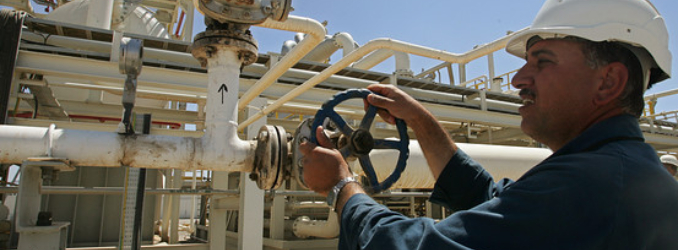
Iraq’s oil sector is currently seeing significant developments, as the country has ramped up production at three major oilfields to their full capacity. This move comes amid ongoing efforts to enhance exports after a period of fluctuating output levels.
Boost in Production Capacity
According to industry sources familiar with the situation, Iraq’s state-owned Basra Oil Company has ordered an increase in output at the West Qurna 1, North Rumaila, and Artawi oilfields. Tankers have begun to arrive for exporting these enhanced cargoes, marking a pivotal moment for Iraq’s oil operations. This directive follows a July 3 notice sent to field operators, emphasizing the government’s urgency in maximizing production from these key sites. While Iraq’s oil ministry and Basra Oil have yet to release official comments, the move signals a clear attempt to stabilize the nation’s oil supply.
Recent Fluctuations in Output
The increase in production capacity contrasts sharply with the previous month’s fluctuations. Iraq had instructed some oilfields to reduce output as challenges with the reopening of the Strait of Hormuz hampered tanker loadings, resulting in full storage tanks. This action followed an interim peace agreement between the U.S. and Iran, which had temporarily spurred optimism about an increase in supply. However, this unstable mix of directives suggests Iraq is grappling with the complexities of balancing production levels with market demand.
Challenges Compared to Gulf Neighbors
Despite these efforts, Iraq continues to lag behind some of its Gulf neighbors, such as the United Arab Emirates and Saudi Arabia, in returning production levels to prewar status. The UAE has already achieved its preconflict export levels, and Saudi Arabia is close behind. Iraq’s challenges in production maintenance and export readiness highlight the ongoing hurdles it faces in an increasingly competitive market.
Signs of Recovery in Oil Exports
There are, however, signs that the constraints affecting Iraq’s oil sector are beginning to ease. Recent shipping data indicates that oil tankers carrying Iraqi crude are now navigating out of the Persian Gulf. Reports from traders have revealed that TotalEnergies SE, a French oil major, is promoting millions of barrels of Iraqi crude intended for immediate delivery to Asia. This surge in activity aims to expedite the resumption of exports and reinforce Iraq’s presence in global oil markets.
The southern region of Iraq experienced output reductions, falling to approximately 1.1 million barrels per day (MMbpd) at the end of June, significantly below Basra Oil’s capacity. Yet, by mid-July, production had increased to around 1.5 MMbpd, illustrating the fluctuating nature of Iraq’s oil output. Basim Abdul Kareem, the director general of Basra Oil, acknowledged these variances, suggesting that operational stability is critical for the country moving forward.
In conclusion, while Iraq seeks to enhance its oil production capabilities and reclaim its position in the global market, ongoing challenges must be addressed. The recent orders to boost output represent a commitment to improving oil exports, but Iraq’s ability to maintain consistent production levels will be essential for long-term success in the competitive oil landscape.