
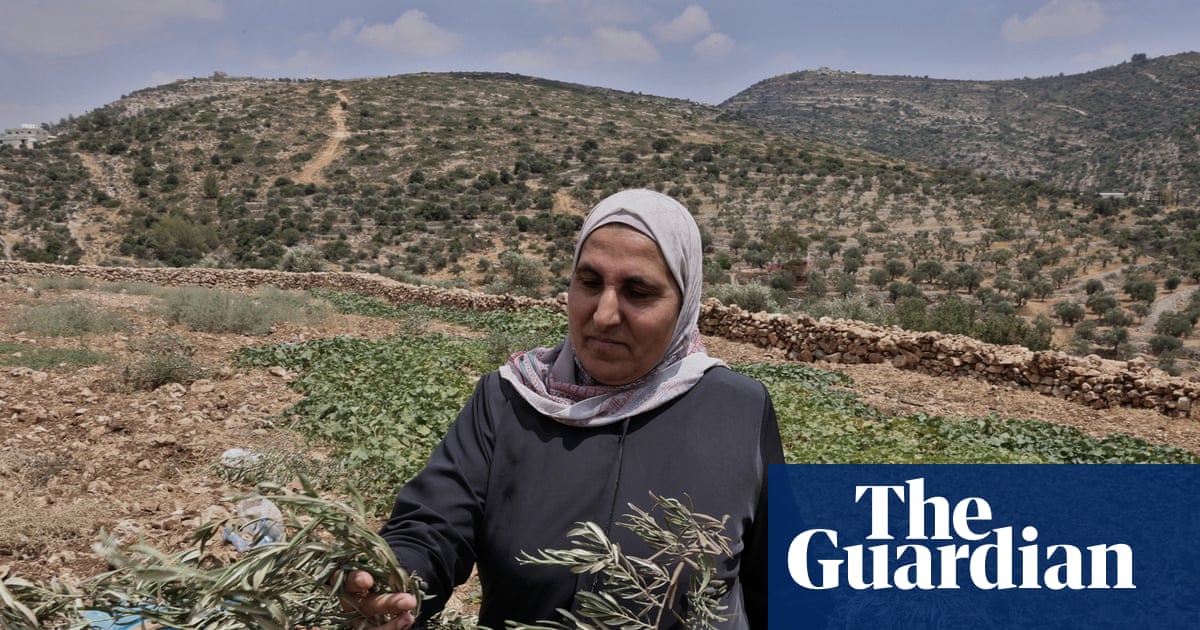
The escalating violence in the West Bank, particularly in villages like Ein Arik, highlights a troubling crisis faced by local Palestinians. This aggression is not limited to physical attacks but extends to the very foundations of life—farmlands, water sources, and agricultural roots.
Devastation in Ein Arik
Ilham Karajeh awoke one Friday morning to find her family’s small farm ravaged. The once vibrant grapevines had been severed, and irrigation systems were destroyed. Most heartbreaking were the 70 olive trees—symbols of the family’s hopes for the future—uprooted and abandoned. As she and her husband, Mohammed, gathered the fractured branches, Ilham lamented the reckless destruction, her distress accentuated by the fresh sap glistening on the broken limbs. This attack, occurring in the dead of night, left no doubt as to the instigators; growing settler outposts in the region have increasingly served as catalysts for such acts of violence.
The Impact of Settler Outposts
The outpost, known as Maoz Tzur, which emerged last year, has systematically encroached upon Palestinian territories. Initially targeting the local Bedouin shepherd community, the settlers gradually turned their focus towards the villagers of Ein Arik. For well over a year, residents have been barred from accessing their olive and citrus groves and must fear for their safety whenever venturing towards the neighboring hills. Attacks, often involving clubs and stones, have become the frightening norm for those attempting to reclaim their ancestral lands.
This attack on the Karajeh family signifies a disturbing trend of intimidation directed at Ein Arik and its surroundings—a trend propelled by the turbulent dynamics of Israeli politics. As elections loom on the horizon, the far-right coalition, led by figures like Benjamin Netanyahu, aims to consolidate control by asserting dominance over Palestinian communities, advancing a campaign of settler violence.
The Ongoing Struggle and International Response
The pace of land appropriation in the West Bank has alarmingly intensified. According to reports from advocacy organizations such as Kerem Navot and Peace Now, settlements now encompass over one million dunams, approximately 18% of the entire West Bank, with significant land grabs occurring in just the last year. The Israeli government’s approach has radicalized under recent leadership, blurring the lines between violence and policy as structural changes promote not only settlement growth but also systematic violence against Palestinians.
Local leaders and villagers increasingly feel hopeless, noting that attempts to seek legal recourse are futile. Ahmad Abu Mayala revealed that when the local community approached lawyers about their grievances, they were often met with discouraging responses, asserting that change would not come until after the elections. The prevailing sense of despair is further heightened by the realization that even if new political leadership emerges, the entrenched power of extremist elements threatens to quash any efforts for reform.
Community Resilience Amidst Oppression
Despite these challenges, leaders like Mohannad Othman, the local mayor, are actively seeking support. Othman has proposed inviting international representatives to accompany village residents for the olive harvest, aiming to bolster their safety against potential attacks. Meanwhile, international reactions have included sanctions against entities supporting settler violence, although the impact remains uncertain amid strong political backing for the Israeli government.
As the situation deteriorates, the prospects for peaceful resolution seem bleak. Dror Etkes, an advocate for monitoring West Bank developments, warns that unless external pressure is applied, any new Israeli leadership may struggle to curtail the ongoing violence perpetrated by settlers. The systemic violence against Palestinians continues to face minimal opposition, and without significant change in policy or public sentiment, the cycle of oppression may persist unchecked.