
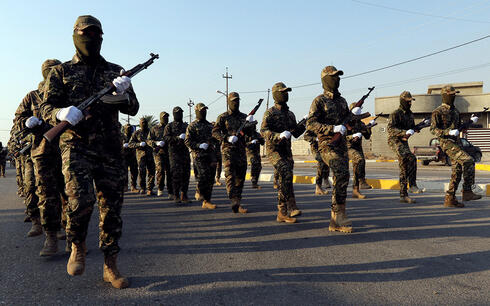
Iraq’s government has issued a deadline for paramilitary groups aligned with Iran to hand over their arms by September 30. This ultimatum is tied to the anticipated withdrawal of the U.S.-led coalition forces from Iraq, as stated by government officials. The deadline reflects the government’s commitment to re-establish state authority over armed factions that operate independently.
End of Armed Groups Outside State Control
The policy aims to dismantle armed organizations functioning beyond the purview of the Iraqi government. Despite this official stance, several powerful Iran-backed militias, including notorious groups like Kataib Hezbollah and Kataib Sayyid al-Shuhada, have openly rejected this demand. Government spokesperson Haider al-Aboudi confirmed that all armed factions had been formally informed about the impending deadline. He emphasized that the end of the coalition presence would coincide with governmental efforts to reclaim control over these militias.
The Prime Minister, Ali al-Zaidi, who assumed office in late May, has been vocal about enforcing this policy. He stated, “The state’s monopoly on weapons is not merely a slogan. We have already initiated its implementation.” He indicated that any arms remaining outside of government control post-deadline would be subjected to Iraqi law, showcasing a strong commitment to re-establishing order within the nation.
Implications of the U.S. Withdrawal
Al-Zaidi is set to visit Washington later this month, marking his first foreign engagement since taking office. The U.S. has long pressed Iraq to dissolve or disarm Iranian-aligned militias operating autonomously. While some groups have shown willingness to comply with the government’s directive—like Asaib Ahl al-Haq and Kataib Imam Ali—others remain staunchly opposed, affirming their intention to maintain their armed status.
This shift in the dynamics among the militias reflects broader changes in Iraq’s political landscape. Asaib Ahl al-Haq, for example, recently formed a committee to oversee its separation from the Popular Mobilization Forces (PMF), realigning itself with the government. Iraqi Parliament Speaker Mohamed al-Halbousi welcomed this decision, asserting that a robust state must strengthen its institutions to control military and security decisions exclusively.
Regional Concerns Amid Transition
Nevertheless, many Iran-backed factions remain defiant. Militia leaders, such as those from Kataib Hezbollah, have vowed not to surrender any arms. Similarly, members of Harakat al-Nujaba regard their weapons as vital ideological tools and are demanding guarantees relating to Iraq’s sovereign status before considering disarmament. This resistance indicates a potential conflict between government initiatives and the ideological commitments of these factions, as U.S. pressure continues to loom over Iraq’s political scene.
Iran has also been closely monitoring these developments. Iranian Foreign Minister Abbas Araghchi’s visit to Iraq, shortly before significant ceremonies for the late Iranian Supreme Leader Ali Khamenei, underscores Tehran’s anxiety about the shifting allegiances within Iraq. Analysts suggest that the Iranian regime is nervous about the potential U.S. influence re-emerging in Iraq post-withdrawal. They are particularly concerned that Iraqi state institutions—backed by U.S. support—could undermine Iran’s influence in the region.
In summary, Iraq’s government is navigating a complex landscape as it aims to enforce its authority over armed groups. While some militias are complying with governmental directives, significant resistance remains. The situation intensifies with the anticipated U.S. withdrawal, shifting power dynamics not only domestically but also in the broader regional context.