
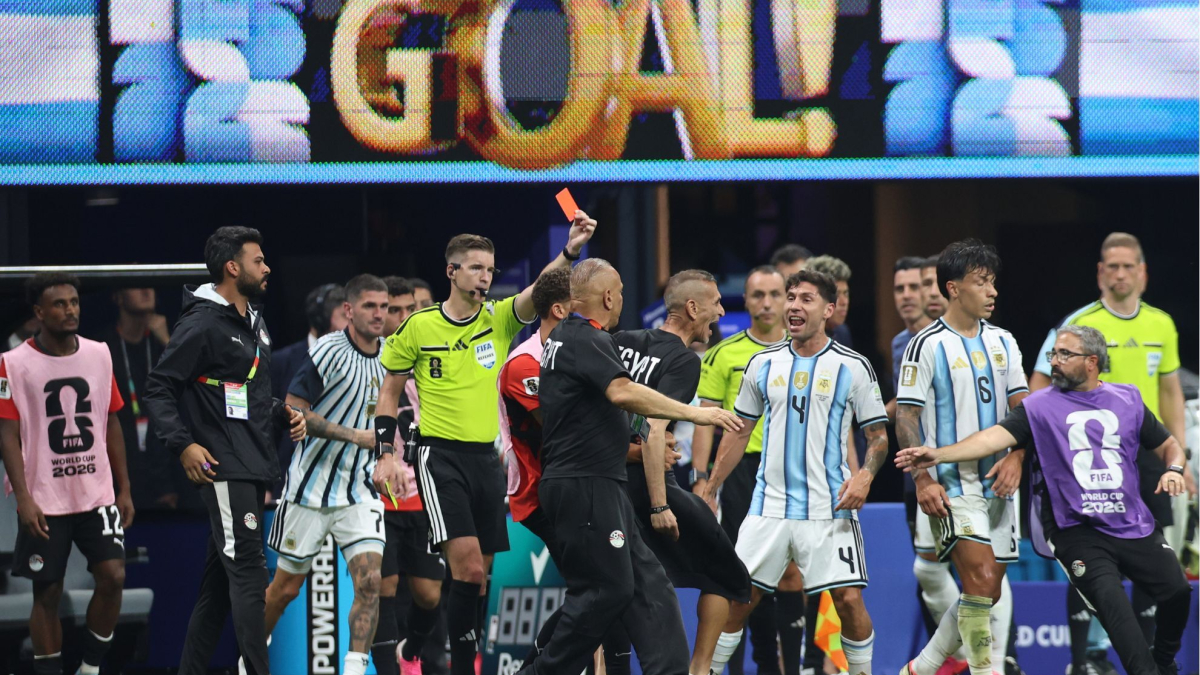
French referee François Letexier has recently sparked widespread discussion after Egypt lodged an official complaint with FIFA regarding his officiating during the thrilling Round of 16 match against Argentina in the 2026 FIFA World Cup. This encounter, known for its dramatic finish, has led to heightened tensions, particularly surrounding the controversial refereeing decisions that have drawn the ire of Egyptian officials and fans globally.
The Disallowed Goal That Changed the Game
Egypt seemed poised to achieve a remarkable upset as they led 2-0, putting pressure on the defending champions, Argentina. However, the turning point came with a disallowed goal by Mostafa Zico following a VAR review, which Egypt believes altered the match’s momentum significantly. This moment has provoked heated discussions, especially since the foul was called at the request of VAR just seconds after Egypt found the back of the net, raising questions about the consistency and timing of the referee’s interventions.
Questionable Penalty Calls Ignite Further Controversy
The second pivotal instance occurred late in the match when Egypt called for a penalty just before Argentina scored their game-winning goal. Egyptian officials asserted that these two crucial decisions undermined the integrity of the match and fueled sentiments of injustice among their supporters. In the aftermath, the Egyptian Football Association formally requested FIFA to reassess the officiating, hoping to bring clarity to what they view as inconsistencies in VAR protocols. Media outlets, including Sky Sports, confirmed the receipt of this complaint, while FIFA has yet to provide an official response.
The Coach’s Outcry and Growing Debate Over VAR
Hossam Hassan, the coach of the Egyptian team, expressed his frustration vehemently after the loss, accusing the officiating of being biased towards Argentina. His bitter critique reflects deeper concerns about the fairness of the match and illustrates a broader trend of frustration among fans and coaches alike regarding VAR’s role in modern football. Critics have increasingly questioned when technology should intervene, particularly as decisions that directly influence match outcomes seem increasingly arbitrary.
This controversy is not isolated to just Egypt; it taps into ongoing global discussions about VAR’s implementation in the World Cup. The Argentine-Egypt match only intensified these debates, leaving many to wonder if the technology designed to enhance clarity is instead complicating the interpretation of pivotal on-field events.
For Argentina, this narrow victory secures their place in the quarterfinals and adds another emotional layer to what has already been a turbulent tournament. This is not the first time Argentina has faced scrutiny for officiating, as criticisms had begun from their opening match when a potential red card for Lionel Messi was overlooked. Such instances suggest that this World Cup is riddled with contentious decisions that could overshadow the event itself.
Egypt’s Departure and the Future of Football Officiating
Egypt’s exit from the World Cup comes with a heavy heart, as they feel robbed of a chance for victory due to perceived officiating errors. This complaint encapsulates not just the frustrations of a single team, but raises broader concerns about the reliability of refereeing standards in football.
Now, the responsibility lies with FIFA and its president, Gianni Infantino. How FIFA chooses to address these allegations and the rationale behind the contested VAR decisions could prove crucial. Ignoring the situation may only escalate tensions, while a transparent discussion could restore some faith in the officiating process. The tournament, full of highs and lows, demands credibility more than ever, as teams and fans alike look for accountability from the organization governing the sport.