
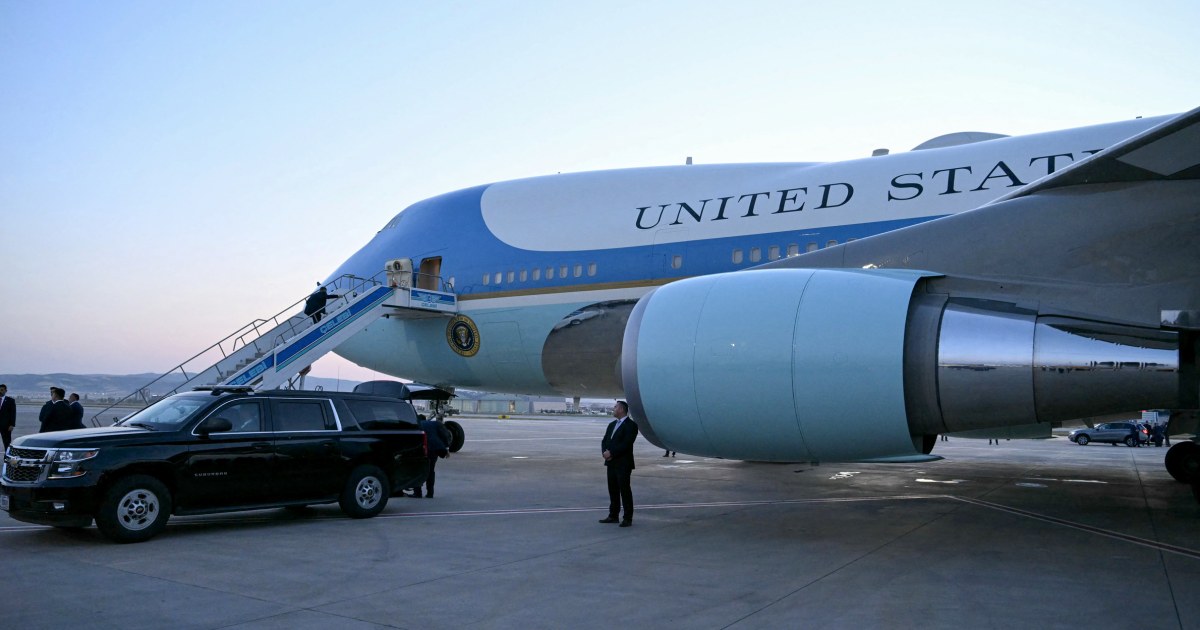
President Donald Trump’s decision to utilize the original Air Force One during the NATO leaders’ summit in Ankara, Turkey, stemmed from a security precaution taken out of “an abundance of caution,” as per a source acquainted with his travel plans.
Security Concerns Prompt Cautious Choice
In today’s high-stakes global environment, leaders often face critical security decisions that can seem overly cautious but are crucial in ensuring the safety of heads of state. Trump’s choice to forgo the newer, Qatari-provided aircraft for a well-known model reflects this mentality. The original Air Force One, which has been a reliable and tested platform for decades, was perceived as a safer alternative amidst concerns that may have stemmed from geopolitical tensions or recent events that could threaten the safety of a sitting president.
The use of the older aircraft not only prioritizes security but also underscores the importance of having trusted support systems in potentially volatile situations. By choosing the old Air Force One, Trump highlighted a principle that many political leaders endorse: when it comes to safety, it is often better to rely on well-established methods and resources.
Implications for Diplomacy and International Relations
The decision to travel on the original Air Force One also suggests deeper implications for international relations and diplomacy. Meeting with NATO allies in a strategic location like Ankara, one can hardly overlook the necessity of projecting strength and reassurance amidst delicate discussions. Leaders like Trump are acutely aware that their actions reverberate far beyond immediate circumstances; they can influence perceptions and alliances.
Choosing a familiar and reliable aircraft signals a commitment to resilience in the face of adversity. It underscores that countries involved in NATO are not only partners in principle but also in practice, particularly when navigating complex geopolitical landscapes. By prioritizing security over showcase, Trump reinforced the idea that safety and stability are fundamental to effective diplomacy.
Public Reaction and Media Coverage
Media responses to this decision have varied, reflecting the politically charged climate surrounding the Trump administration. While some commentators view the choice as overzealous, arguing that it emphasizes a lack of confidence, others maintain it demonstrates a prudent approach to leadership in a critical diplomatic context. Coverage of the event serves as a reminder of how every action taken by national leaders can provoke significant discourse, impacting public perception and the political narrative.
In this age of instant communication and information sharing, decisions like the one Trump made can quickly become topics of debate. The implications of such choices often extend beyond just security and into discussions about leadership style, risk management, and the optics of international travel.
As global leaders continue to navigate the complexities of international politics, reflections on Trump’s travel decisions may promote deeper conversations about future security measures and protocols for diplomatic events. Ultimately, these decisions can reveal both the internal struggles of leadership and the external pressures shaped by ever-shifting geopolitical landscapes.