
On Thursday, tensions escalated in the Persian Gulf as the United States launched a series of airstrikes against Iran, prompting a retaliatory response from Tehran that targeted Bahrain, Kuwait, and Qatar. This renewed hostilities cast doubt on an interim agreement designed to stabilize the region following prolonged conflict.
The Context of the Strikes
Early Thursday, U.S. airstrikes focused on military installations and port facilities in Iran, just hours after President Donald Trump condemned recent Iranian actions against vessels in the vital Strait of Hormuz. This maritime corridor is crucial for global oil and gas trade, accounting for approximately 20% of worldwide shipments. The U.S. military’s actions followed Iran’s bombing of several merchant ships off Oman, intensifying fears over navigation safety amidst the ongoing conflict.
Reports indicated a more significant escalation, with alarm sirens sounding in Bahrain, where the U.S. Navy’s Fifth Fleet is based. Although initial assessments did not confirm substantial damage in Bahrain, Kuwait’s defense forces stated they were intercepting drones and missiles launched from Iran. Iran’s Revolutionary Guard claimed responsibility for strikes on Bahrain and Kuwait, indicating a broader regional conflict might be brewing.
U.S. Military Objectives
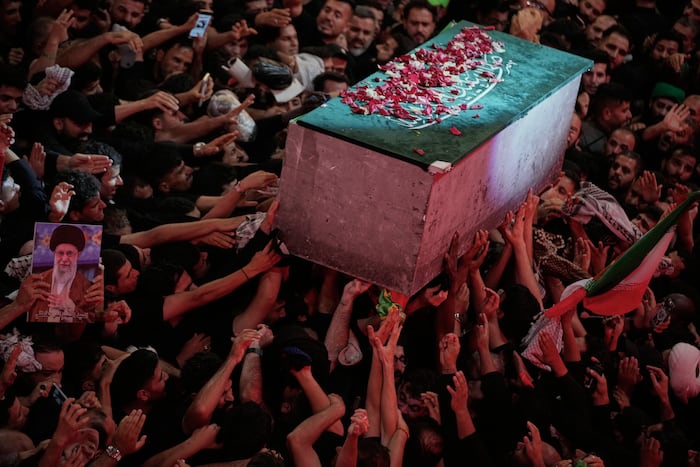
Military officials in the U.S. stated that the airstrikes were intended to “further degrade” Iran’s capabilities to threaten maritime navigation in the Strait of Hormuz. Iranian media reported that explosions occurred in multiple cities, including Bushehr—the site of Iran’s nuclear power facility—and along critical infrastructure, such as roads and bridges connecting to key regions like Mashhad, where officials planned an important funeral ceremony.
For the first time since April, U.S. strikes targeted Iranian bridges, signaling a strategic shift in military operations. These strikes also hint at a potential escalation of U.S. military objectives against Iranian assets in a conflict that has seen significant shifts in tactical approaches.
Escalating Warnings and Diplomacy Challenges
In a series of statements following these developments, President Trump forewarned that further Iranian aggressions would result in even more severe retaliations, emphasizing that U.S. military responses would be swift. Although he expressed that long-term military involvement was not anticipated, the uncertainty surrounding the strikes has raised alarms within international markets, reflected by rising oil prices.
Iranian officials pushed back against the U.S.’s threats, stating that the interim ceasefire agreement provided them the authority to manage maritime traffic through the Strait. Mohammad Bagher Qalibaf, the Iranian Parliament Speaker and a leading negotiator, warned that any further U.S. strikes would result in immediate and significant consequences, indicating heightened tensions and diminishing prospects for a peaceful resolution.
Implications for Future Negotiations
The recent military actions significantly complicate ongoing diplomatic efforts aimed at establishing a lasting peace in the Gulf region. Efforts had been in motion to finalize a more permanent ceasefire and address contentious issues, including the reopening of the Strait and Iran’s nuclear program. However, with hostilities reignited, the path to negotiation appears more fraught than ever, as both sides prepare for a more extensive confrontation rather than reconciliation.
As international observers watch closely, the situation remains precarious, with implications not only for regional stability but also for global energy markets. A resumed conflict could halt oil shipments from the Strait, impacting economies worldwide, underscoring the urgency for diplomatic resolution and the need for substantive dialogue moving forward.