
Trump’s Surprising Air Force One Swap: A Closer Look
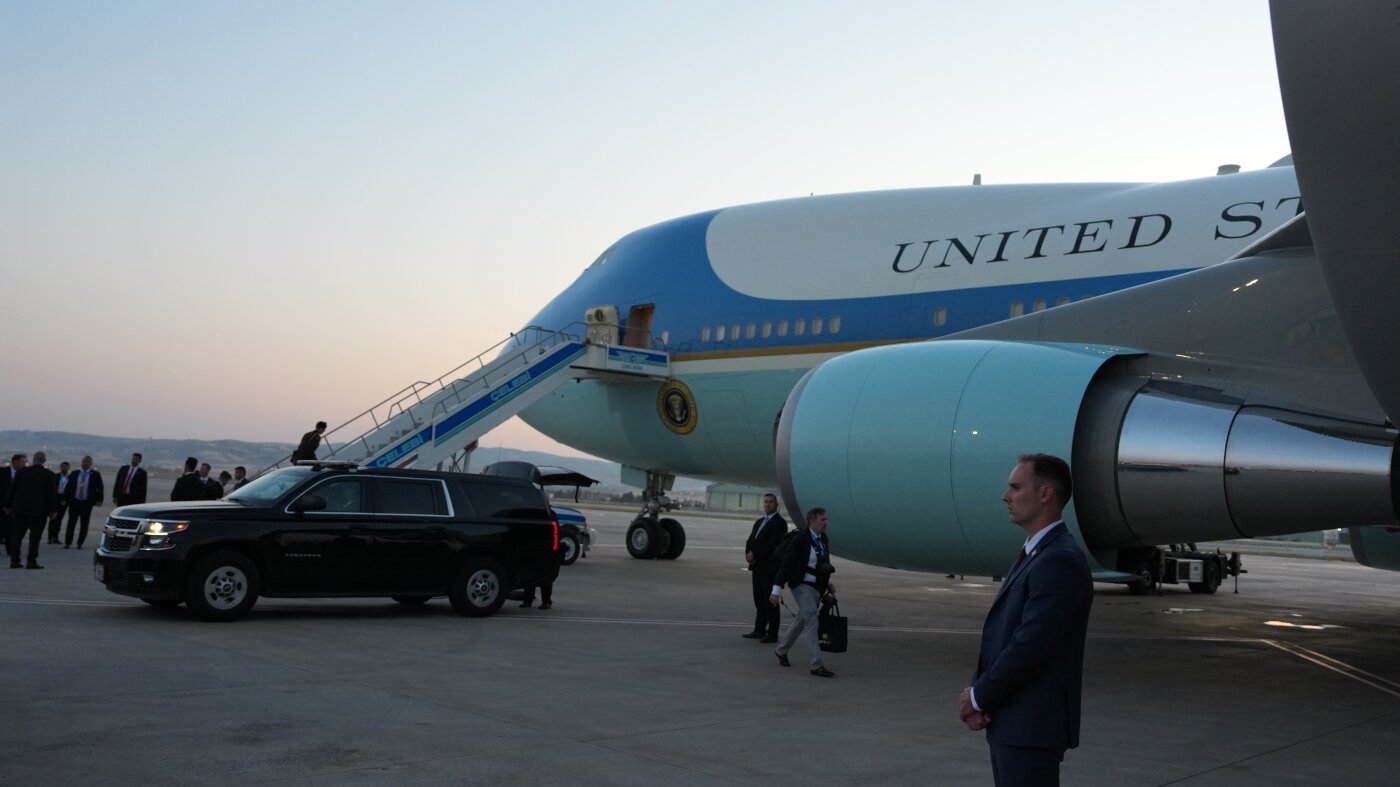
President Donald Trump made headlines when he flew from a NATO summit in Turkey aboard an older version of Air Force One instead of the newly retrofitted aircraft. This unexpected aircraft exchange occurred amid escalating tensions between the U.S. and Iran, raising important security concerns that are worth examining.
The Unexpected Aircraft Switch
In a surprising move, Trump opted for the classic baby blue Air Force One rather than the sleek red, white, and navy blue jet gifted by Qatar. This unique swap has sparked inquiries about the reasoning behind such a decision, especially given the news of renewed hostilities with Iran, where military strikes have recently increased. When asked about the switch, Trump provided little clarity, merely stating he wanted to travel “for old time’s sake.” This statement left many questioning whether there were underlying security concerns prompting this choice.
The flight details revealed that both aircraft planned a halt at Royal Air Force Mildenhall, a U.S. military base in the U.K. During a subsequent briefing, Trump maintained that the change was not influenced by security worries. “I have a threat all the time,” he remarked, emphasizing his awareness of being a target for Iran. Yet, this vague assurance raised eyebrows, especially in light of the missile and drone capabilities Iran possesses within striking distance.
Security Concerns and the New Aircraft’s Capabilities
While both planes have undergone extensive upgrades, the decision to return on an older model has amplified scrutiny regarding the Qatari jet’s security features. Visuals of the newly refurbished aircraft suggest it lacks some critical missile detection systems found in its predecessor. This has led to concerns about the new jet’s effectiveness in safeguarding Trump, given the geopolitical climate. Simply put, if operational security is paramount, why risk it with a less secure model?
Moreover, the U.S. military had carried out large strikes in Iran recently, seemingly escalating tensions. These military actions were linked to Iranian aggression against merchant shipping, indicating that the environment during this trip was already precarious. Analysts have pointed out that despite Trump’s assertions, the situation necessitated a more vigilant security approach.
Flight Patterns and Strategic Decisions
The choice to maintain a low profile during the flight was particularly notable as the aircraft’s transponder, typically used for commercial tracking, was reportedly turned off. This maneuver is common when transport involves high-profile figures in potentially hostile areas. Interestingly, other world leaders’ flights during the same period had their transponders active, highlighting the atypical nature of this flight.
U.S. officials have been adamant that the retrofitted aircraft is equipped with advanced security measures to mitigate potential threats. Trump’s flying back to the States on an older model raises questions about how seriously the administration takes the risks involved in his travels, especially with emerging threats from Iran and its capabilities of launching strikes across significant distances.
Conclusion: Implications for Future Presidential Travel**
As the situation stands, this incident illuminates broader implications for presidential air travel amid rising geopolitical tensions. The initial rollout of the new Qatari jet aimed to enhance the safety and efficiency of presidential movements, but the decisions made during this trip suggest a reevaluation of priorities in flight security. Trump’s penchant for traditionalism could have deeper meanings in the context of national and personal safety.
With updated models still under development, and due to be completed in 2028, it remains crucial for the administration to address these security matters comprehensively. As international relations evolve, effective presidential travel will need to balance tradition with state-of-the-art safety protocols. Ultimately, this incident serves as a reminder of the intricate relationship between security, politics, and the logistics of high-level international diplomacy.