
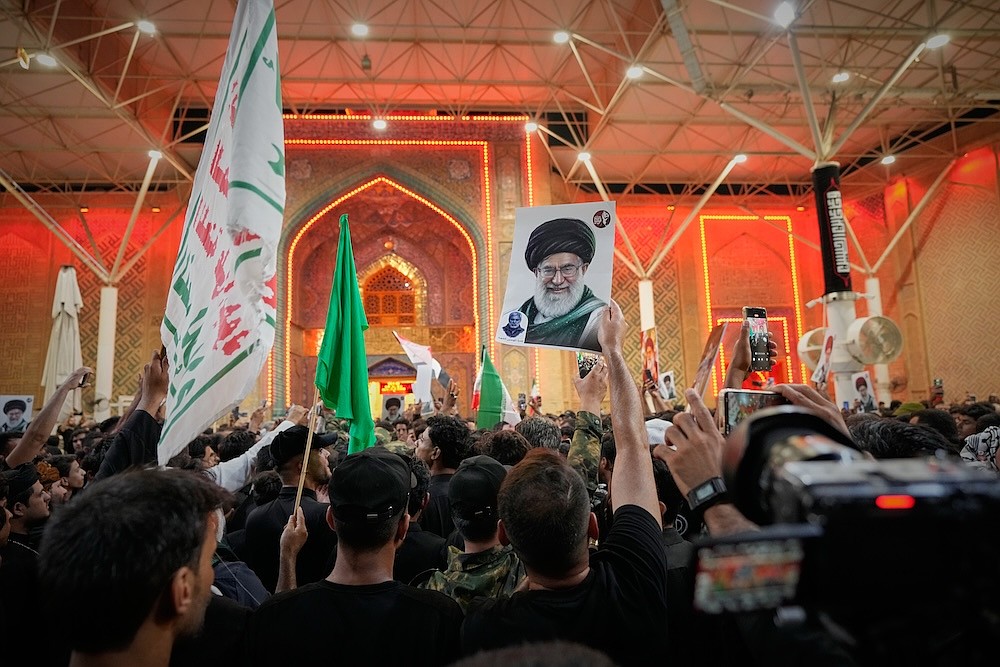
The funeral processions for Iran’s former Supreme Leader, Ayatollah Ali Khamenei, have commenced in Najaf, Iraq, drawing thousands of mourners. This significant event marks a pivotal moment in both Iranian and Iraqi history, highlighting the intersection of politics and deep cultural ties within the Shiite community.
Funeral Observances and Their Significance
The commemorative ceremonies for Khamenei, who dominated Iranian politics for decades, officially began on Saturday. As part of these observances, Iranian authorities enacted measures that included shutting down streets, airspace, and disrupting daily life in Tehran. Khamenei’s life was characterized by a strong stance against Western influence and a hardline approach domestically. Following the ceremonies in Najaf, his body will be transported to Karbala and then to Iran, a journey steeped in symbolism for Shiite Muslims.
h2>The Impact on U.S.-Iran Relations
In the interim, discussions between the United States and Iran appear to be stalled until after Khamenei’s burial. Recent military actions in the Persian Gulf have raised fears that fragile ceasefire negotiations could collapse. Reports indicate that U.S. forces conducted strikes against Iranian interests, a response to allegations that Tehran had attacked vessels in the strategically vital Strait of Hormuz. These escalating tensions underscore the volatile nature of Middle Eastern politics, particularly in light of Khamenei’s death.
The Mourning Rituals
Khamenei’s body was brought to Najaf adorned in a casket draped with the Islamic Republic’s flag, encased in glass. Mourners erupted in displays of grief, some holding portraits of the deceased leader while others engaged in traditional acts of mourning, such as self-flagellation. The scene in Najaf has been charged with emotion, as participants express their loyalty and tribute to Khamenei’s legacy. “We the people of Iraq will remain a thorn in the eyes of the enemies,” stated Jaafar Jawad, highlighting the strong sentiments among mourners regarding Khamenei’s impact on regional politics.
Religious Ceremonies and Prayers
Ceremonial prayers are set to take place at the Imam Ali Shrine in Najaf, led by a respected figure from the local seminary, Muhammad Taqi al-Hakim. This location is particularly significant as it is one of the holiest sites for Shiite Muslims. Following these rites, additional prayers will occur in Karbala, where Abdul Mahdi al-Karbalaei will lead the services at the Imam Hussein Shrine, another crucial religious site. The interconnectedness of religious and political elements in these funerals serves to further solidify Khamenei’s legacy within Shiite Islam.
h2>The Future of Iranian Leadership
Ayatollah Mojtaba Khamenei, Iran’s newly appointed supreme leader and son of the late Ayatollah, has not yet made an appearance during the ongoing funeral ceremonies. There are reports suggesting that he may be in hiding after sustaining injuries in the airstrikes that took his father’s life. The uncertainty surrounding his leadership and the circumstances of Khamenei’s death leave questions about the future direction of Iran and its influence in the region.
As the funeral for Khamenei continues to unfold, its implications resonate far beyond the borders of Iran, affecting geopolitical dynamics and the stability of the Middle East.