
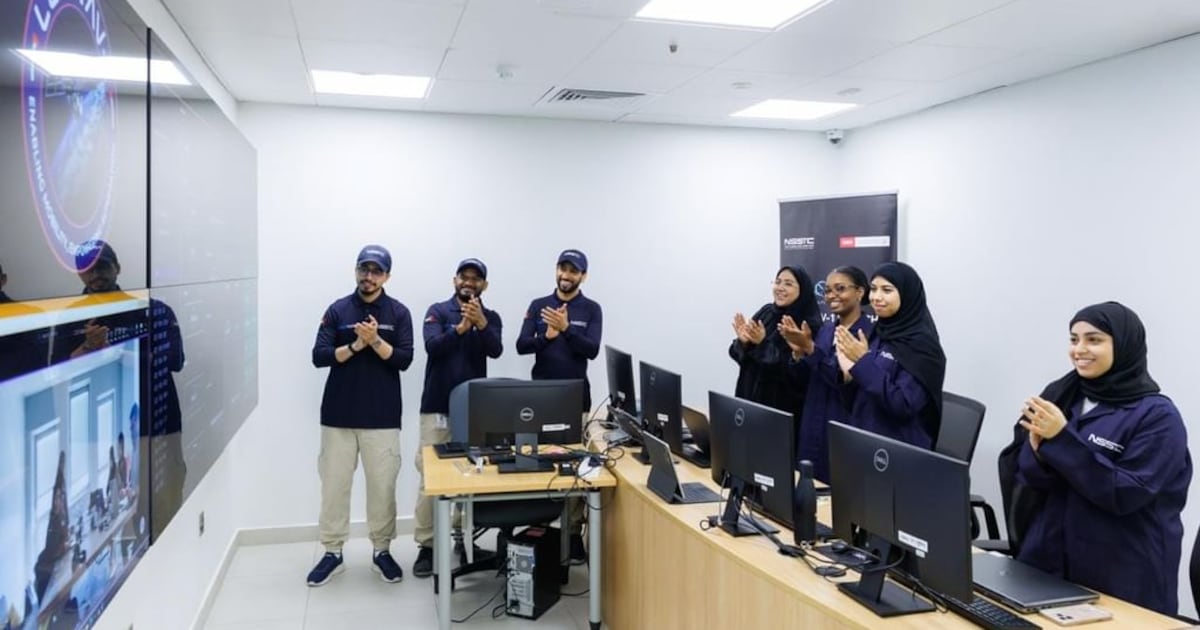
A prestigious university in the UAE has partnered with the national space agency to launch an advanced satellite aimed at enhancing global navigation systems. This initiative showcases the country’s evolving capabilities in space technology and signifies a step forward in its efforts to improve positioning and navigation services around the world.
Introduction of Leonav-1 Satellite
The newly developed satellite, Leonav-1, was created by the National Space and Science Technology Centre (NSSTC) affiliated with the United Arab Emirates University. Its launch marks a pivotal moment in the quest to establish satellite navigation systems that function effectively in low-Earth orbit. Such systems are designed to enhance precision and reliability, potentially offering improvements over traditional navigation technologies that operate at higher altitudes.
Equipped with cutting-edge technology, Leonav-1 aims to significantly enhance the accuracy of future navigation solutions by positioning satellites closer to Earth. This strategic deployment not only addresses existing challenges in navigation systems but also seeks to optimize signal performance, leading to increased efficiency in various applications, from commercial aviation to personal navigation devices.
Government Support and Research Development
The launch of Leonav-1 has been made possible through the robust support of the UAE Space Agency, which is dedicated to advancing academic research and technological innovation in the space sector. This collaborative effort is part of a broader national strategy aimed at not just furthering research but also at establishing the UAE as a leader in space technology on a global scale.
Following its successful launch, Leonav-1 will enter a critical phase involving extensive system checks and performance evaluations. During this period, engineers will synchronize systems, establish reliable communications, and conduct a series of tests to confirm the satellite’s operational readiness. By ensuring that the satellite can emit signals without interfering with existing global navigation frameworks, the project aims to reduce reliance on traditional satellite technology.
Future of UAE’s Space Initiatives
The NSSTC’s success in deploying Leonav-1 is seen as a milestone in the development of next-gen satellite navigation systems, reinforcing the capabilities of Emirati engineers and researchers. This progress aligns with the UAE’s ambition to compete on a global scale through technological advancements and the nurturing of homegrown talent.
Moreover, the UAE’s space initiatives are gaining traction, with the recent operational status of Space42’s trio of satellites—Foresight-3, Foresight-4, and Foresight-5—focusing on disaster response and climate mitigation. These satellites employ advanced radar technology to provide comprehensive Earth observation capabilities, highlighting the nation’s commitment to using space technology for the greater good.
In conclusion, as the UAE makes significant strides in its space endeavors, Leonav-1 is not just another satellite; it represents a concerted effort to advance navigation systems globally. As the region continues to invest in its space program and harness emerging technologies, the future looks promising for both the UAE and its aspirations in the international space arena.