
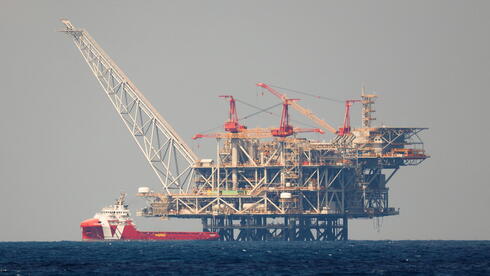
Israel’s energy sector is witnessing a significant advancement with the completion of a subsea pipeline connecting Ashdod and Ashkelon. This development enables a consortium composed of Chevron, NewMed Energy, and Ratio, who are operating the Leviathan natural gas reservoir, to boost their gas exports to Egypt’s Blue Ocean Energy. This venture is part of an extensive natural gas export agreement established last summer, estimated at around $35 billion over the next ten years.
Details of the New Pipeline
The newly constructed pipeline spans approximately 45 kilometers, establishing a crucial link between the Leviathan gas reception facility in Ashdod and the EMG pipeline’s connection point near Ashkelon. This connection allows for the onward transport of gas to various facilities in El-Arish, Egypt. Enhancements in infrastructure are set to play a pivotal role in increasing the gas transmission capacity to Egypt by roughly 2 billion cubic meters (BCM) annually. This escalation raises the total capacity from about 6.5 BCM to an impressive 8.5 BCM, marking a significant 30% increase.
Impact on Export Capacity
This expansion greatly influences the amount of natural gas that can be exported from the Leviathan reservoir. Estimates indicate that export volumes to Egypt could rise from approximately 4.7 BCM to 6.7 BCM per year, reflecting about a 43% increase. Recent efforts have also focused on enhancing the production capacity at Leviathan, which has now been marked at 15.8 BCM per year following the integration of a third pipeline linking the reservoir to the production platform.
Statements From Industry Leaders
NewMed Energy confirmed that all conditions necessary for escalating gas supplies to Blue Ocean Energy have been successfully met. The company articulated that this would result in a 40% increase in the quantities of gas required for export to Egypt, with additional amounts available for spot sales, catering to a broader market need. Yossi Abu, the CEO of NewMed Energy, emphasized the project’s importance, stating that the completion of the Ashdod-Ashkelon pipeline allows for the execution of the largest export agreement in Israel’s history, alleviating previous transmission bottlenecks.
Investment and Future Exploration
The total cost of constructing the Ashdod-Ashkelon pipeline amounted to approximately NIS 1 billion, or $330 million, and the project faced numerous delays, including setbacks related to prolonged regional conflicts. Concurrently, the Israeli Ministry of Energy has announced the initiation of the country’s fifth licensing round for offshore natural gas and oil exploration. This tender encompasses five exploration zones covering roughly 7,600 square kilometers within Israel’s economic waters, signaling a forward-looking approach in the energy sector. Though initially planned for launch in February, the process faced delays due to external political circumstances.
These developments not only highlight Israel’s growing role in the natural gas market but also signify an optimistic outlook on future energy collaborations within the region. With enhanced infrastructure and strategic agreements in place, the nation seems poised to capitalize on increasing energy demands both domestically and in export markets.