
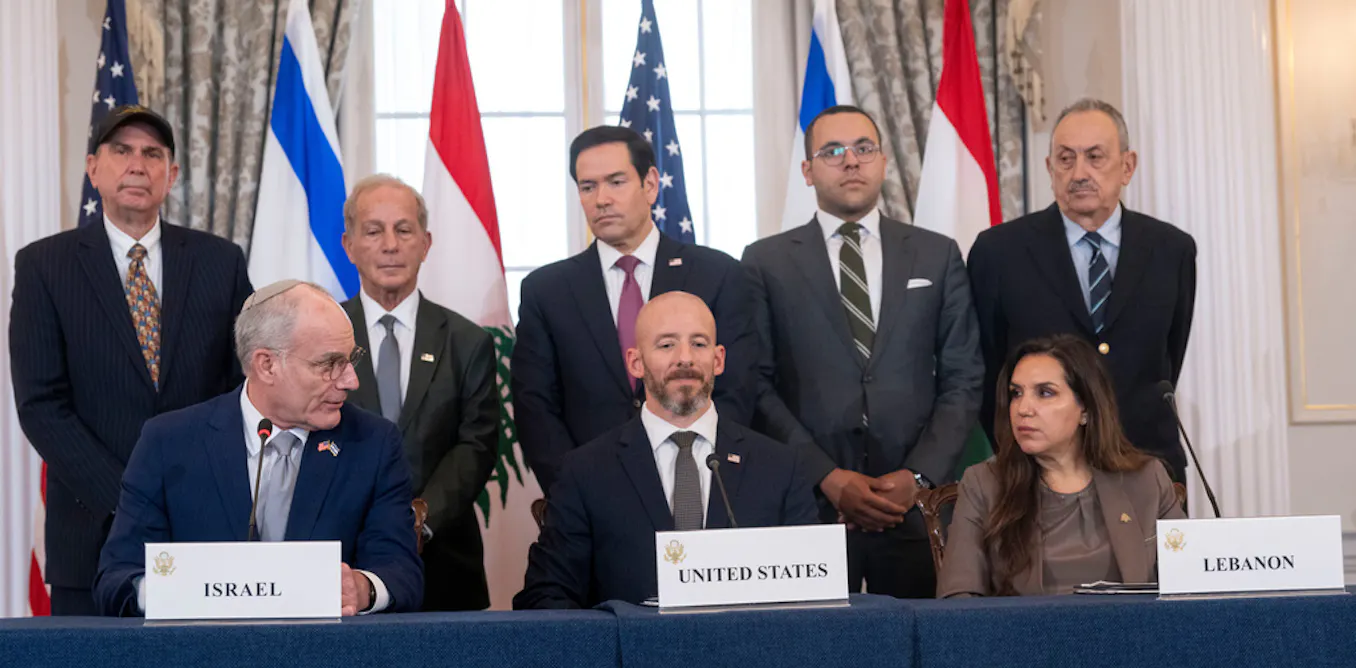
The newly proposed framework agreement between Lebanon and Israel, forged in June 2026, has the potential to reshape the relationship between these two nations, marking a significant milestone in nearly eight decades. However, the success of this agreement hinges on various factors, particularly its acceptance and implementation by both sides.
Challenges Facing the Agreement
The framework stipulates the establishment of peaceful relations, disarmament of Hezbollah, complete Israeli withdrawal from Lebanon, and the restoration of Lebanese sovereignty throughout the country. Nonetheless, current realities starkly contrast these aspirations. Hezbollah has categorically rejected the agreement, and Israel’s ongoing military operations are undermining the government’s credibility in Lebanon. This ongoing violence complicates the Lebanese government’s capacity to uphold the proposed terms.
An examination of historical ceasefires between Israel and Hezbollah reveals a troubling trend: temporary agreements have often only resulted in short pauses in hostilities. Our analysis of ceasefires occurring in 1993, 1996, 2006, 2024, and April 2026 indicates a cyclical pattern where fighting resumes shortly after agreements, suggesting that both parties have generally been prepared for renewed conflict. While temporary agreements at times reduced violence, they seldom led to lasting peace, and this precedent looms large over the current framework.
Historical Context of Conflict
While Lebanon and Israel have yet to normalize relations, they share a historical example of a successful conflict containment agreement: the 1949 Lebanese-Israeli General Armistice Agreement, mediated by the United Nations. This agreement managed to halt active hostilities after the 1948 Arab-Israeli War, laying a framework that lasted nearly two decades. However, this relative stability deteriorated in the 1970s as various factions, including the Palestine Liberation Organization, provoked renewed clashes with Israel, leading to military invasions.
Since Israel’s significant military intervention in Lebanon in 1982, varying attempts at peace have failed to achieve sustainable results. Most ceasefires were exploited by either side as a tactical pause rather than a genuine pathway to peace. The 1983 accord aimed at normalizing relations and facilitating Israeli withdrawal quickly fell apart due to internal pressures within Lebanon and failed state authority.
Is Disarming Hezbollah Feasible?
The contemporary landscape presents a unique opportunity for disarming Hezbollah and possibly normalizing relations with Israel. Israeli military actions have severely constrained Hezbollah’s capabilities, coupled with growing public sentiment in Lebanon against the group, which has been blamed for recurring conflicts. Even within its traditional Shiite base, discontent is rising, especially toward Iran, its main supporter.
Lebanon’s political leadership, under President Joseph Aoun and Prime Minister Nawaf Salam, seeks to leverage this shift to implement Hezbollah’s disarmament, aligning it with the longstanding U.N. mandate requiring the disarmament of all non-state forces. What was once seen as an unrealistic ambition now stands on the precipice of being actionable.
Despite these developments, both Hezbollah and Israel risk undermining this diplomatic moment. Short-term political motivations—including those related to upcoming elections—threaten to derail the fragile process. Israel’s Prime Minister Benjamin Netanyahu faces mounting pressure to deliver visible results against Hezbollah, leading to actions that may provoke further conflict.
The Necessity of Diplomatic Engagement
A focus on sustained diplomatic efforts is crucial to foster a lasting peace. Historical precedents indicate that direct communication between conflicting parties can lead to groundbreaking resolutions, as evidenced by the fine-tuned negotiations during the 1973 Arab-Israeli War, which ultimately contributed to the 1979 peace treaty between Egypt and Israel.
As the current situation unfolds, American involvement may be essential in applying pressure to Israel to minimize military activities in Lebanon, thereby facilitating fruitful negotiations. Lebanon also requires diplomatic and operational support to enforce governmental authority across its territory. The convergence of military outcomes, political shifts, and diplomatic dialogue creates fleeting opportunities for progress, and the situation between Lebanon and Israel stands at such a juncture. However, history cautions against complacency, reminding us that missed openings can quickly dissolve, leading to further cycles of violence.