
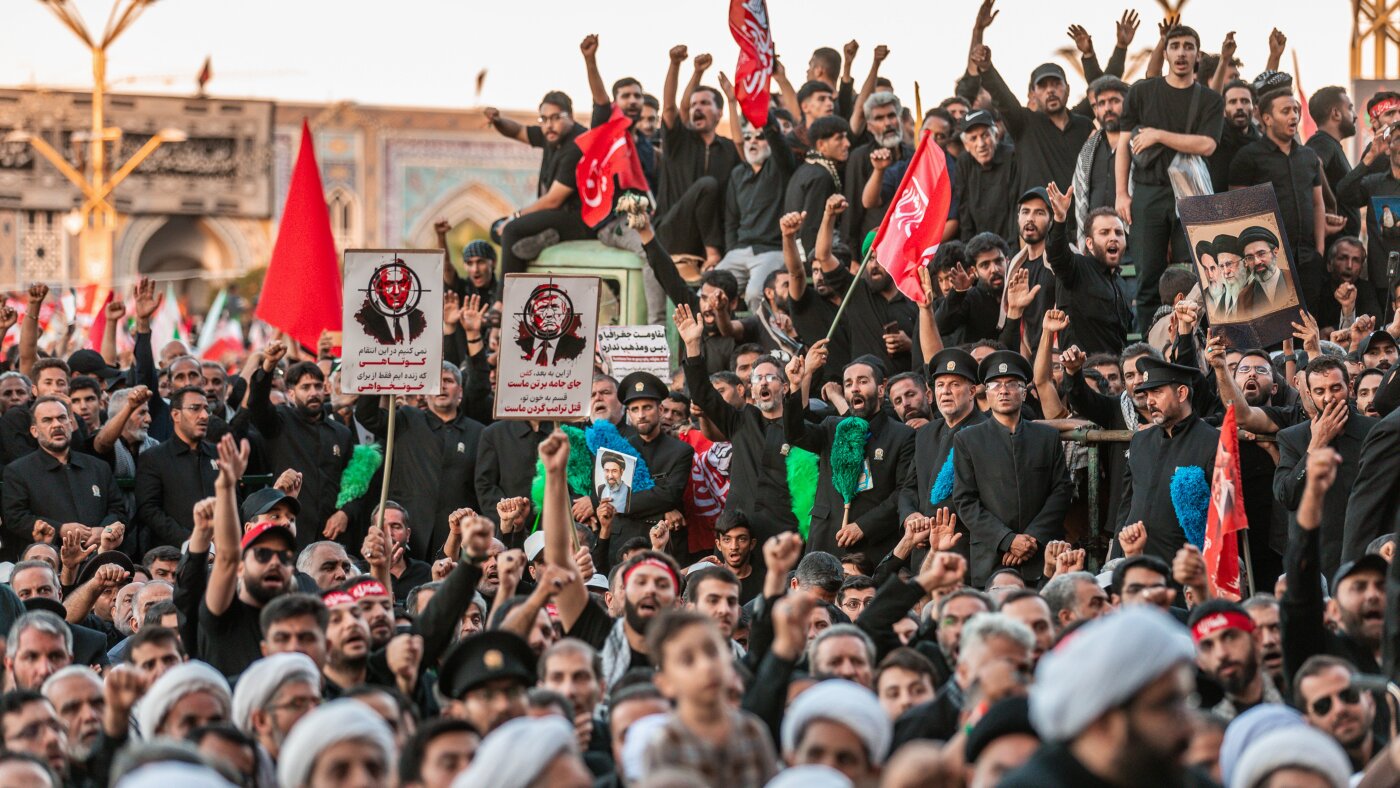
In the wake of heightened tensions in the Middle East, U.S. President Donald Trump made a provocative statement following the funeral of late Iranian Supreme Leader Ayatollah Ali Khamenei. This event, which saw mourners openly calling for Trump’s assassination, underscored the increasingly volatile geopolitical climate. The unrest has escalated amid stalled negotiations aimed at establishing a ceasefire in the ongoing conflict.
The Fallout After Khamenei’s Funeral
During Khamenei’s funeral, public displays of anger, including calls for violence against Trump and Israeli Prime Minister Benjamin Netanyahu, indicated significant turmoil. Trump, responding on social media, issued a stern threat that implied an intense military readiness, stating that numerous missiles were “locked and loaded” and aimed at Iran should any aggression occur. This tough rhetoric came after U.S. officials urged Iran to openly acknowledge that the crucial Strait of Hormuz would remain safe for international shipping, a request that Tehran has yet to fulfill.
The Strait of Hormuz is vital for global oil transport, with about one-fifth of all oil and natural gas transiting through it pre-war. Iran’s insistence on maintaining control over this waterway disrupts decades of precedent labeling it as an international corridor. Continued strikes and military actions from both the U.S. and Iran have heightened fears of an escalating conflict that could threaten global energy markets.
International Response and Potential Solutions
Despite escalating hostilities, diplomatic efforts are still underway. Qatari mediators have been dispatched to meet with Iranian officials, and discussions are expected to take place aimed at de-escalating tensions. However, Iranian officials have made it clear that any movement regarding the Strait of Hormuz is under their jurisdiction, complicating international relations. Iran’s insistence on both controlling the waterway and charging vessels passing through it has alarmed many nations, further intensifying the geopolitical stakes.
The ongoing conflict has resulted in a ripple effect on oil prices, which, although they peaked at around $120 per barrel during the height of the war, have since seen a decline. Nevertheless, the uncertainty surrounding the strait and Iran’s military capabilities pose a continued threat to both regional and global economies.
U.S. Position on Iran’s Nuclear Capabilities
The U.S. administration has indicated that any future negotiations regarding Iran’s nuclear program must include an agreement for Iran to relinquish its stockpile of highly enriched uranium. Despite international pressure, Iran has historically rejected these requests, claiming the peaceful nature of its nuclear ambitions. U.S. officials have stressed that there are military options should diplomatic avenues fail to yield results.
As tensions remain high, the U.S. has suggested that mariners steer clear of Iranian waters. This precaution is an effort to protect shipping routes from Iranian revolutionary guards and further military confrontations. The possibility of mutual compliance between the nations appears increasingly elusive as hostilities continue to escalate.
In conclusion, both sides find themselves at a crossroads, with diplomatic efforts attempting to bring clarity amidst chaos. However, the commitment to military readiness and longstanding grievances continue to overshadow peaceful resolutions, leaving the situation precarious and uncertain. The implications of these developments stretch far beyond regional borders, affecting global energy markets and international relations as a whole.