
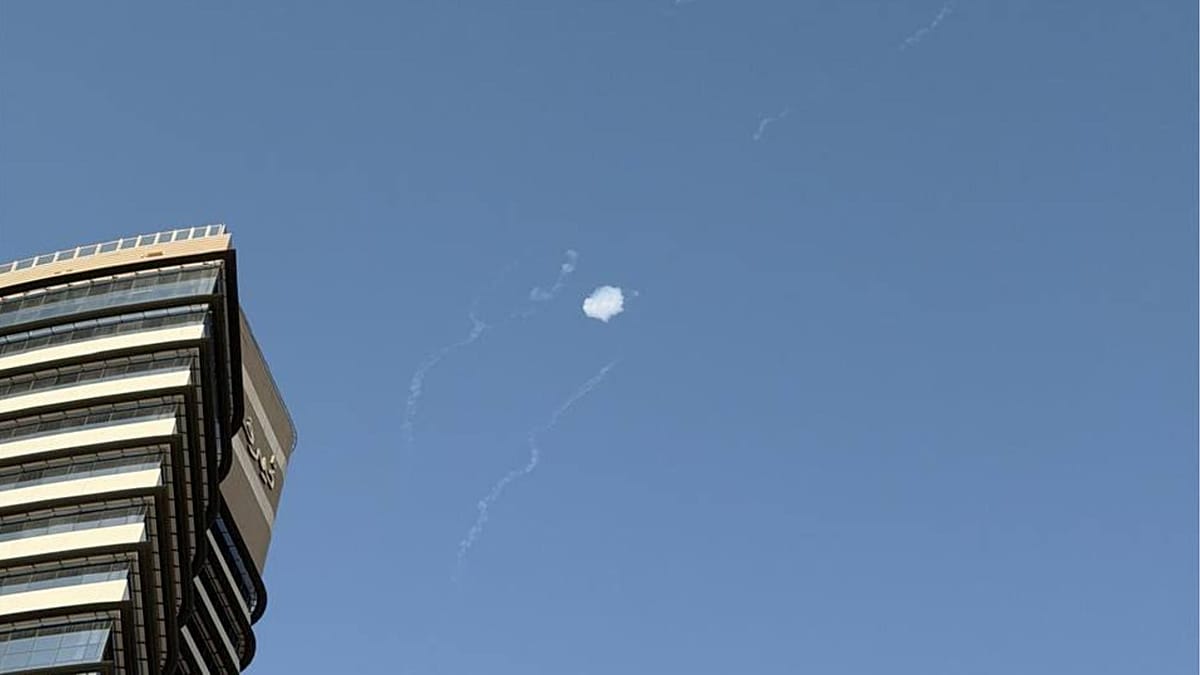
Iran launched a significant wave of missile and drone strikes across the Gulf region on Sunday morning, primarily focusing on Qatar, the UAE, Bahrain, and Kuwait. This sudden escalation follows recent U.S. airstrikes in Iran as retaliation for an attack on a ship in the Strait of Hormuz. As tensions mount, the geopolitical landscape in the Gulf is rapidly changing.
Missile Attacks on Gulf Nations
Reports indicate that Doha experienced two intense waves of missile strikes, causing tremors that resonated throughout the city. Qatar’s air defense successfully intercepted multiple Iranian missiles directed toward the capital, according to journalists on the ground. The Qatari Defense Ministry confirmed ongoing interceptions, stating that their armed forces remained vigilant against potential threats. Witnesses described a series of loud booms and shockwaves that mimicked the initial days of previous conflicts involving Iran.
National emergency alerts resonated throughout Qatar, urging residents to find shelter and avoid windows as the government raised the security threat level. Meanwhile, the UAE also activated its defense systems against incoming Iranian missiles and drones, advising its citizens to take precautions. Kuwait’s military followed suit, issuing warnings to its population and engaging “hostile aerial targets,” while Bahrain confirmed the activation of its air defenses in response to the escalating situation.
Claims of Targeted Facilities
Iran’s Revolutionary Guard announced that its missiles targeted the Al-Udeid US airbase in Qatar, claiming to have destroyed key facilities there. However, Qatari officials reported successfully intercepting these missiles aimed at the largest American military installation in the region. Additionally, Iran asserted it struck the Prince Hassan airbase in Jordan and targeted Oman’s Duqm port, a strategic location for the U.S. Navy. This sharp uptick in hostilities highlights the continued Iranian strategy of projecting power across the Gulf.
Tehran has repeatedly issued warnings that any further U.S. military action will result in retaliation against American interests throughout the Gulf states. This mirror effect of responses reflects the long-standing cycle of provocation and retaliation in the region.
U.S. Military Response
In the backdrop of these events, the U.S. Central Command (CENTCOM) conducted airstrikes in southern Iran late Saturday, targeting over 140 locations. This response was prompted by an attack on a Cyprus-flagged container ship in the Strait of Hormuz, which resulted in significant damage and forced the crew to abandon ship, with one sailor reported missing. U.S. Defense Secretary Pete Hegseth commented on the situation, framing Iran’s actions as a critical miscalculation that would have consequences.
Mohammad Bagher Ghalibaf, Iran’s top negotiator, underscored Tehran’s stance regarding its sovereignty over the Strait, declaring, “the era of one-sided deals is OVER.” His comments reflect a growing frustration within Iran regarding U.S. policies and underscore the heightened tension surrounding the ongoing conflict.
In conclusion, the recent missile strikes by Iran demonstrate a sharp escalation in military aggression within the Gulf. As nations react and adjust their defense strategies, the prospect of further conflict looms larger, enriching the complexities of regional stability and international relations. This unfolding situation will demand careful attention from global leaders and military strategists as it continues to evolve.