
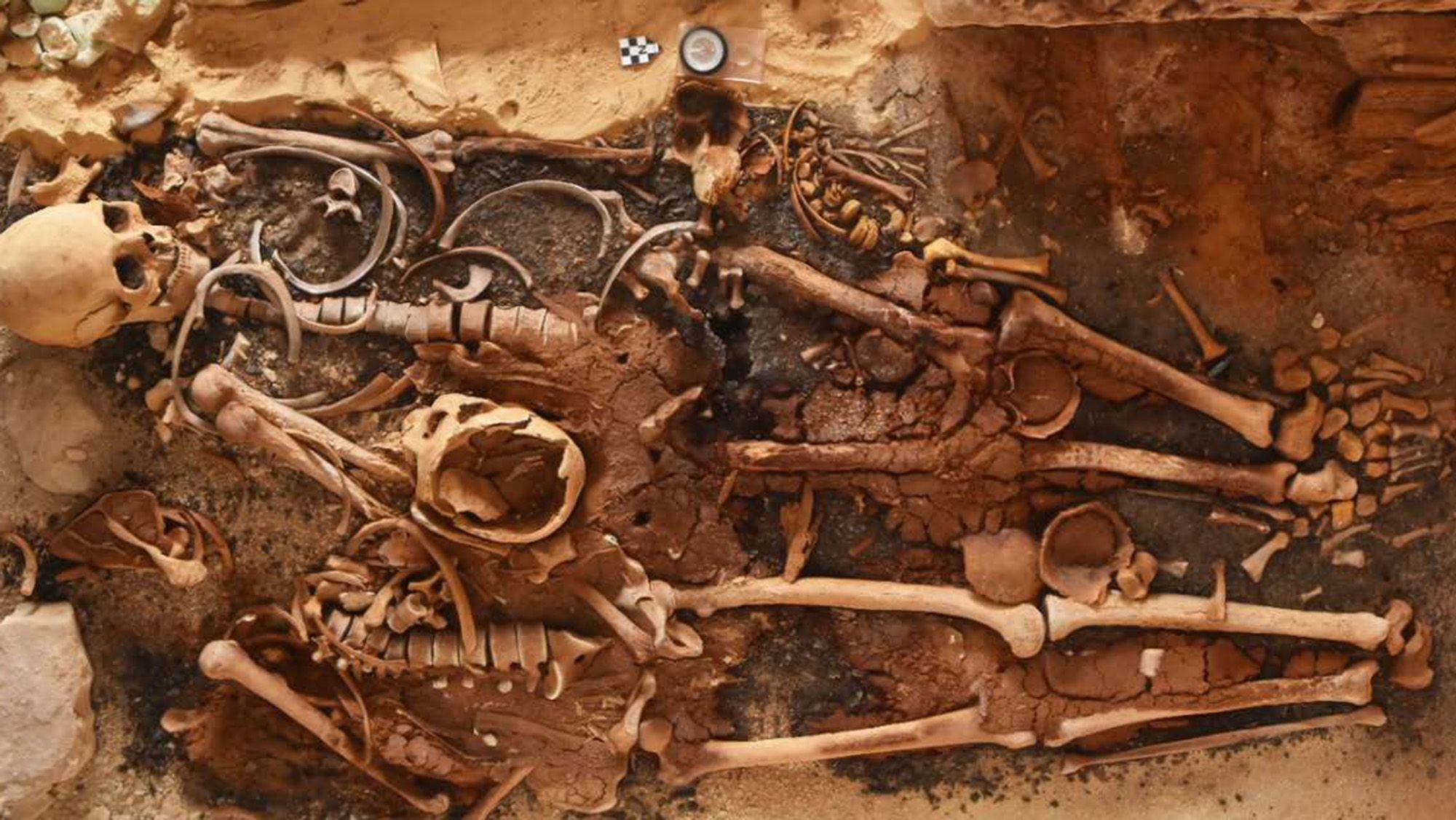
Archaeological excavations in Egypt have yielded a fascinating discovery: 18 ancient tombs located in Marina el-Alamein, a coastal town about 100 kilometers west of Alexandria. These tombs, dating back to either the Ptolemaic or Roman periods, span from 322 B.C. to A.D. 395. The Egyptian Ministry of Tourism and Antiquities made this announcement, indicating their significance in understanding the funerary practices of these ancient cultures.
Historical Context of Marina el-Alamein
The Ptolemaic era began after Alexander the Great’s conquests, with Egypt ruled by his generals. This period saw the fusion of Greek and Egyptian cultures, which profoundly influenced the local practices. The subsequent Roman period followed after Cleopatra VII’s reign, marking Egypt’s incorporation into the Roman Empire. Analyzing these tombs offers scholars a unique insight into how these diverse cultures interacted and influenced each other.
Unique Artifacts Unearthed
Within the tombs, many intriguing objects were found, including 24 gold tongues and a distinct offering altar. The gold tongues, believed to facilitate communication with the gods in the afterlife, have been frequently discovered in other Egyptian burials. These artifacts were thought to symbolize the flesh of the gods, allowing the deceased to speak before the Egyptian god Osiris during judgment. The offering altar, designed to represent a false door, signifies the spiritual connection between the living and the dead. Hesham Hussein from Egypt’s Ministry of Tourism elaborated that the false door symbolizes the interface through which the departed could receive offerings from the living.
A Closer Look at Other Discoveries
Among the finds, researchers also uncovered an 8.2-foot-long granite coffin with its lid intact, indicating careful preservation practices. An incomplete statue of Aphrodite, the Greek goddess known for love and beauty, was also excavated. This highlights the blending of Greek and Egyptian cultures during the Ptolemaic dynasty. Various scholars speculate on the significance of this statue, particularly regarding any potential nearby shrine dedicated to Aphrodite within the funerary complex.
The Fusion of Cultures
Dorota Dzierzbicka, the director of the Polish-Egyptian Archaeological Mission, noted that previous findings and these new discoveries together create a narrative of a culturally diverse community. This blend of Egyptian and Graeco-Roman traditions illustrates daily life and funerary practices in the ancient town. The recent discoveries reflect a significant chapter in Egyptian history, indicating not just a fusion of cultures, but also advancements in funerary customs.
With these discoveries, Marina el-Alamein has emerged as a critical site for those interested in ancient civilizations and their burial customs. The findings underscore the daily lives and beliefs of those who lived during these periods, paving the way for deeper exploration and understanding of the social, spiritual, and cultural dynamics in ancient Egypt. These tombs are not merely graves; they are portals to an era characterized by rich traditions and transformative cultural exchanges.