
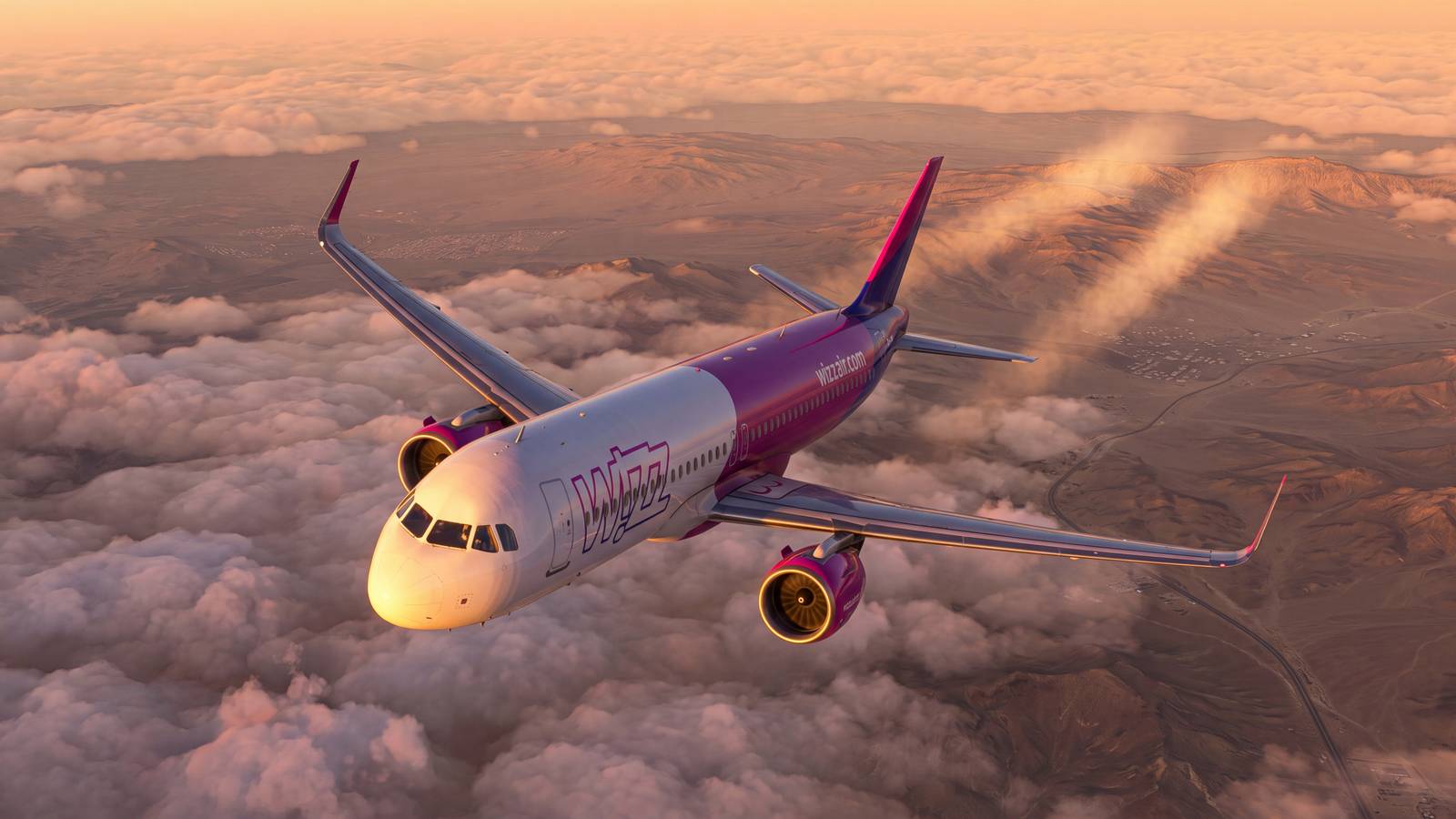
Wizz Air’s recent decision to eliminate its longest routes marks a significant shift for the airline, drawing attention from industry analysts and travel enthusiasts alike. The ultra-low-cost carrier has officially removed flights connecting London Gatwick to Jeddah and Medina from its booking system, raising questions about its long-haul strategy. This move follows a brief period where Wizz Air had plans to expand its operations in Saudi Arabia.
End of Long-Haul Services
The discontinuation of these Saudi routes is noteworthy as they represented Wizz Air’s longest scheduled flights, with some journeys approaching seven hours. These cancelations come as a surprise to many, particularly since the airline had intended to bolster its service to Jeddah, planning to offer double daily flights by 2026. The sudden removal of these routes has left passengers who rely on Wizz Air’s budget-friendly options scrambling for alternatives, particularly among those traveling for pilgrimage purposes.
Industry experts are beginning to speculate on the implications this has for the Airbus A321XLR, an aircraft type that was expected to play a central role in Wizz Air’s long-haul ambitions. Company executives recently acknowledged that the A321XLR no longer fits into their evolving business model, leading to fresh deliberations on the future of these aircraft within their fleet.
Changing Perspectives on Aircraft Strategy
In light of these developments, Wizz Air’s Chief Commercial Officer Ian Malin commented that the A321XLR will be utilized more like the airline’s traditional A321neo fleet, confirming that their operational strategies will no longer emphasize the aircraft’s extended range capabilities. This adaptation marks a notable pivot from Wizz Air’s earlier goals. Once centered on expanding into remote markets, the recent cancellation of these routes highlights how quickly airlines can recalibrate their strategies in response to shifting market dynamics.
Following the closure of Wizz Air Abu Dhabi, which was anticipated to launch various long-range services, the carrier transformed 36 of its 47 A321XLR orders into standard A321neos. This strategic reassessment has eliminated the long-range missions that the A321XLR was originally designed for, leaving only a small number of these aircraft in the future pipeline.
A Limited Future for the A321XLR
With the removal of the Saudi Arabian routes, Wizz Air’s network now lacks destinations that necessitate the A321XLR’s additional range. Most of their ongoing services in Europe and adjacent regions fit comfortably within the capabilities of the standard A321neo. Moreover, the airline has consciously refrained from pursuing transatlantic routes while exhibiting caution regarding deeper expansions into the Middle East or Africa due to operational and geopolitical complexities.
For Airbus, however, the A321XLR remains a popular choice among carriers looking to target premium long-thin routes. This suggests that Wizz Air’s current strategy should not be mistaken as a reflection of any inherent deficiencies in the aircraft itself. Instead, it serves as a reminder of how swiftly airline strategies can adapt to external pressures and market realities, raising questions about ongoing operational strategies in an evolving travel environment.
As Wizz Air continues to evaluate its options, it’s essential for the airline to navigate these changes effectively. With an unwavering focus on cost-efficiency and flexibility, the future of its A321XLR fleet hinges on discovering viable mission opportunities that align with its broader operational goals.