
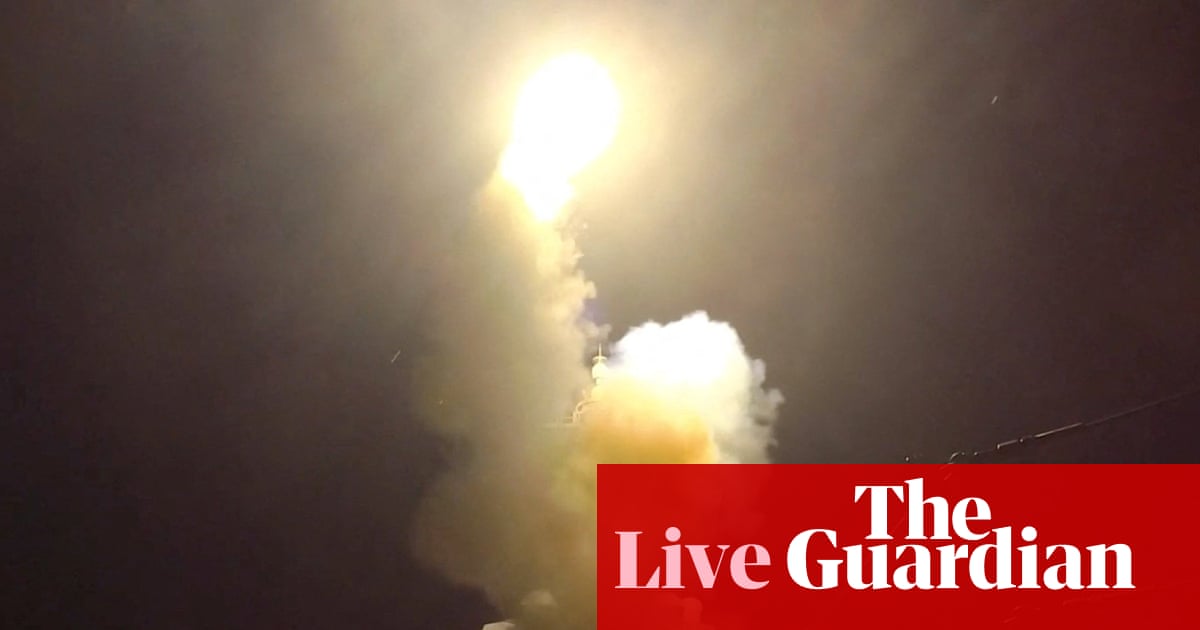
Iran has escalated military tensions in the Middle East by launching attacks on American military facilities in Bahrain and Kuwait. This response follows recent U.S. airstrikes targeting several Iranian positions, which included the destruction of air defense systems and other military assets. The Iranian Revolutionary Guards announced that their operations included strikes on fuel tanks and ammunition depots in Jordan, as well as the destruction of radar systems in Oman.
### Iranian Retaliation and Regional Responses
Jordan reported that it intercepted and destroyed four missiles originating from Iran, while Kuwaiti military forces claimed to be engaged in intercepting “hostile aerial targets” within their airspace. These developments mark a significant escalation in the ongoing hostilities between the U.S. and Iran, particularly regarding control over the strategic Strait of Hormuz, a vital maritime corridor for global trade.
### U.S. Claims and Iranian Assertions
The U.S. Central Command declared, “The Strait of Hormuz is a vital maritime corridor for global trade,” asserting that Iran does not control it. In contrast, the Iranian Revolutionary Guards dismissed this claim, stressing that the strait is part of Iranian territory and warning against any American interference. This conflict occurs amid a volatile backdrop of geopolitical tensions, with the two nations currently engaged in an interim agreement aimed at negotiating a permanent peace.
### The Broader Context
The interim deal was intended to facilitate talks to conclude a conflict that began when the U.S. and Israel launched military actions against Iran in February. However, instead of moving toward diplomacy, both sides have seen a rapid increase in attack exchanges centered around the Strait of Hormuz, through which about 20% of the world’s oil flows. The situation has escalated beyond mere exchanges into a cycle of military actions.
### U.S. Position and Mediation Efforts
Recently, U.S. President Donald Trump suggested that the interim deal may be “over.” Nonetheless, mediators from countries such as Pakistan, Qatar, and Egypt continue to explore avenues for a final agreement. While both nations engage in military posturing, the global community remains focused on the economic implications and the potential impacts on energy supplies.
In light of the ongoing tensions, the U.S. has intensified its military presence in the region, claiming to ensure the Strait of Hormuz remains open for commercial navigation. This promise, however, confronts increasing challenges as Iran moves to assert its influence and control in the area.
### Key Developments
Several notable occurrences have compounded the tensions:
– The U.S. struck Iran after the Islamic Revolutionary Guard Corps allegedly fired upon a container ship in the Strait.
– Iran responded by targeting a second vessel and conducted missile strikes against its Gulf neighbors.
– The Iranian military has announced a temporary closure of the Strait of Hormuz, raising alarms globally.
As the situation continues to unfold, both parties remain entrenched in their respective positions, making diplomatic resolutions increasingly challenging. Observers closely monitor how these escalating military actions will affect not only geopolitical relations but also global energy markets.