
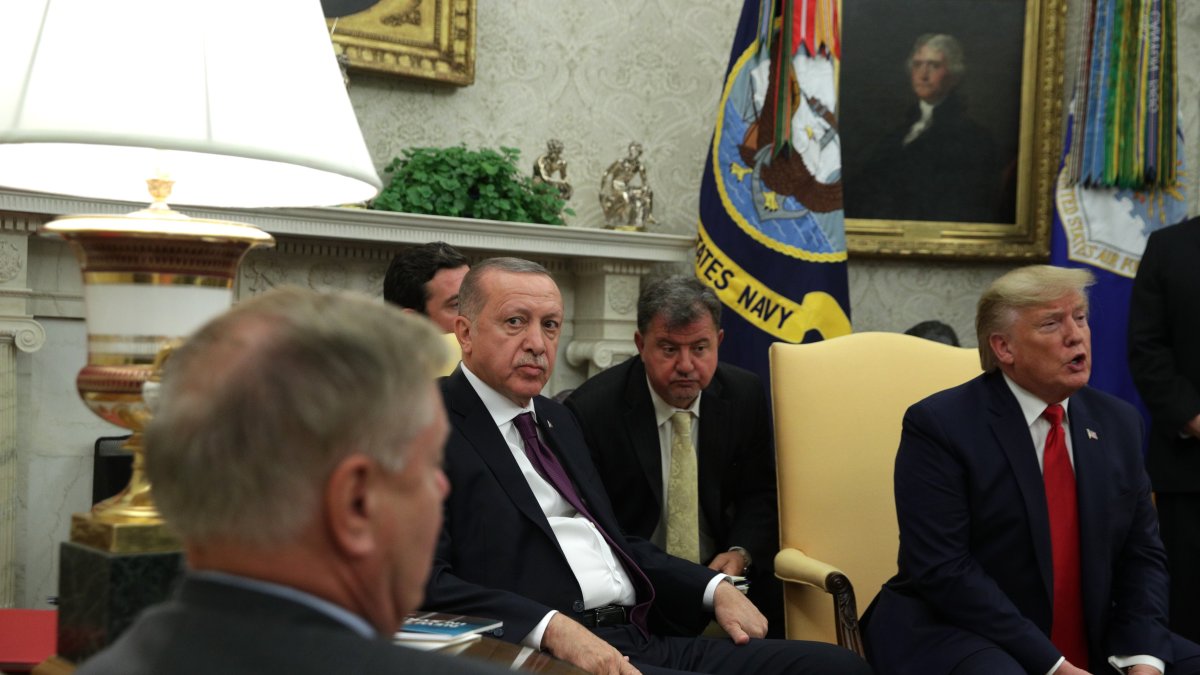
Lindsey Graham, a notable neoconservative and ardent supporter of former U.S. President Donald Trump, had a complex relationship with Türkiye. Known for his hawkish approach, Graham often found himself at odds with Turkish interests throughout his political career. His passing on a recent Saturday has sparked varied reactions, particularly within Turkish media, where some labeled him an adversary while others presented a more measured view, reflecting on his complicated history regarding U.S.-Türkiye relations.
Changing Tides in U.S.-Türkiye Relations
Graham’s position on Türkiye oscillated over the years, and his past collaborations with Israeli Prime Minister Benjamin Netanyahu complicated perceptions of his stance. Despite his longstanding opposition to elements of Turkish policy, particularly in regard to military actions in Syria, his more recent statements seemed to indicate a warming toward Ankara. Graham met with President Recep Tayyip Erdoğan multiple times, emphasizing diplomacy in their encounters, including a notable meeting at a classical concert in January 2019 designed to foster goodwill. His last significant visit was to Ankara during a NATO summit, showcasing the ebb and flow of diplomatic relations.
A Record of Opposition
Despite occasional diplomatic overtures, Graham maintained a firm stance against Türkiye on several critical issues. He was particularly vocal about Türkiye’s cross-border military operations in Syria and took notable action against what he termed threats to Kurdish groups, often associating them with the YPG, a Kurdish militia deemed terrorist by Türkiye. His legislative endeavors, like the Save the Kurds Act, reinforced his anti-Türkiye rhetoric, aiming to protect Kurdish interests in Syria against Turkish incursions. Graham’s insistence on sanctions and legislative proposals sought to curb Türkiye’s military actions, deepening the rift between Washington and Ankara.
Sanctions and Military Relations
Graham’s fierce opposition extended to Türkiye’s acquisition of the S-400 missile defense system from Russia, which he argued jeopardized U.S. national security interests. He proposed swift sanctions if Türkiye proceeded with the deployment, further complicating diplomatic engagements. His advocacy for the Countering America’s Adversaries Through Sanctions Act (CAATSA) led to Türkiye’s expulsion from the F-35 program. The repercussions of such initiatives lingered for years, alienating Türkiye from vital military support and exacerbating tensions between the two nations.
Potential for Reconciliation
Interestingly, the dynamics shifted during Trump’s presidency when both leaders expressed a desire to rebuild ties, despite Graham’s past opposition. Trump’s administration showed enthusiasm for strengthening U.S.-Türkiye relations, pledging to reverse sanctions and potentially approve sales of fighter jets. These developments marked a significant pivot, as Trump sought to mend the rifts exacerbated during Graham’s tenure in Congress. Given Graham’s established stance, his gradual alignment with the Trump administration’s softer approach raised eyebrows, yet it revealed the intricate dance of diplomacy that characterizes U.S.-Türkiye relations.
In summary, Lindsey Graham’s legacy will likely be characterized by his hawkish views on foreign policy, particularly in relation to Türkiye. While his later actions suggested a possible thawing of relations, the historical context of his opposition paints a complex picture. As the U.S. navigates its foreign policy in a shifting geopolitical landscape, understanding figures like Graham becomes crucial in evaluating how past perceptions influence current and future interactions with Türkiye.