
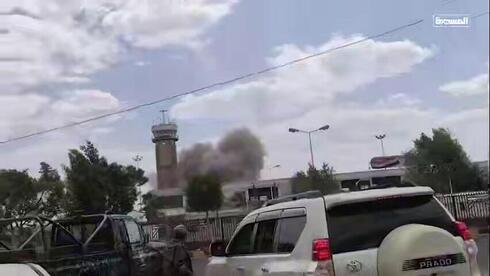
Saudi Arabia reported on Monday evening that its air defense systems successfully intercepted ballistic missiles launched by the Houthis, a militant group in Yemen. According to information from Yemen, these Iran-backed rebels made an attempt to attack various Saudi airports using advanced hypersonic missiles.
Recent Attacks on Saudi Airports
Sources indicate that the targets of these missile strikes included prominent Saudi military installations, specifically the King Khalid Air Base and the Prince Sultan Air Base. This escalation in hostilities comes in the wake of escalating tensions in the region, highlighting the ongoing conflict between Saudi Arabia and the Houthi movement, which is supported by Iran.
In a related report, Sabereen News, a media outlet associated with pro-Iranian factions in Iraq, claimed that an attack specifically targeted the Abha International Airport, located in the southern part of Saudi Arabia. These incidents underscore the continuous threat posed by the Houthis to Saudi infrastructure, raising alarms about the stability of the region.
Houthi Threats and Military Capabilities
In the aftermath of these missile launches, a senior Houthi official named Hezam al-Assad issued a severe warning. He remarked, “They opened the gates of hell upon themselves.” This statement reflects the group’s willingness to escalate their military efforts and indicates that they are prepared to intensify their campaign against Saudi Arabia. Al-Assad further emphasized a stark ultimatum, suggesting that the future of transportation and development in the region is at stake — “Either there will be airlines, airports, ports, trains, oil companies, ships, shipping lines, investment, and development for everyone, or there will be none for anyone.”
This alarming rhetoric encapsulates the gravity of the situation and the Houthi’s determination to disrupt Saudi operations, thereby inflicting economic and logistical damage. Their use of advanced missile technology, including hypersonic missiles, signifies a troubling development in their military capabilities, which poses a significant risk to Saudi defenses.
The Broader Implications for Regional Security
The recent surge in missile attacks signifies a moment of heightened risk not just for Saudi Arabia but for the entire region. Such aggressive maneuvers further strain relationships among Middle Eastern countries and align with a broader narrative of ongoing instability. The continuous pattern of retaliation and counter-retaliation could place innocent civilians in danger and disrupt energy supplies critical to the global economy.
As the situation unfolds, it becomes essential for international observers and policymakers to monitor developments closely. The potential for escalation remains high, and diplomatic efforts may need to be reconsidered in light of the growing hostility between the two sides. Without meaningful dialogue or intervention, the cycle of violence seems poised to continue, perpetuating a climate of insecurity in an already volatile region.