
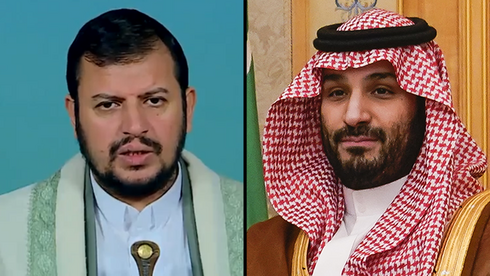
Tensions between Saudi Arabia and the Houthi rebels have escalated dramatically following a Saudi airstrike on Sanaa International Airport in Yemen. This incident has prompted swift retaliatory actions from the Houthis, leading to a resurgence of hostilities in an already volatile region.
Rapid Response from the Houthis
Just eight hours elapsed between the Saudi assault and the Houthis’ announcement of retaliatory measures. Saudi Defense Ministry spokesperson Turki al-Maliki confirmed that the kingdom’s air defenses successfully intercepted incoming ballistic missiles directed at its southern territories. This rapid response from the Houthis highlights the ongoing friction between the two sides and raises questions about the nature of their current conflict.
Yahya Saree, the Houthis’ military spokesperson, claimed the Saudi airstrike was an unjustified assault. He emphasized that the strike aimed to disrupt humanitarian flights, which are critical for those stranded or in need of medical care. In retaliation, the Houthis launched an attack on Abha International Airport using ballistic missiles and drones, asserting that their mission was successful.
Regional Geopolitical Dynamics
The conflict between Saudi Arabia and the Houthis has persisted for years, with periods of relative calm often disrupted by renewed violence. The situation is further complicated by external influences, particularly Iran’s involvement. A source in Sanaa revealed that recent airstrikes were a response to what was perceived as an Iranian violation of Yemen’s airspace. This indicates how regional tensions and alliances play a significant role in the Saudi-Houthi conflict.
Attempts to reach a comprehensive resolution have largely failed, despite various negotiations and international mediation efforts. The consistent failure to achieve peace can be attributed to escalating regional tensions and the complexity of local power dynamics.
Potential Implications of the Conflict
The recent skirmishes also reflect a shifting paradigm in Gulf geopolitical strategies. The Houthis appear more emboldened, adopting tactics reminiscent of Iran’s approach to conflict. Just as Iran often threatens proportional responses to perceived attacks, the Houthis mirrored this strategy by launching counterattacks on strategic Saudi sites. Their warning to airlines to avoid Saudi airspace further underscores their assertiveness.
This shift in the deterrent dynamic could have far-reaching implications. Historical norms dictating a careful approach to military engagements in the Gulf seem compromised, with strikes occurring with less fear of consequences. The predictability of retaliatory actions diminishes the sense of urgency and caution that used to govern these interactions.
In summary, as conflict continues to engulf the region, the dynamics between Saudi Arabia and the Houthis serve as a stark reminder of the complexities involved in Middle Eastern geopolitics. The interplay of local grievances with broader regional tensions can create a cycle of violence that complicates peace efforts, illustrating that the road to stability remains fraught with challenges.