
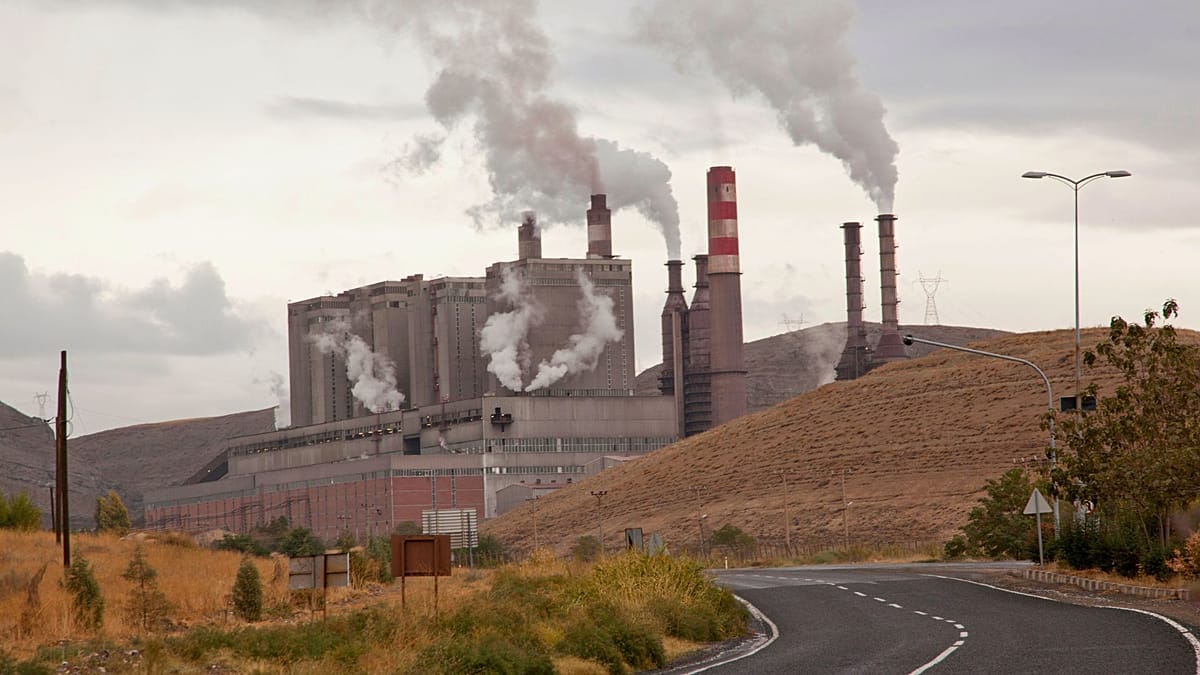
Environmental advocates in Türkiye are celebrating a significant triumph following a court’s decision to halt the expansion of the nation’s largest coal-fired power plant. This ruling has been seen as a pivotal moment in the fight for a cleaner, healthier environment.
Community Involvement and Legal Action
Local residents have rallied together with Greenpeace Türkiye to contest the planned construction of two additional units at the Afşin-Elbistan A Thermal Power Plant, located in the southeastern Kahramanmaraş Province. Their lawsuit highlighted serious concerns regarding the potential adverse effects of this expansion on human health, local agricultural land, water supplies, and regional ecosystems. On July 8, the court made a significant ruling, canceling the Environmental Impact Assessment that had originally green-lit the project. The court concluded that the anticipated negative environmental effects could not be deemed manageable.
“This court ruling is a win for the communities of Afşin and Elbistan. We have been fighting for clean air, fertile land, and a better future for our children,” remarked Mehmet Dalkanat of the Afşin Elbistan Life and Nature Protection Platform, which has collaborated closely with Greenpeace. The organization now calls for a comprehensive transition away from coal that considers both human well-being and ecological sustainability.
The Future of Coal in Türkiye
The proposed expansion at Afşin-Elbistan marks yet another decline in coal projects within Türkiye. The country has seen a dramatic reduction in proposed coal units, decreasing from 95 units equating to 57.5 GW in 2015 to just two active proposals today. This has led to an unprecedented cancellation rate of coal projects—up to 97 percent globally.
However, a national coal phase-out plan remains elusive. Another proposal—a significant expansion of the Cenal Coal Power Plant—was recently approved, raising concerns about Türkiye’s commitment to environmental sustainability. Critics, including the campaign group Beyond Fossil Fuels, argue that strengthening coal infrastructure sends mixed signals, especially with Türkiye poised to host the UN’s COP31 climate summit in November. Despite coal accounting for nearly one-third of Türkiye’s electricity production, its aging fleet lacks clear retirement timelines, raising alarms among environmental advocates.
Legal Findings and Community Concerns
The expansion of the Afşin-Elbistan facility faced delays due to legal challenges. A recent report from a court-appointed expert committee stated that the project was not in the public’s best interest. Key assessments regarding environmental impacts and the livelihoods of local residents were either incomplete or overlooked. This negligence poses significant public health risks, particularly among vulnerable populations, who have suffered due to inadequate regulatory frameworks.
Civil society organizations continue to voice their opposition to coal projects, citing plans that could endanger local agriculture and heritage sites. Many coal plants in Türkiye are reported to lack proper emissions filtration systems, resulting in high levels of air pollutants like sulfur dioxide and particulate matter.
Renewable Energy: A Path Forward for Türkiye
Advocates argue for the reallocation of coal subsidies toward renewable energy and updating the electric grid as a viable strategy to enhance energy security and job opportunities in regions traditionally reliant on coal. As financial support for fossil fuels diminishes, employment in the coal sector is also declining, alongside the rising costs of coal-based electricity generation.
The outlook for renewable energy is promising; solar and wind energy costs have plummeted by as much as 69 percent and 40 percent, respectively, over the past decade. A recent report by Greenpeace Türkiye indicated that investment in renewable resources could significantly bolster employment in the Afşin-Elbistan area.
With ongoing efforts, Türkiye is making steady progress toward its ambition of achieving 120 GW of renewable energy capacity by 2035. As a key moment approaches with the COP summit, the nation has an opportunity to cement a transition to cleaner energy, benefiting both the environment and local communities.