
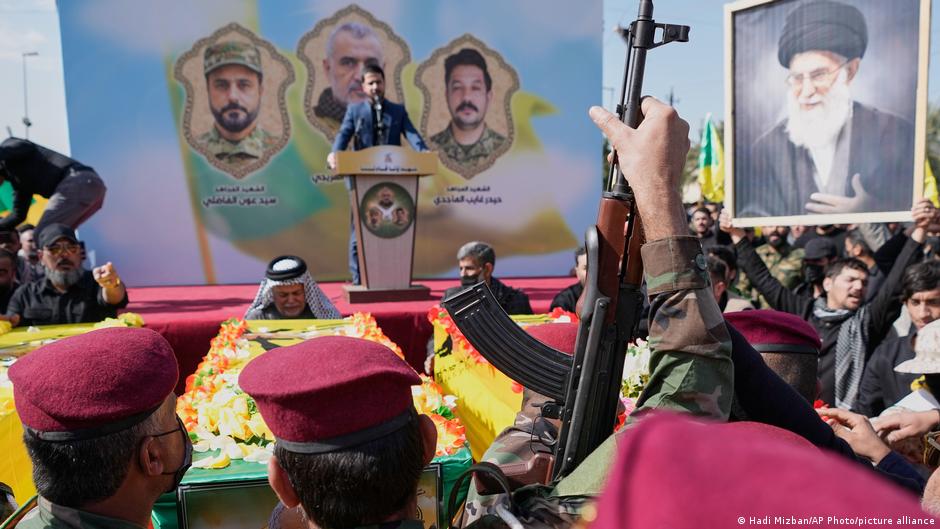
As Iraq’s newly appointed Prime Minister Ali al-Zaidi prepares for discussions at the White House, he is likely to face a range of sensitive topics, including the contentious role of Iran-linked paramilitary groups in Iraq. These groups have gained prominence in Iraq’s political and military landscape, particularly since their formation in 2014 to combat the rise of the Islamic State. The dynamics of these militias, especially the Popular Mobilization Forces (PMF), are crucial not only for Iraq but for the broader geopolitical climate involving Iran and the United States.
The Emergence of the Popular Mobilization Forces
Initially established in response to the Islamic State threat, the PMF comprises several factions, with approximately 240,000 fighters and an estimated budget of $3.5 billion annually. Some of these factions are closely aligned with Iran and are part of its broader “Axis of Resistance,” which includes groups like Hezbollah and Hamas. Recent tensions between the U.S. and Iran have intensified scrutiny of the PMF, especially given their involvement in attacks on U.S. bases across Iraq and beyond. As the situation evolves, U.S. officials have expressed a desire for these militias to disarm, emphasizing that peace in the region cannot be achieved as long as Iranian proxies remain armed.
U.S. Pressure on Iraq
In the past year, the United States has escalated its campaign to pressure the Iraqi government into addressing the militias’ influence. Measures have included classifying certain PMF factions as foreign terrorist organizations, applying sanctions on associated businesses, and even threatening to limit Iraq’s oil revenues. Amidst this pressure, the Iraqi government has announced a plan to bring all arms under state control, and factions like Muqtada al-Sadr’s Saraya al-Salam have started to comply by handing over weapons. However, doubts linger regarding the sincerity of such moves and whether they signify genuine disarmament or merely a rebranding of existing power dynamics.
The Challenge of Political Integration
Many PMF factions maintain political representation in Iraq’s parliament, with their parties controlling a significant portion of seats and ministries. This intertwining of military and political power complicates disarmament efforts. Experts argue that effective monitoring of any disarmament would require external oversight, as the Iraqi state remains weak and susceptible to manipulation. While some militia groups, like Asaib Ahl al-Haq, have shown a willingness to transition towards a more political engagement, other factions, such as Kataib Hezbollah, remain firmly committed to maintaining their military capabilities.
Will Changes Lead to Stability?
Despite the apparent movements towards disarmament, many analysts express skepticism regarding the long-term implications. The complexities of Iraq’s political landscape mean that, even if some groups were to disarm or shift away from violent resistance, the underlying pro-Iran sentiment among many factions and segments of the population could still fuel conflict. This sentiment poses a significant challenge for U.S. ambitions of reducing Iranian influence in the region. The discussions during Prime Minister al-Zaidi’s meeting in Washington will likely weigh heavily on these dynamics, highlighting the intricate balance between local power struggles and broader geopolitical interests.
In summary, Iraq’s militias represent a critical challenge in the nation’s governance and security framework. While recent pledges to disarm may hint at a shift toward more political engagement, the deep-rooted ties to Iran and the complexities of local power dynamics suggest that achieving lasting stability will require much more than mere promises. The situation remains fluid, and the ramifications of these developments continue to unfold.