
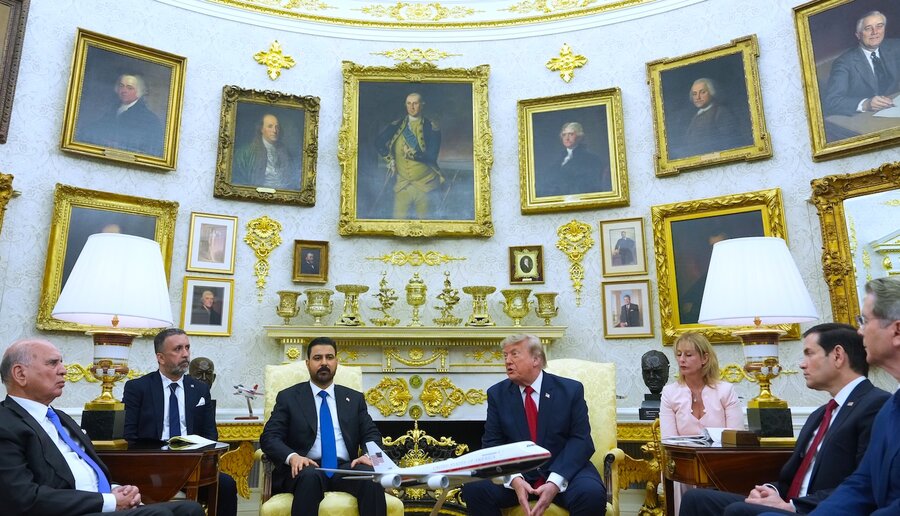
The recent meeting between Iraqi Prime Minister Ali al-Zaidi and U.S. President Donald Trump highlights Iraq’s vital role in U.S. foreign policy. With a population of 48 million and the world’s fifth-largest oil reserves, Iraq finds itself at a strategic crossroads. Its extensive border with Iran and complex political landscape, influenced by Iran-affiliated militias, adds layers to its significance in the region. This interaction also indicates a promising yet delicate phase in Iraq’s recovery from years of instability and conflict.
Progress Amidst Challenges
In the aftermath of decades marked by dictatorship, insurgency, and foreign intervention, Iraq is now facing an opportunity for genuine transformation. Retired U.S. Army General David Petraeus, who previously commanded coalition forces in Iraq, emphasized the rarity of such a moment in history. “Iraq may have reached such a moment,” he noted, suggesting that the U.S. can play a significant role in facilitating this pivotal change. As Iraq embarks on its path to a redefined future, international support may prove essential for long-lasting improvement.
Since the fall of the Islamic State, which was expelled from its stronghold in Iraq’s northwest, the country has witnessed remarkable societal changes. In Mosul, where cultural activities were once banned, citizens are now engaging in book clubs and various artistic pursuits. Baghdad has also been revitalized, featuring a skate park and a newly established American University of Iraq. These developments represent a growing acceptance of art and education, critical components in fostering a vibrant civil society.
Younger Generations Driving Change
Despite political strife and economic challenges, younger Iraqis are emerging as catalysts for change. A recent report underscores the active role that youth are playing in shaping their communities. “Unwilling to accept the status quo, they are pushing boundaries to influence constructive change,” the report indicated. This spirited activism stems from a deep-seated desire for better opportunities and a more stable social framework. A young Iraqi woman succinctly captured this ambition, expressing her desire for personal and communal growth beyond the limitations of an inconsistent economic system.
Prime Minister al-Zaidi appears to be aware of the critical support needed from both the U.S. and regional partners to fulfill the aspirations of the Iraqi people. Although relatively new to politics, al-Zaidi has a background in business and has moved quickly to initiate collaborations with American energy firms. Furthermore, he has launched a significant anti-corruption campaign, resulting in the arrest of nearly 50 officials and the seizure of around $100 million in cash and assets. Such actions reflect a commitment to tackling long-standing issues that have hindered progress.
A Stable Iraq as a Trade Corridor
A stable and sovereign Iraq, free from foreign and extremist influences, could serve as a reliable overland trade route connecting Gulf States with the West, passing through Syria and Turkey. This strategic vision could not only benefit Iraqi citizens but also enhance regional cooperation and economic growth. As Petraeus remarked, this juncture provides a unique opportunity for both Iraq and its international allies—including the United States—to demonstrate their dedication to a prosperous future for Iraqis.
The outcomes of the al-Zaidi-Trump meeting signify more than just diplomatic engagement; they represent a potential partnership aimed at nurturing the aspirations of an entire nation. With the right support and strategic planning, Iraq might indeed be on the brink of a new era marked by stability, progress, and possibility.