
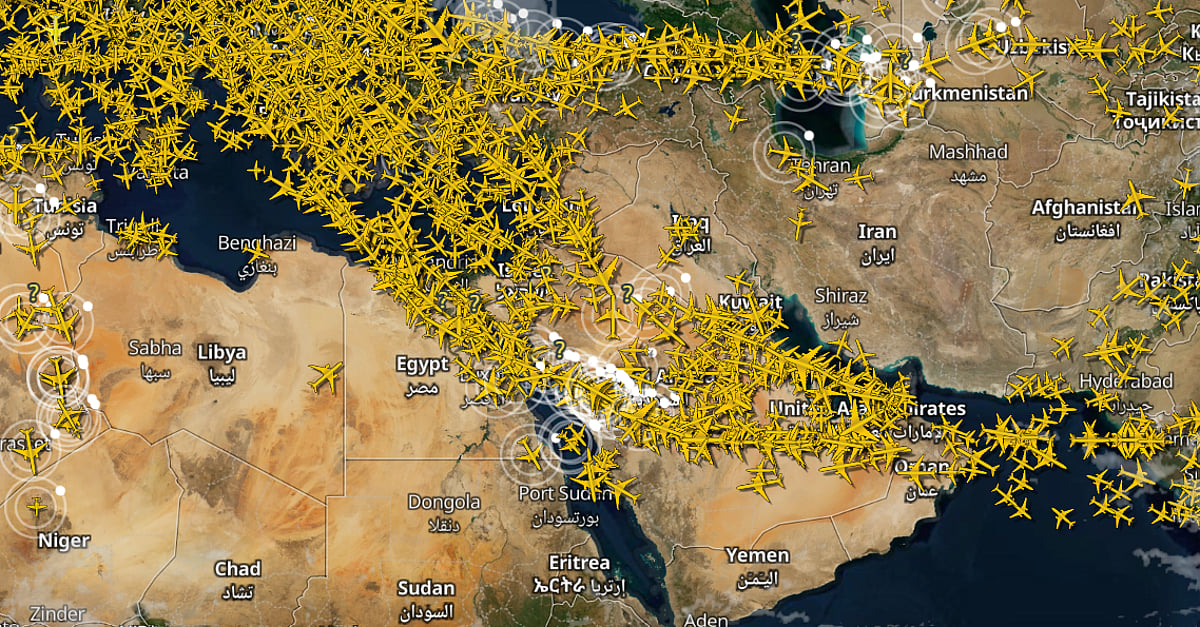
EASA has recently issued important safety recommendations for airlines operating in certain regions, particularly in the Gulf area. These guidelines are aimed at minimizing risks associated with escalating tensions in the region. The aviation community is urged to heed these advisories to maintain the safety of air travel.
Airspace Restrictions Recommended by EASA
The European Union Aviation Safety Agency (EASA) has advised airlines to take significant precautions concerning airspace operations in the Gulf region. Specifically, the agency recommends that airlines should:
– Refrain from flying in the airspace of the UAE, Bahrain, Kuwait, and Qatar at any altitude.
– Avoid traversing the waters of the Gulf of Oman, particularly within the Muscat Flight Information Region (FIR) west of longitude 58°E.
– Stay updated on official aviation alerts and guidance from national authorities.
The rationale behind these advisories is grounded in the increasing risks associated with the area’s unstable political climate. EASA’s notice emphasizes the importance of these restrictions to ensure safe air travel over regions currently under heightened scrutiny.
Underlying Reasons for the Advisory
The warning from EASA follows a noticeable decline in security as a result of continuous violations of ceasefire agreements between the United States and Iran. Heightened Iranian efforts to assert control over the strategically vital Strait of Hormuz, along with attacks on commercial vessels and subsequent military responses from the U.S., have further escalated risks in Gulf airspace.
Additionally, the strategic presence of major U.S. military bases in the region intensifies fears of potential missile and drone strikes aimed at Gulf states. EASA has noted that civil aircraft could be mistakenly identified or unintentionally involved in military operations, given the rapid escalation of military activities. The possibility of sudden military confrontations adds another layer of unpredictability, leaving airlines with minimal time to adjust their flight routes or respond to suddenly imposed airspace restrictions.
The Ongoing Security Landscape
The security environment remains fluid, with various countries in the Gulf region enacting airspace closures and additional safety measures. However, EASA warns that the dynamic nature of the conflict often means these actions may not be implemented swiftly enough to guarantee safety. Missiles, drones, and combat aircraft present severe risks to civil aviation over affected airspace at all levels of flight.
EASA intends to continuously monitor developments alongside the European Commission and EU member states to adapt its risk assessments for airlines operating in these turbulent regions. This advisory reflects a broader concern stemming from ongoing conflicts, with separate guidelines still in effect that instruct airlines to avoid airspace over Iran, Iraq, and Lebanon, thereby expanding the scope of existing safety issues to include several Gulf states like the UAE.
In light of these developments, the UK Foreign Office has also revised its travel advisories for the UAE, indicating that the security landscape remains uncertain. Despite a memorandum of understanding between the U.S. and Iran aimed at stabilizing the region, the potential for renewed hostilities looms large.
Overall, it is crucial for airlines and passengers alike to remain vigilant and informed about the evolving security situation in the Gulf region.