
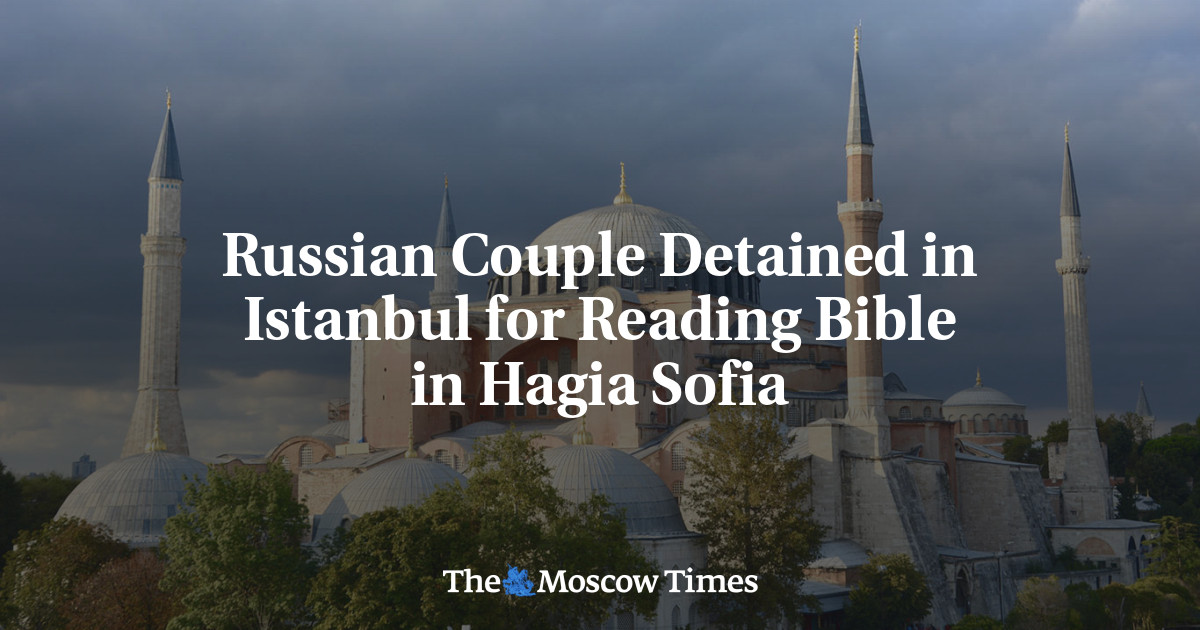
A Russian couple is facing deportation from Turkey after they were apprehended for reading the Bible inside Istanbul’s Hagia Sophia, a significant historical site that was transformed into a mosque a few years ago. This incident brings to light ongoing tensions regarding religious practices in Turkey and the implications for foreign visitors.
Details of the Incident
The individuals involved, Viktoria and Igor, were reportedly taken out of Hagia Sophia on a Monday and charged with inciting hatred or hostility among locals, according to reports from Ostorozhno Novosti. By the following day, Turkish authorities transferred them to a detention center as preparations for their deportation began. Sources from the state-run TASS news agency confirmed the couple’s arrest, shedding light on the stringent measures being implemented by Turkish law enforcement.
In a statement, Russia’s Foreign Ministry announced that its consulate in Istanbul had reached out to the couple’s legal representative. This diplomatic involvement underscores the complexities of international relations between Russia and Turkey, particularly regarding the treatment of Russian citizens abroad.
The Historical Context of Hagia Sophia
Originally constructed as a cathedral during the Byzantine Empire, Hagia Sophia has a rich and tumultuous history. After the Ottoman conquest of Constantinople in 1453, it was converted into a mosque. In 1934, amid efforts to secularize the country, it became a museum. However, in 2020, Turkish President Recep Tayyip Erdoğan reinstated Hagia Sophia’s status as a mosque for Muslim worship, a move that sparked widespread criticism, particularly from Christian communities. The Russian Orthodox Church has labeled this change as a “threat to the whole of Christian civilization,” highlighting the ongoing cultural and religious sensitivities surrounding the site.
Despite these transformations, parts of Hagia Sophia still serve as a museum, which is where Turkish security personnel reportedly caught Igor reading the Bible. This situation raises important questions about religious freedom and the limits placed on such practices in a space that holds historic significance for multiple faiths.
Implications of the Arrest
The arrest of Viktoria and Igor possibly signals a larger trend in Turkey, where the government has been increasingly vigilant about maintaining public order and protecting national identity, especially amidst rising tensions surrounding religious and cultural activities. Such incidents may create a chilling effect, discouraging foreign visitors from engaging in practices that may be viewed as provocative. The diplomatic talks between Russia and Turkey could remain crucial in determining the future of their relationship, particularly for Russian citizens who might engage in similar activities.
Ultimately, the deportation case of this couple serves as a reminder of the delicate balance between freedom of expression and the cultural sensitivities that exist in different parts of the world. As Turkey navigates its identity, more attention will likely be paid to such incidents, and they may contribute to the evolving narrative surrounding religious freedom and the rights of international visitors within its borders.