
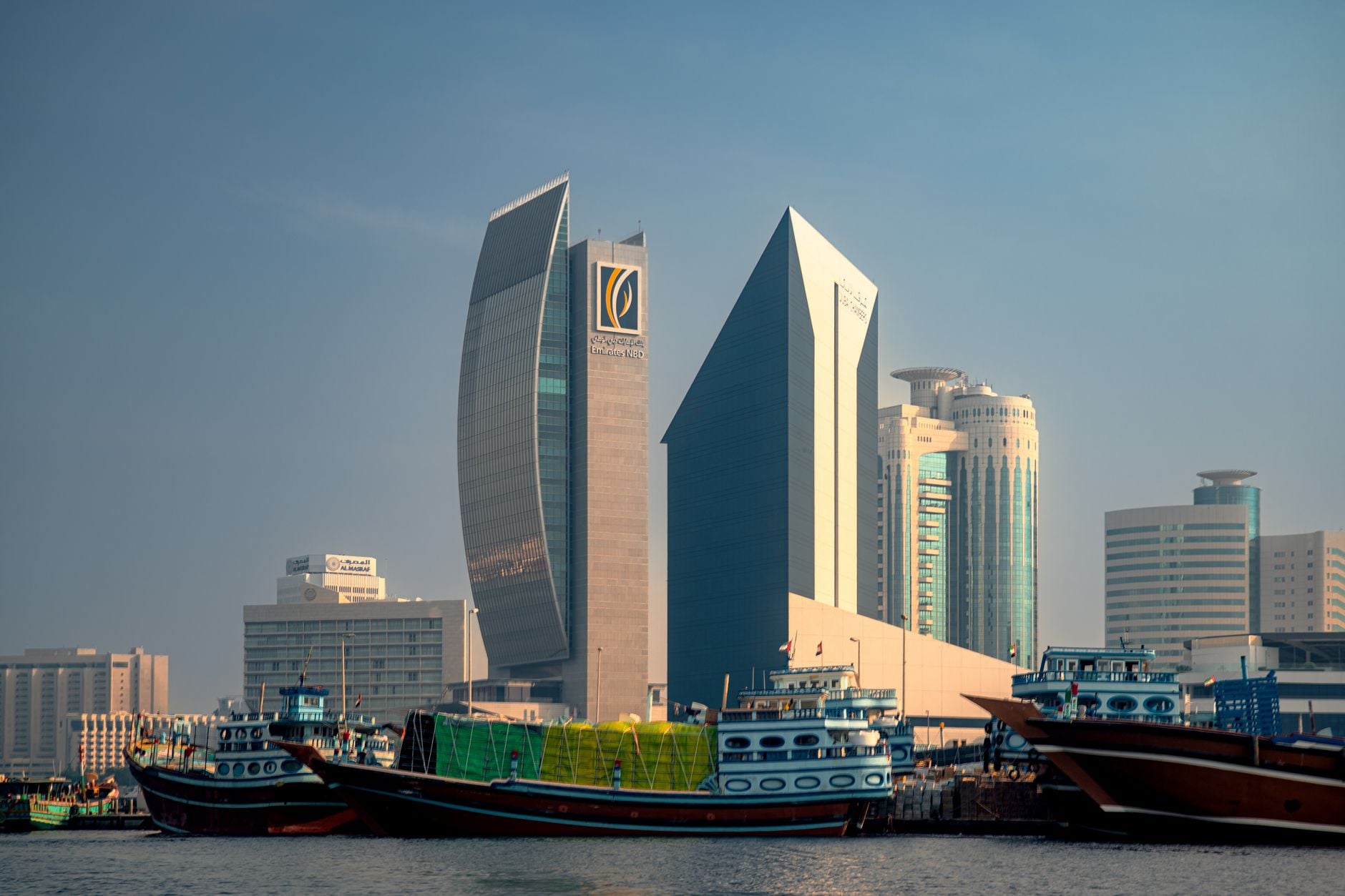
Dubai is often perceived as a city solely defined by its oil wealth, but a closer look reveals a much more sophisticated economy. The city has successfully diversified away from hydrocarbons, shifting its focus to trade, finance, tourism, and aviation. This transformation is crucial for understanding Dubai’s role in the global economy, as well as its position within the United Arab Emirates.
Understanding Dubai’s Economic Evolution
The narrative that oil constituted roughly half of Dubai’s economy in the early 1980s and has since dropped to less than 1% is a simplification that deserves scrutiny. In 2004, a government report indicated oil’s contribution was around 7%, and by 2009, an International Monetary Fund discussion paper pegged it at less than 1%. However, recent data does not distinguish oil production as clearly as before, now placing it within the broader category of mining and quarrying, which makes tracing its exact current contribution challenging.
Despite the complexities of measuring oil’s economic role, one fact remains robust: oil and gas account for only a minor fraction of Dubai’s overall economic output today. This shift emphasizes that hydrocarbons are no longer the primary engine driving economic growth.
Clarifying the Distinction: Dubai vs. UAE
One common misconception is equating Dubai with the broader United Arab Emirates. While the UAE is rich in oil, primarily situated in Abu Dhabi, Dubai’s oil reserves are modest by comparison. The city’s early revenues from oil did help accelerate its infrastructure development in the 1960s, but the significance of oil in annual economic activity has significantly diminished over time. This historical context is essential; while oil revenues might have funded the construction of airports or ports, the resulting trade and services now drive economic growth independently of their origins.
Trade as the Cornerstone of Dubai’s Economy
Current data clearly illustrates that trade is the largest direct sector in Dubai’s economy. Recent figures show that wholesale and retail trade made up around 22% of the GDP in early 2026. Other sectors such as finance, real estate, and construction also contribute significantly, but trade remains foundational. The city’s logistics infrastructure, such as the Jebel Ali Port and the adjoining Free Zone, has enabled it to function as a crucial hub for regional trade and commerce.
The creation of the Jebel Ali Free Zone has particularly facilitated a surge in business activity, with its evolution from a handful of companies to over 11,000 today. This transformation underscores how Dubai has capitalized on its strategic location to sustain and grow its trading prowess, rather than solely relying on its natural resources.
Aviation: The Connective Tissue of Dubai’s Growth
Aviation is another critical pillar fortifying Dubai’s economy. Established in 1985, Emirates Airlines has evolved into a major global carrier and economic player. An Oxford Economics study indicated that aviation contributed approximately AED 137 billion in gross value to Dubai’s economy in 2023, similar to 27% of the GDP. This figure reflects the interconnected nature of the city’s economy, where different sectors, including tourism and trade, feed off each other.
As travel and logistics channels expand, the importance of aviation to Dubai’s connectivity strategy further solidifies. The flow of passengers and cargo supports hotels, retail establishments, and finance sectors alike, highlighting the interdependence of various revenue streams.
In conclusion, while oil once laid the foundation for Dubai’s growth, the city has transitioned to an economy driven by interconnected sectors such as trade, tourism, and aviation. The evolution from a single-resource economy to a diversified marketplace has established Dubai as a significant global economic hub. However, even with diversification, the city remains subject to global market fluctuations, emphasizing the need for continued investment in infrastructure and services.