
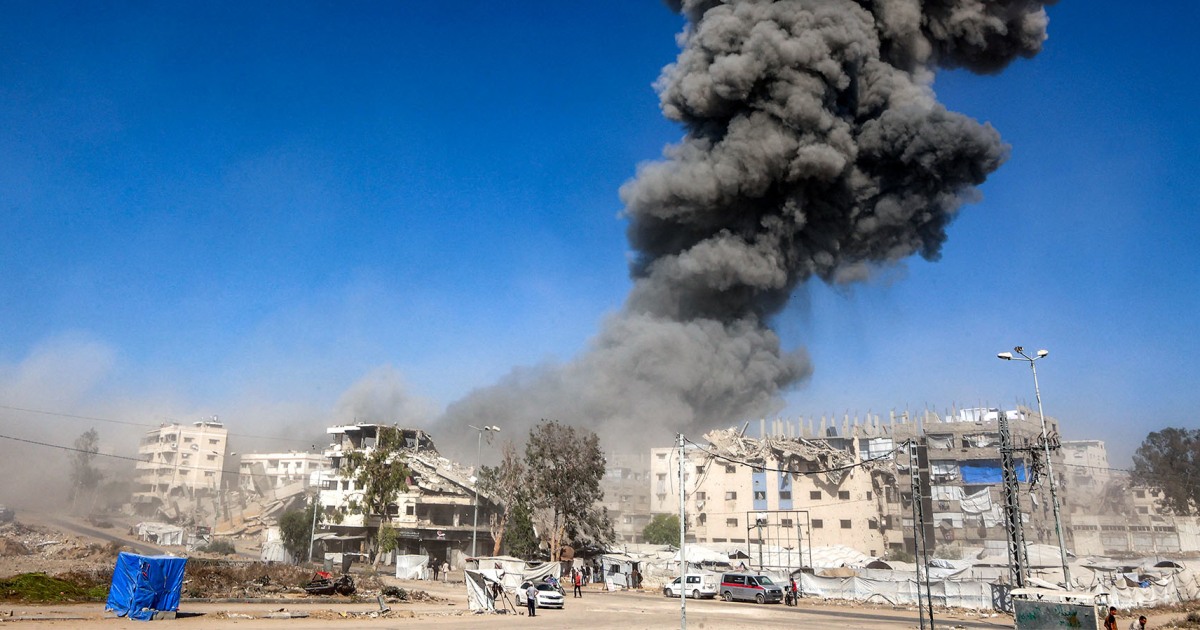
House Democrats Divided on Israel Aid Amendment
A notable schism is emerging among House Democrats regarding the future of U.S. aid to Israel, drawing a line between the party’s progressive faction and its more centrist members. This internal conflict has escalated to the point where it has forced a public confrontation between the party’s leadership.
Intra-Party Conflicts Emerge
The ongoing tensions within the Democratic Party reflect a significant rift among lawmakers about how to approach U.S. foreign policy toward Israel. A rising progressive faction is advocating for a halt to financial support for Israel unless there’s a change in the Israeli government’s conduct in Gaza. In contrast, centrist Democrats are hesitant to jeopardize the long-standing alliance between the U.S. and Israel. This divergence presents a challenging landscape for party leaders.
House Minority Leader Hakeem Jeffries, a key figure in the party, has declared his opposition to an amendment introduced by Rep. Thomas Massie, a Republican from Kentucky, which seeks to stop aid to Israel. Jeffries criticized the amendment as “overly broad” and counterproductive. Meanwhile, Minority Whip Katherine Clark of Massachusetts publicly diverged from Jeffries, expressing her intention to support the amendment in light of the urgency for change regarding U.S. military aid to foreign nations that do not align with American values and laws.
Debate Surrounding the Massie Amendment
Despite her reservations, Clark noted that the current situation is untenable and stressed that the Netanyahu government’s actions have not met U.S. standards. She mentioned, “I will be voting yes, not because I support the entirety of the amendment but because I believe we must change course.” This sentiment indicates a growing frustration among incumbents, who feel the need to reevaluate the norms of U.S. foreign aid.
The Massie amendment proposes to prohibit any allocations from the national security and State Department appropriations bill being directed toward Israel. This would also include blocking $3.3 billion in security assistance. Jeffries, in a communication to House members, has warned that the Massie proposal could hinder the U.S.’s ability to combat organizations like Hamas and Hezbollah, which pose threats to both Israel and American interests.
Public Sentiment Influencing Democratic Leadership
The dissent among Democrats comes at a time when public opinion is also shifting regarding U.S. involvement in the Israeli-Palestinian conflict. A recent Gallup poll revealed that for the first time, more Americans express sympathy for Palestinians over Israelis. Among Democrats, the discrepancy is even more pronounced, with a significant majority favoring support for Palestinians.
This changing landscape puts additional pressure on party leaders to adapt their stance on the issue. Progressive Caucus Chair Greg Casar of Texas has openly contested the party’s traditional alignment with Israel, advocating for a new approach that addresses the concerns raised by constituents. He argues for an end to taxpayer funding that supports military actions resulting in civilian casualties, especially during a time when many Americans are grappling with their own economic difficulties.
Democrats are now at a crossroads. As the vote on the Massie amendment approaches, members are confronting whether to uphold the party tradition of unwavering support for Israel. Some representatives have publicly stated their conflicts on how they will vote, revealing the deep divisions in the party. Rep. Ami Bera from California, who sits on important committees, noted he would choose to vote “present,” indicating his support for the U.S.-Israel relationship while voicing strong disapproval of the current Israeli administration’s actions in Gaza.
This situation encapsulates a pivotal moment for the Democratic Party as it navigates shifts in public opinion, internal dissent, and the evolving geopolitical landscape in the Middle East. As discussions continue, the implications of this vote and how lawmakers respond could have lasting effects on U.S. foreign policy decisions regarding Israel.