
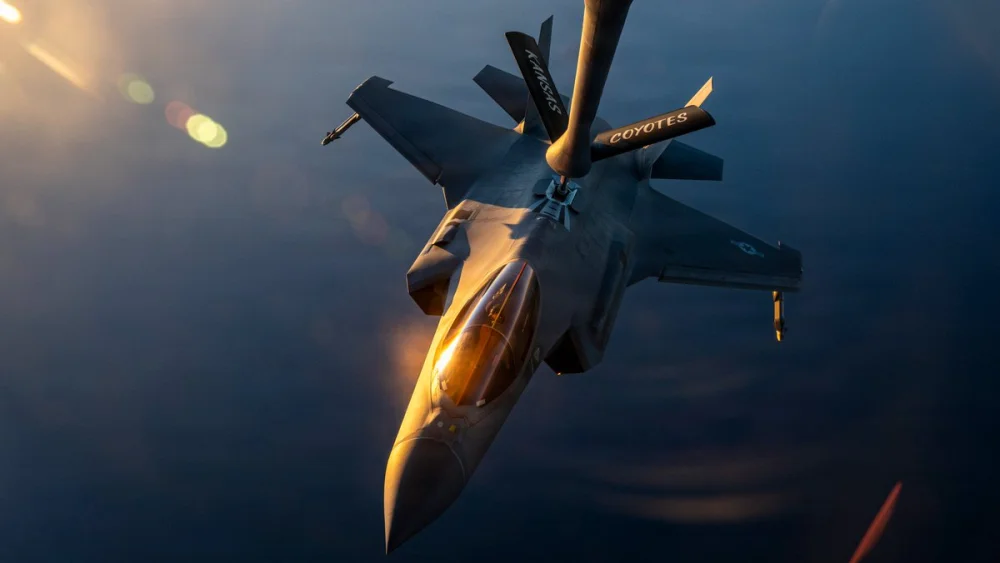
The U.S. decision to provide F-35 fighter jets to Turkey signals a profound shift in foreign policy that raises concerns for allies like Israel and the stability of the Middle East. This move not only undercuts America’s strongest democratic partner in the region but also threatens the values of liberty that are foundational to the United States.
A Historical Context of Conflict and Betrayal
As a member of the Tigrinya nation in Eritrea, I reflect on the long-standing history of conflicts involving my people and the regions surrounding the Red Sea. This area has witnessed various empires and ambitions, from the Roman Empire’s efforts to secure trade routes to the Ottoman Empire’s incursions in the 16th century. My ancestors took up arms against invaders, only to face overwhelming force and brutality that left lasting scars. The recent military developments indicate a worrying resurgence of imperial aspirations, particularly with Turkey under President Erdoğan actively seeking to expand its influence.
Growing up with the legacy of Ottoman atrocities instills a deep-seated skepticism about arming Turkey, especially under an Islamist leadership that has clear ambitions for regional dominance. Historical figures like Ahmed Gragn led campaigns under Ottoman backing, reminiscent of today’s extremist groups. The impact of such militarization resonates through centuries, embedding fear and a sense of vulnerability within communities. The question arises: what are the consequences of empowering a nation that has historically taken such aggressive actions?
The Dark Legacy of Ottoman Rule
The Ottoman Empire established a regime that blurred the lines between political authority and religious imposition. Its rule brought about systematic persecution and the enslavement of indigenous peoples, including the Tigrinya. The Massawa-Hirgigo region became notorious as a hub for the slave trade, where countless lives were upended and identities lost. The plight of the Tigrinya, especially the resilience shown by women adorning themselves with Christian symbols as a form of resistance, underscores the brutal reality of imperial ambitions. This history, largely unacknowledged on the global stage, paints a vivid picture of why modern geopolitical decisions carry profound significance.
The contemporary political climate reveals echoes of this oppressive past. Turkey is actively engaging in a strategy reminiscent of the Ottoman Empire, expanding its military footprint across several countries, from Syria to Libya, and even harboring opposition groups against the Eritrean government. Providing advanced military technology like the F-35 could enable Erdoğan’s government to further entrench itself in territorial ambitions, undermining not only regional stability but also American interests.
A Strategic Miscalculation
The transfer of F-35s to Turkey should not be seen merely as a military upgrade; it is a dangerous empowerment of an increasingly authoritarian regime. The jet’s capabilities are unmatched—offering cutting-edge stealth and electronic warfare systems—that could alter the power balance in the region. By supporting Turkey’s expansionist agenda, the U.S. risks sowing discord among allied nations and jeopardizing lives that have endured historical violence and oppression.
Erdoğan’s threats towards Israel and maneuvers against traditional allies signal a significant power shift that could reshape alliances and destabilize the already fragile relations within the region. Reports suggest Turkey’s intentions of realigned alliances as a bargaining chip for military support from the U.S. This coercive diplomacy presents a clear message: failure to comply could lead to alliances that sidestep American interests.
In conclusion, the implications of providing F-35s to Turkey extend far beyond a strategic military partnership. It risks reinforcing a neo-Ottoman vision that could lead to significant geopolitical destabilization. Supporting Israel and recognizing the historical context of these dynamics is critical for preserving regional stability and safeguarding the foundational democratic ideals upon which the United States was built.