
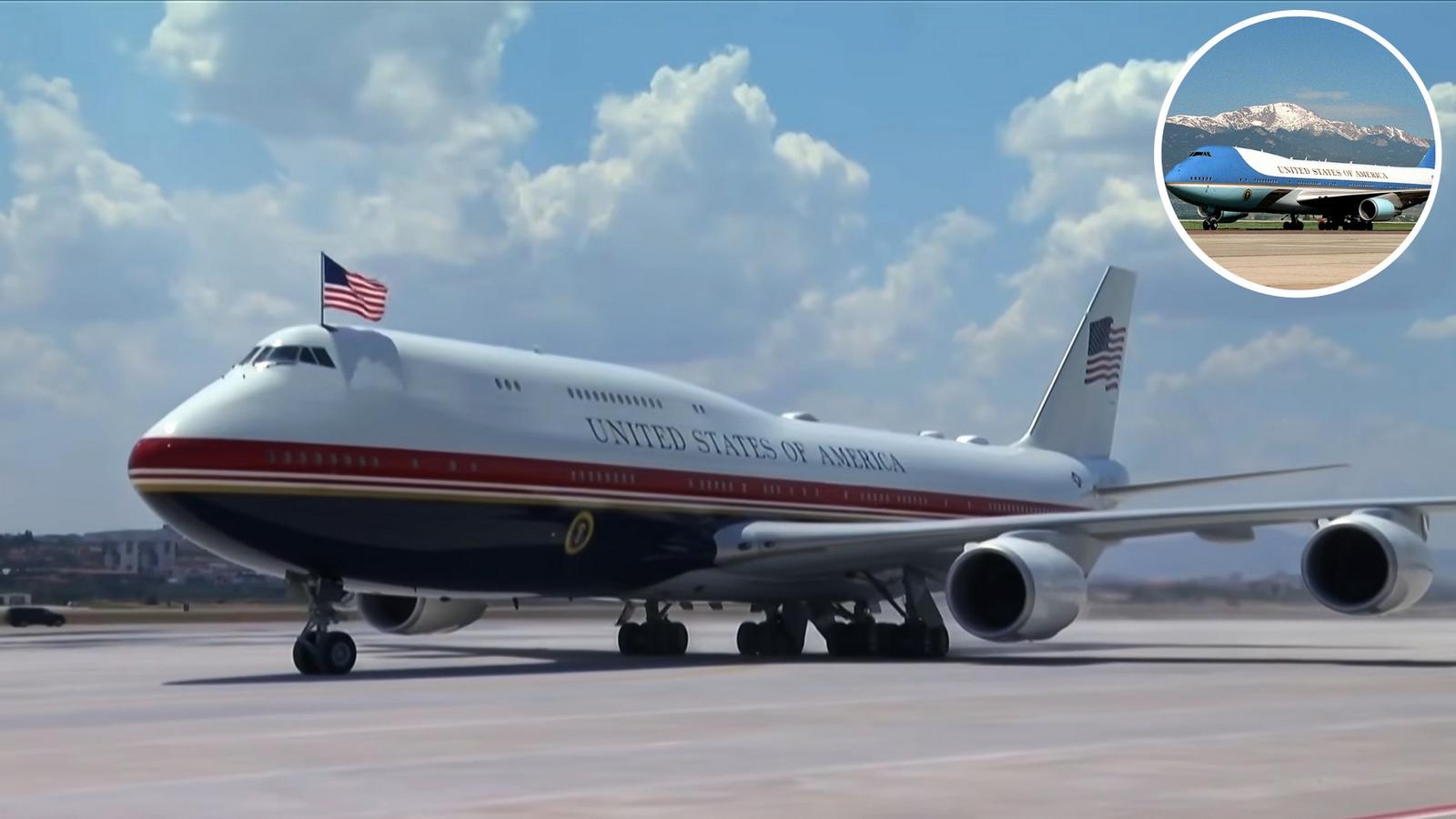
The transition to the new Air Force One, a Boeing 747-8 donated by Qatar, presents significant challenges before it can even take to the skies. This aircraft, often compared to its predecessors, the VC-25A jets, necessitates extensive groundwork at airports to accommodate its impressive size. In fact, the 747-8 stands out as larger than the majority of commercial aircraft, raising several logistical concerns.
Preparing Airports for the Jumbo Jet
The transformation of the 747-8 into an interim Air Force One includes not just opulent interiors but also demanding airport requirements. At a maximum takeoff weight of approximately 987,000 pounds, the aircraft is substantially heavier than the existing VC-25A, which weighs around 833,000 pounds. As a result, airport authorities need to assess pavement strength carefully, along with other factors like runway dimensions and parking arrangements.
When it comes to airport compatibility, the aircraft’s massive wingspan of 224 feet and 7 inches falls into the ICAO Category F, while many major airports were designed to accommodate smaller Code E aircraft. This means that the aviation sector has had to develop specialized procedures to ensure the safe operation of such a large craft. Airports may need to widen taxiways and runways or reassess existing infrastructures to meet these requirements.
Extensive Modifications and Upgrades
One notable instance of airport preparation occurred at Turkey’s Etimesgut Airport. Ahead of a NATO summit, the facility invested around $120 million in extending and modernizing its runway to adhere to the necessary Code F standards. The airport underwent an eight-month renovation that included extending the runway from 2,450 to 3,000 meters and enhancing various operational systems. Such extensive modifications highlight the lengths to which airports may need to go to accommodate the smaller number of flights conducted by such a large aircraft.
Not every airport can easily meet these requirements. Each one must often rely on special operating procedures and approvals to accommodate a Code F aircraft like the 747-8. In the U.S., for instance, the FAA offers specific allowances that can facilitate the aircraft’s operations at airports lacking full Code F compliance. Engineering Briefs have been issued to allow certain non-standard taxiways and runways to support the aircraft, demonstrating the aviation industry’s adaptability and willingness to innovate.
Challenges in Parking and Logistics
Accommodating the new Air Force One goes beyond just landing and taking off. Parking presents its challenges as well. Boeing has issued guidelines stating that airports without designated Code F stands may have to shut down nearby gates or reserve spaces normally used by multiple smaller aircraft. The logistics become even more complicated because Air Force One arrives with a fleet of accompanying vehicles, including the presidential limousine, security personnel, and additional support staff.
In certain cases, existing airports like Joint Base Andrews and Bismarck Municipal Airport are not on Boeing’s compatibility lists, indicating they may not be fully equipped for the demands of the new aircraft without substantial investment. This disconnect emphasizes the necessity for advanced preparations to ensure that these massive planes can effectively serve the needs of U.S. presidents.
Ultimately, as the new era of Air Force One approaches, it presents a complex web of challenges that extend well beyond the aircraft itself. From upgrading airport infrastructures to coordinating logistics for a large entourage, significant efforts are required before this representative of U.S. leadership can take flight, ensuring its safe and efficient operations across diverse destinations.